I also cover these techniques in my cookbooks, Everyday Sous Vide: It’s All French to Me and Sous Vide Meal Prep. The books have many sous vide recipes and practical tips like the ones below.
If you’re new to sous vide and want a place to start, visit my beginner’s guide for everything you need to get going.
Ready to get technical about sous vide? This article is a detailed look at sous vide air removal methods for bags.
Sous vide cooking requires placing food into a jar or bag and immersing it in a precisely temperature-controlled water bath using an immersion circulator. Here we focus on bags: removing as much air as possible from the bag before submerging prevents floating, ensures even cooking, and keeps the food fully surrounded by temperature-controlled water.
The Methods
1. The “arm” method
This simple technique wasn’t included in my book because it has some limitations, but it does work well for wetter or “soupier” foods such as meat in a marinade because the liquid helps keep the bag flattened.
Place the food in a freezer-grade zipper-top bag and push it down to the bottom. Lay the bag flat and zip it almost closed. Use one arm or the edge of the counter to press the bag flat against the surface near the food, then slide your other arm from the bottom toward the top to push air out through the opening. Finish sealing the zipper once most of the air has been expelled.
This method is quick and handy when you don’t have other tools, but it’s less reliable for thick or buoyant items.
2. The water displacement method
The water displacement method is similar to the arm method but generally more effective. It’s ideal for delicate foods or items in a marinade that could be damaged by more aggressive air-removal techniques.
Put food into a freezer-grade zipper bag and prepare a large container of water. A good tip is to use your sous vide water bath before heating it. Zip the bag almost closed, leaving a small opening for air to escape. Holding the zipper above the water, slowly submerge the bag so the water pressure pushes the air toward the opening. When the bag is submerged up to the zipper, finish sealing it. The trapped air will be forced out and the bag will cling to the contents, reducing buoyancy when cooked.
This method is reliable and gentle, making it a favorite for many home cooks.
3. Reusable vacuum-seal bag
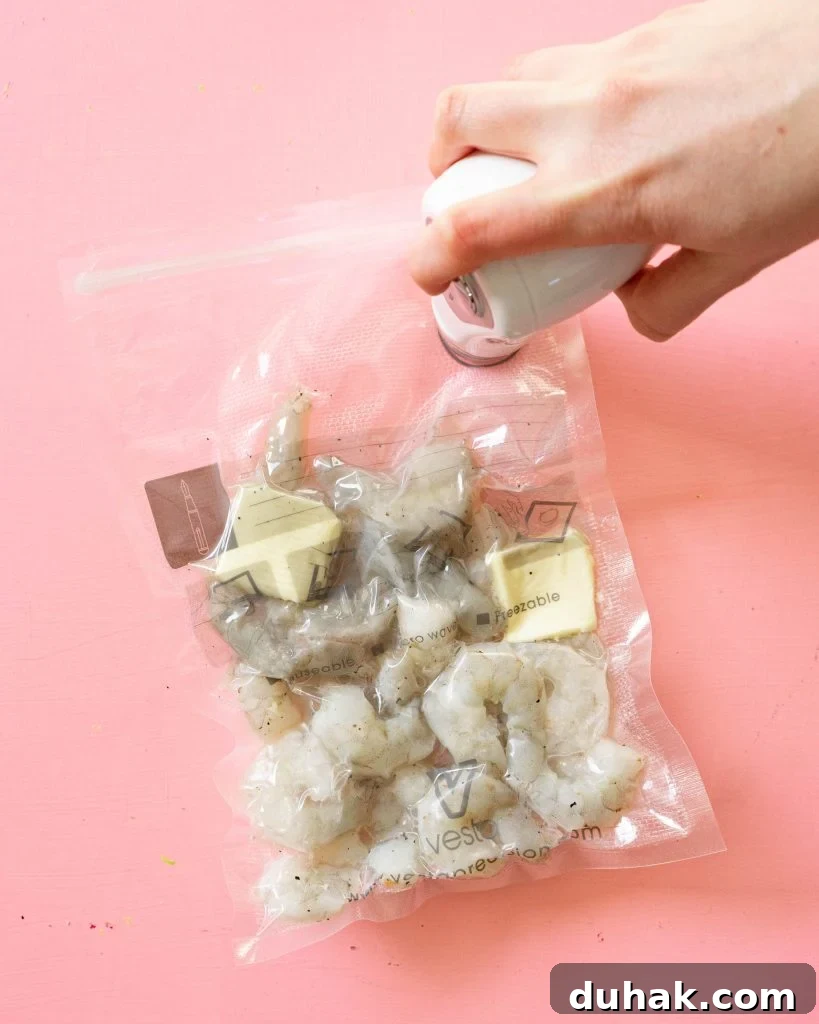
Reusable vacuum-seal bags are designed for sous vide use and are an affordable, environmentally friendlier option than single-use plastic. They seal securely and come with a small hand pump to remove air.
The main drawback is cleaning: turn the bag inside out, rinse it, run it through the dishwasher if possible, then let it air dry before turning it right-side out for storage. Despite the extra care required, these bags are convenient and versatile.
To use them, place the food in the bag, seal it completely, then use the hand pump to evacuate the air. They work well for many types of food and are a durable choice for repeated sous vide cooking.
4. Vacuum seal
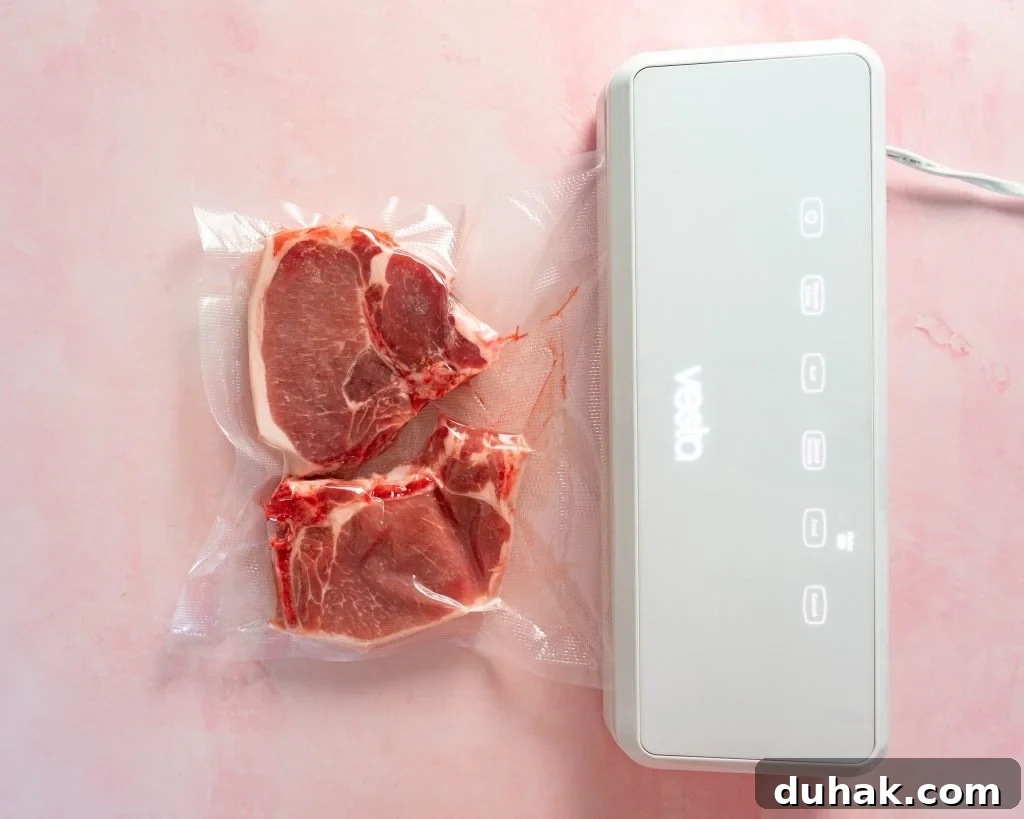
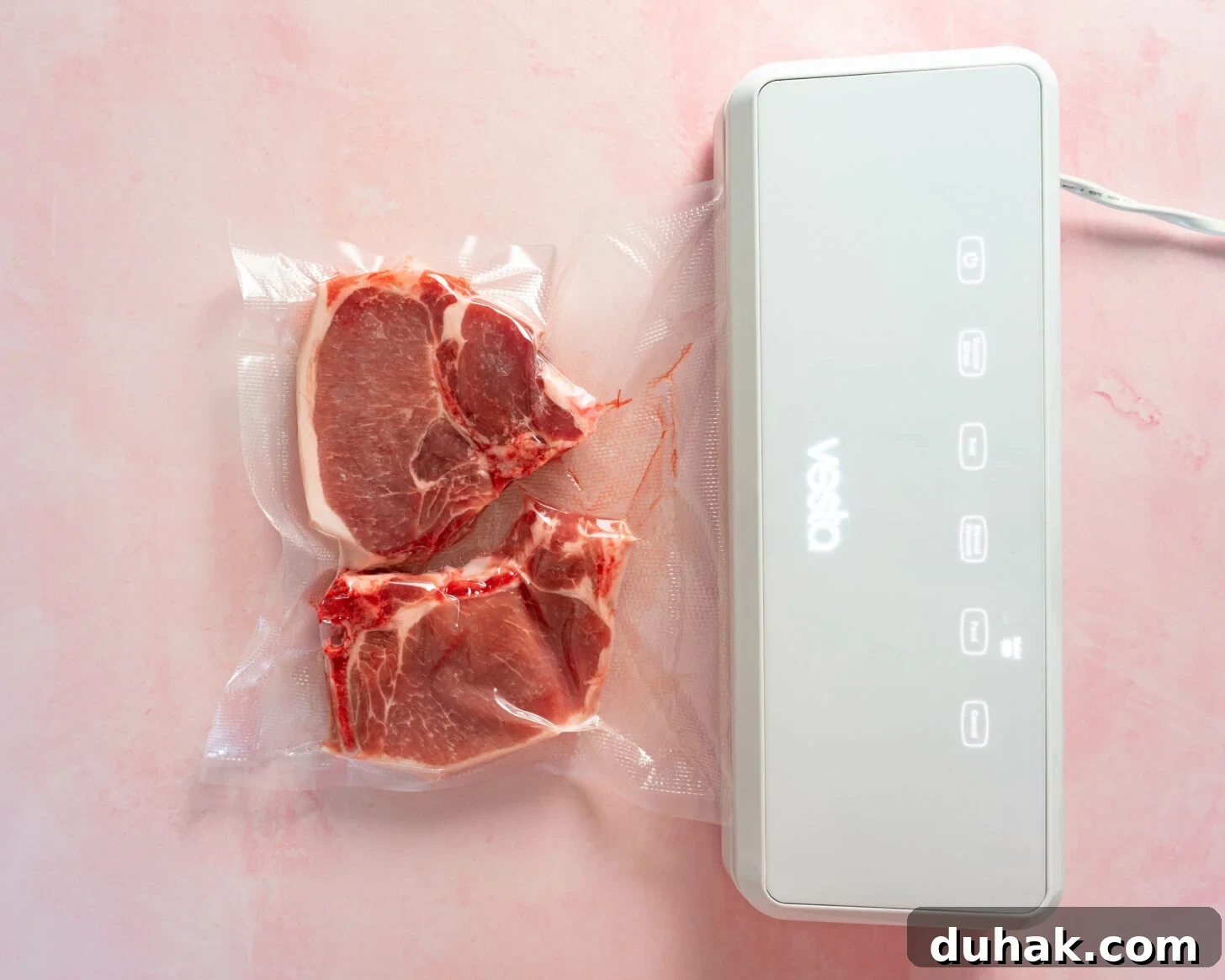
The most reliable method is a proper vacuum sealer. These machines remove nearly all air and create a strong, consistent seal so bags won’t float. A vacuum sealer is the easiest option for repeatable, worry-free sous vide cooking.
Lower-cost vacuum sealers can perform well for home use and make sous vide meal prep convenient: season, vacuum-seal, and freeze meals; when you’re ready to cook, place the sealed package straight into the water bath.
Main advantages of vacuum sealing: an airtight seal you can trust, predictable sinking of bags, no need to hold zippers above water, and minimal cleanup.
For most home cooks who sous vide regularly, a vacuum sealer is a worthwhile investment for convenience and reliability.