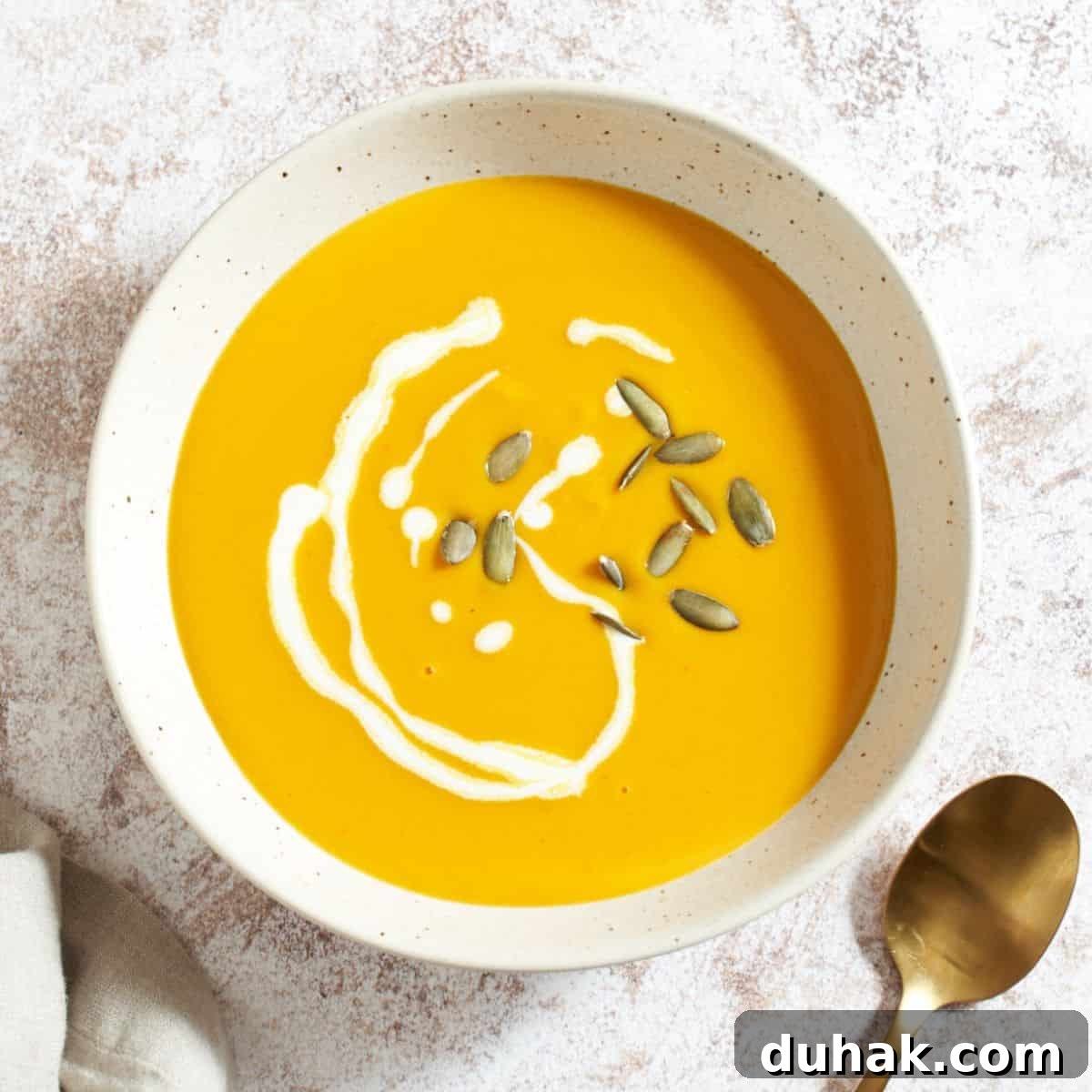
Creamy kabocha squash soup with gochujang gives a Korean-inspired twist to a classic autumn soup. The combination of sweet, nutty kabocha and savory, spicy gochujang creates a silky, comforting bowl that’s ready in about 40 minutes using mostly pantry ingredients.
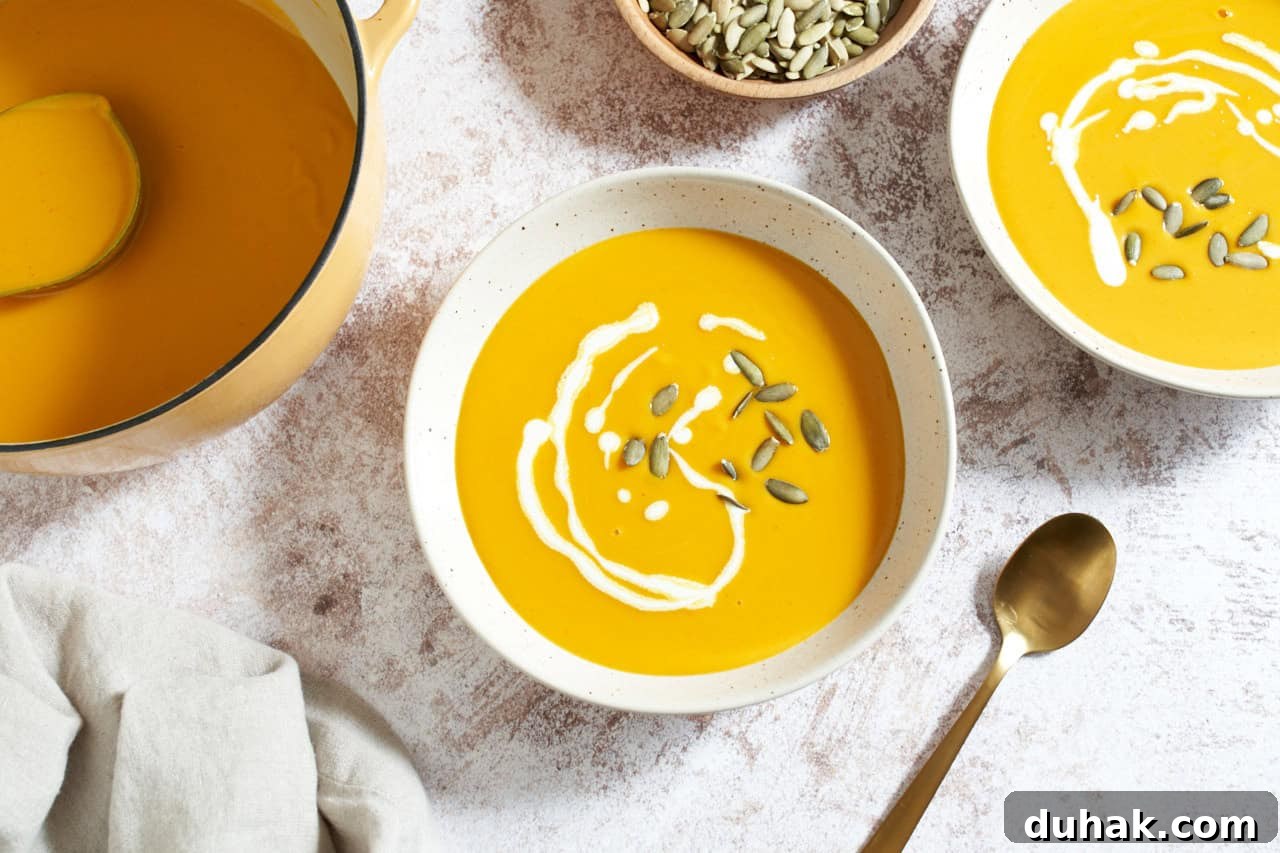
Kabocha is worth choosing for its color, texture, and flavor. Its dense, dry flesh becomes luxuriously creamy when pureed with a bit of fat, and it pairs beautifully with the earthy umami of gochujang. The resulting soup is balanced—sweet, spicy, and brightened by a touch of acid.
This recipe keeps things simple: onion, garlic, gochujang, a little water, and cream. It works as a quick weeknight main, a cozy lunch, or an elegant starter for holiday gatherings.
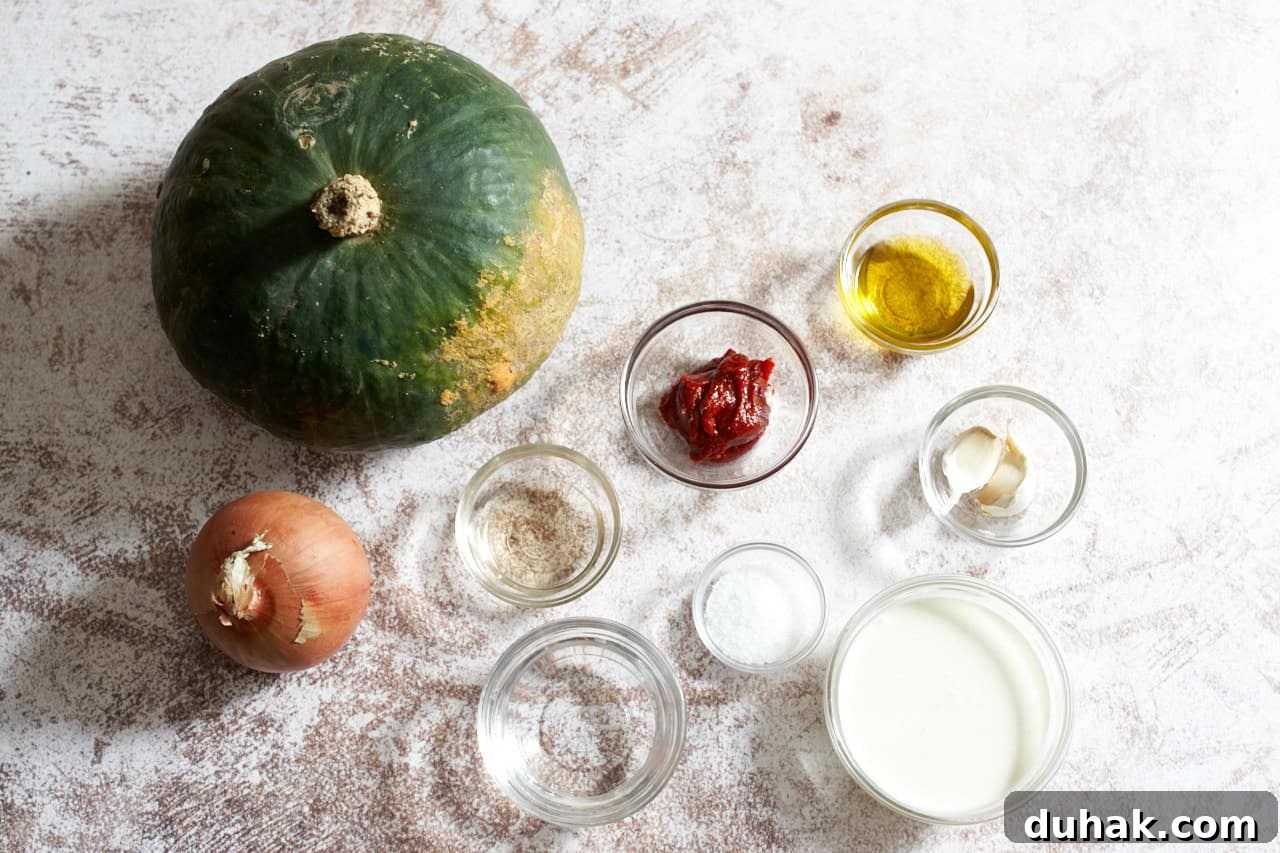
Kabocha squash soup key ingredients
- Kabocha squash: A Japanese winter squash with a lightly sweet, nutty flavor and firm flesh that becomes rich when blended.
- Gochujang: Korean fermented chili paste that brings umami, subtle sweetness, and heat—use more or less depending on your spice preference.
- Heavy cream (or substitute): Adds body and silkiness; swap half-and-half or coconut milk for lighter or dairy-free versions.
- Rice vinegar: A small splash of acid brightens the bowl and balances the creamy, sweet, and spicy elements.
Measurements are provided in the recipe card below.
How to make kabocha squash soup
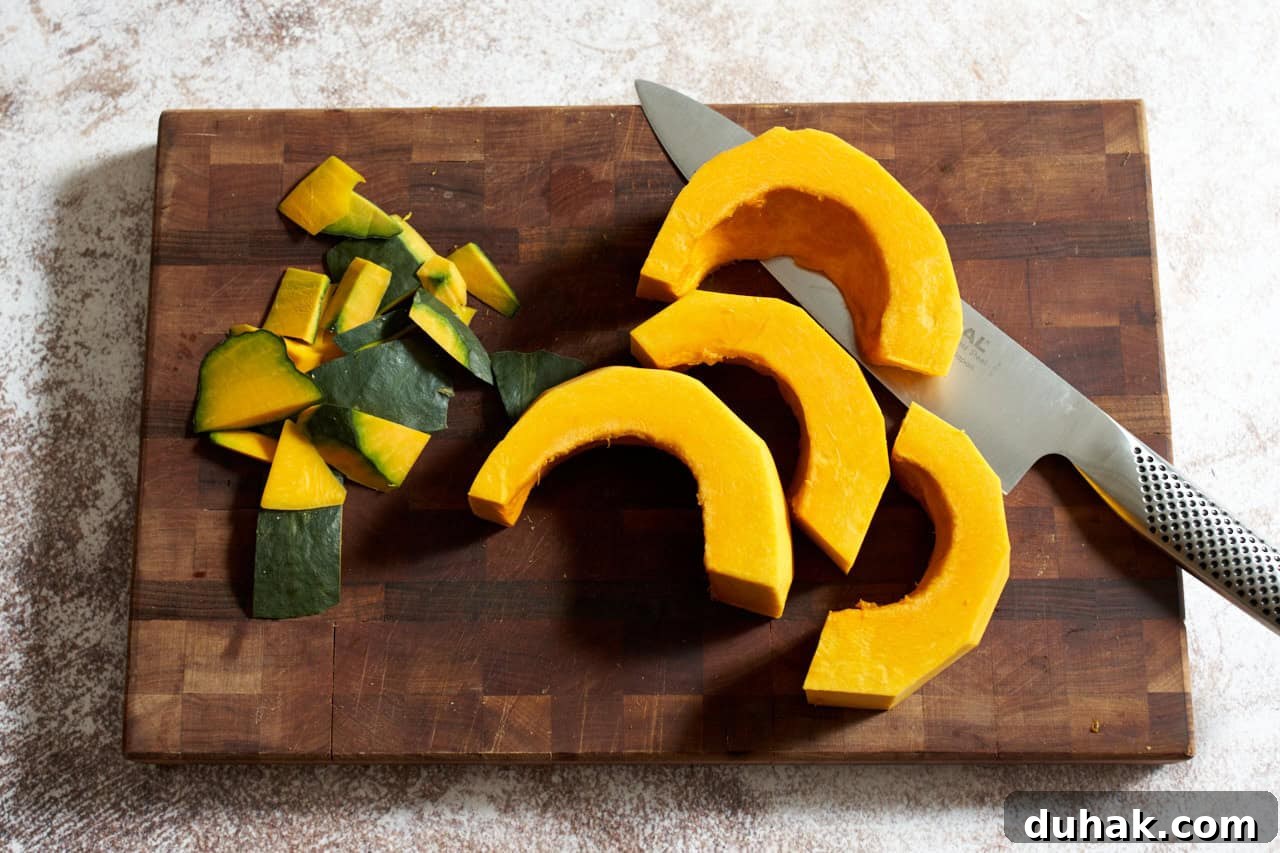
Step 1: Peel and chop the squash
Trim the stem and cut the squash into manageable slices. Scoop out the seeds, peel, and cut into large chunks. Because kabocha can be firm, slice first and then peel—it’s safer and easier that way.
Tips for cutting kabocha squash
Use a sharp chef’s knife and a stable cutting surface. If the squash slides, place a damp towel under the board. Rock the knife gently to get through the rind; once you make the first cut, the rest is simpler.
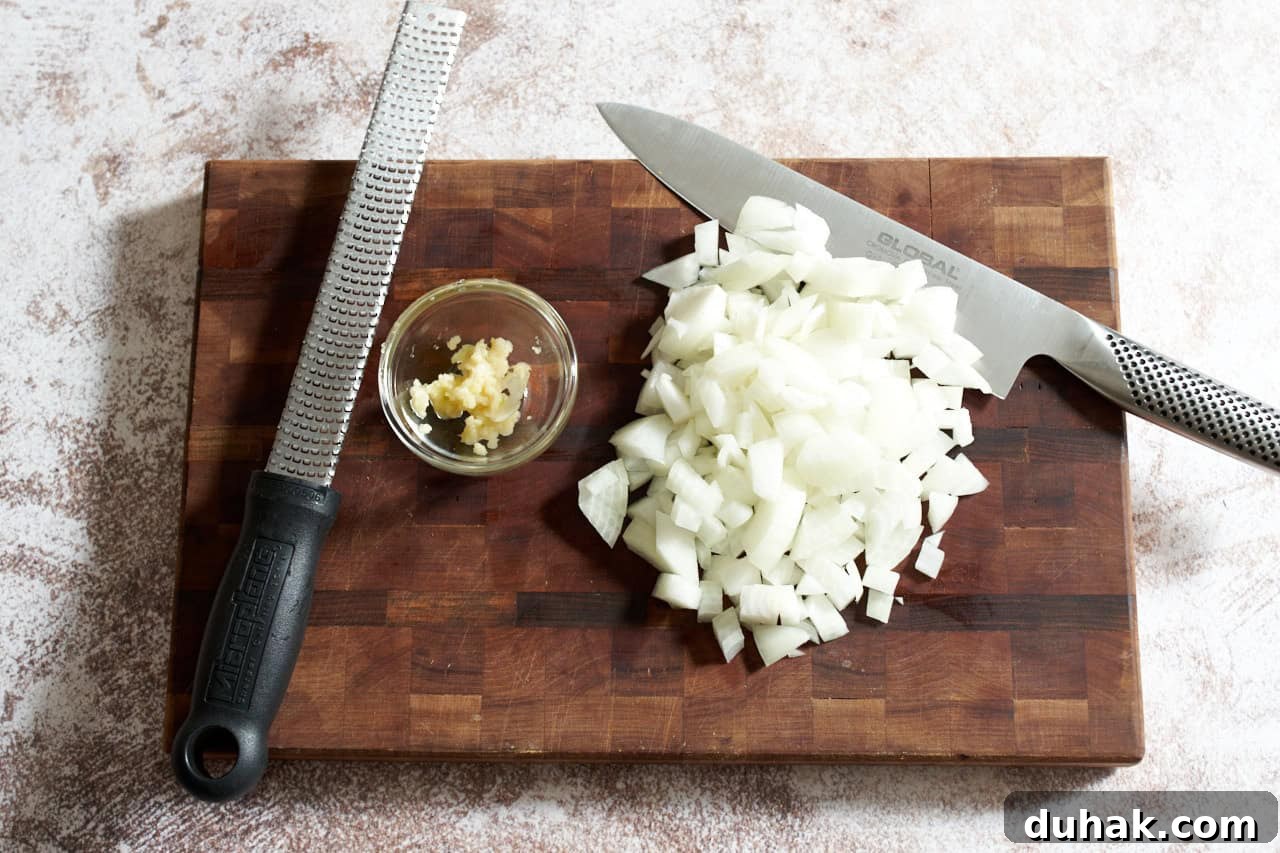
Step 2: Chop the onions and grate the garlic
Dice a yellow onion and grate or finely mince the garlic. Softer, well-cooked onions add a sweet base that complements the squash and gochujang.
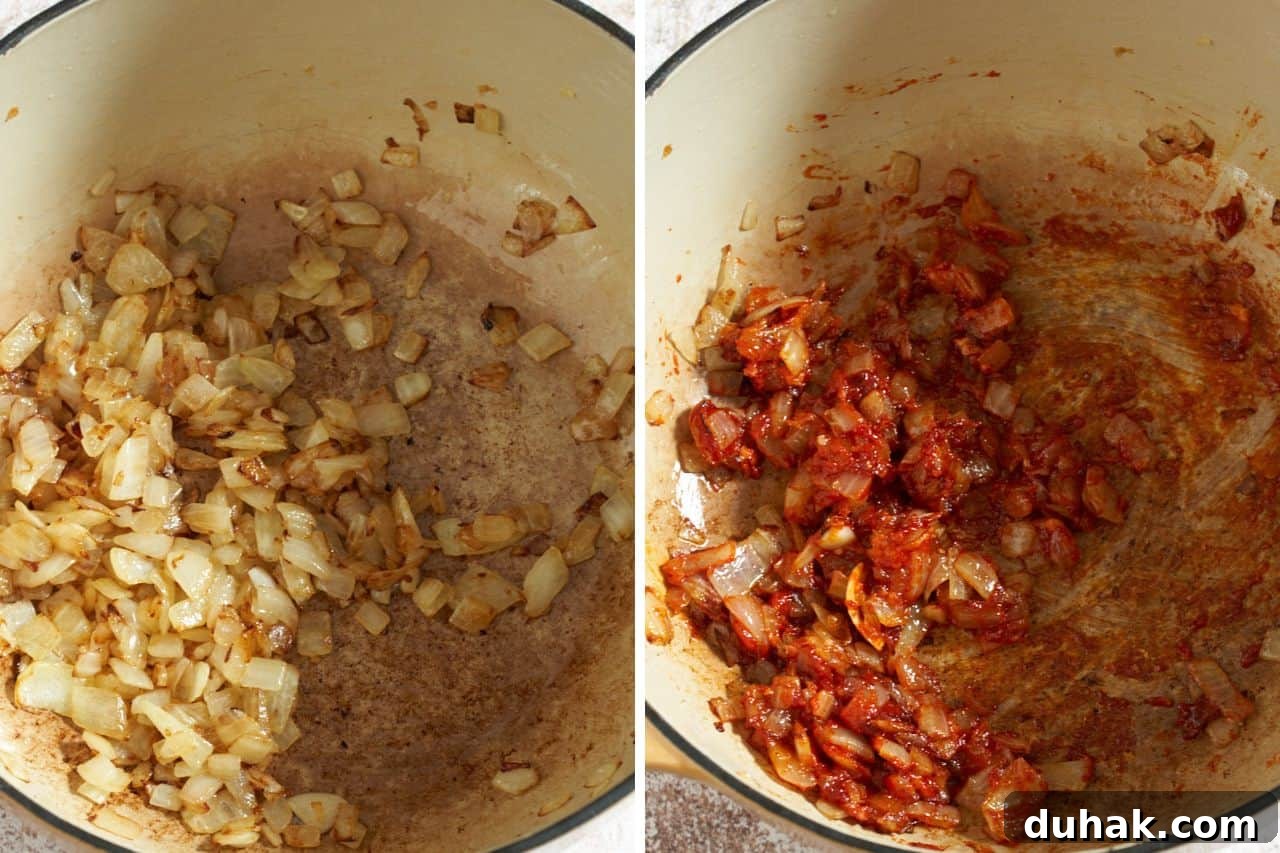
Step 3: Cook the onions and gochujang
Warm olive oil in a stockpot or Dutch oven over medium heat. Sauté the onion with a pinch of salt until translucent, then stir in gochujang and garlic for about a minute to bloom the paste and deepen the flavor.
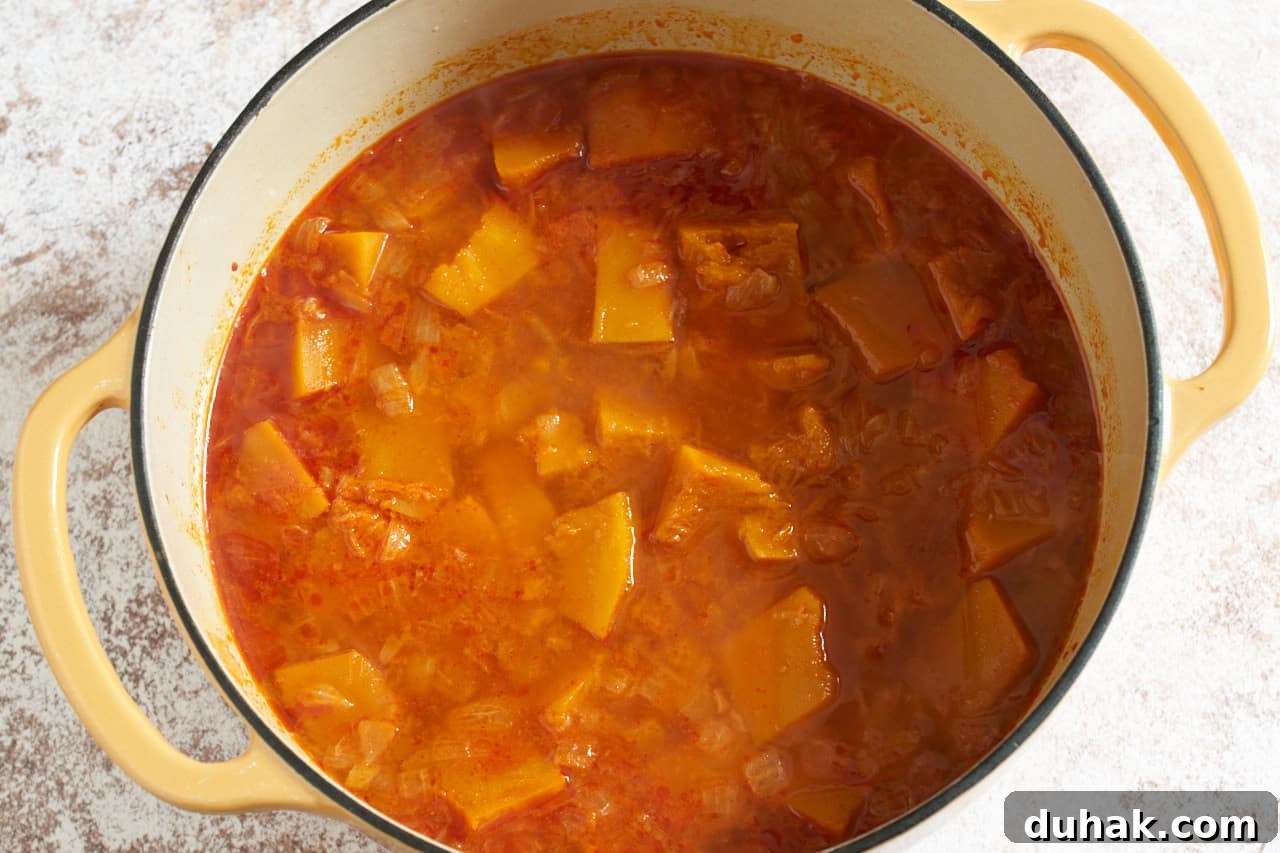
Step 4: Simmer
Add the chopped kabocha, salt, and just enough water to barely cover the squash. Bring to a gentle boil, then reduce heat, cover, and simmer until the squash is fork-tender, about 20 minutes.
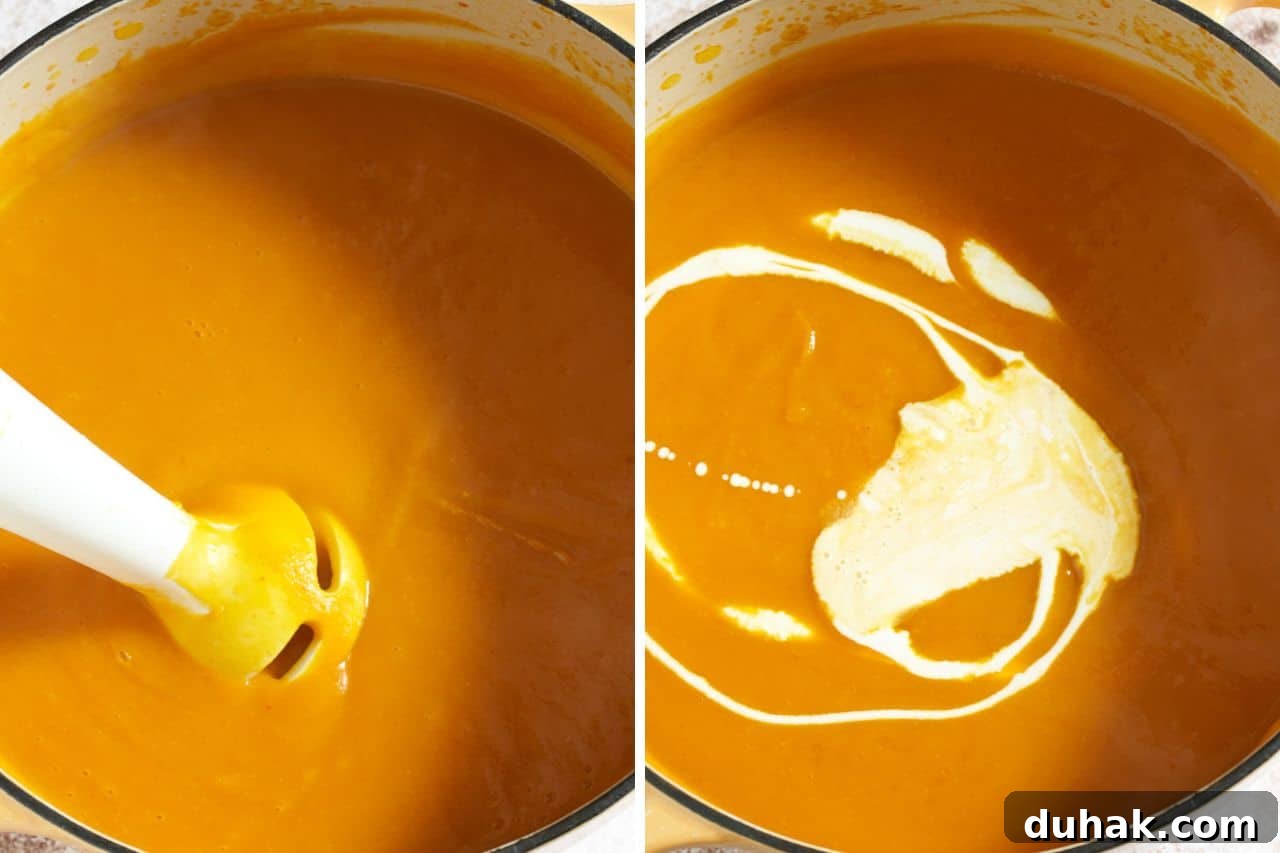
Step 5: Blend and add cream
Remove the pot from the heat and puree the soup with an immersion blender, or work in small batches using a regular blender (vent the lid). Stir in the cream, warm gently over low heat, taste, and adjust seasoning. If the soup is too thick, thin with a splash of water.

Expert tips
- Blender safety: If using a standard blender, blend in small batches and leave the lid slightly ajar or cover with a towel to let steam escape.
- Low heat after adding cream: Keep the soup at a gentle temperature so the cream doesn’t scorch; just warm it through.
FAQ
Yes. Butternut, honeynut, or buttercup squash are good alternatives if kabocha isn’t available.
Swap the heavy cream for full-fat coconut milk or another plant-based cream substitute.
More winter squash recipes
-
Winter Squash Agrodolce with Cranberries
-
Maple Roasted Acorn Squash


Debra’s Details: Unique, quick, easy, spicy-sweet flavor!
- Kabocha + gochujang + cream = a distinctive blend of sweet, savory, and spicy.
- Six main ingredients, mostly pantry staples.
- Ready in about 40 minutes—perfect for weeknights.
- Simple prep: chop squash, onion, and garlic.
- Adjust spice level to your taste.
- Vegetarian by default with easy vegan swaps.
If you enjoy this recipe, please leave a rating in the recipe card—ratings help others discover the recipe. Sign up for the newsletter for more recipes delivered to your inbox. Thank you!
Recipe

Creamy Kabocha Squash Soup with Gochujang
Equipment
- Chef’s knife
- Cutting board
- Microplane grater (optional)
- 4.5 quart Dutch oven or stock pot
Ingredients
- 2 pounds peeled and chopped kabocha squash
- 2 tablespoons olive oil
- 1 yellow onion, diced
- 2 garlic cloves, grated or minced
- 2 tablespoons gochujang (adjust to taste)
- 2–3 cups water (just enough to barely cover the squash)
- 2 teaspoons kosher salt
- 1½ tablespoons rice vinegar
- 1 cup heavy cream (or half-and-half, or coconut milk)
Instructions
- Prepare the kabocha: stabilize the squash on a damp towel or a board with rubber feet, trim the stem, slice into sections, scoop seeds, peel, and cut into large chunks.
- Dice the onion and grate or finely mince the garlic.
- Heat olive oil in a Dutch oven over medium. Sauté the onion with a pinch of salt until soft and translucent (5–8 minutes). Add gochujang and garlic and stir constantly for about 1 minute.
- Add the chopped kabocha and salt, then pour in just enough water to barely cover the squash (about 2–3 cups). Bring to a gentle boil, reduce heat, cover, and simmer until the squash is fork tender, about 20 minutes.
- Remove from heat and puree with an immersion blender, or blend in batches in a regular blender (vent the lid). Stir in the cream and rice vinegar, warm gently over low heat, taste, and adjust seasoning. Thin with extra water if needed. Serve warm.
Notes
- Water amount: Use just enough to cover the squash; kabocha releases moisture while cooking. Start with 2 cups and add more if needed when blending.
- Gochujang and gluten: Some gochujang contains gluten; check labels for gluten-free options.
- Spice level: Adjust gochujang to suit your heat preference—1–3 tablespoons works depending on taste.
- Make ahead and storage: Refrigerate in an airtight container for up to 2 days or freeze for up to 2 months.
Video
Leave a comment and a star rating below—I love hearing how it turned out for you!
Nutrition
Carbohydrates: 18 g
Protein: 3 g
Fat: 19 g
Saturated Fat: 10 g
Sodium: 798 mg
Fiber: 3 g
Sugar: 6 g
Vitamin A: 2661 IU
Vitamin C: 21 mg
Nutrition information is an estimate and not guaranteed to be exact.