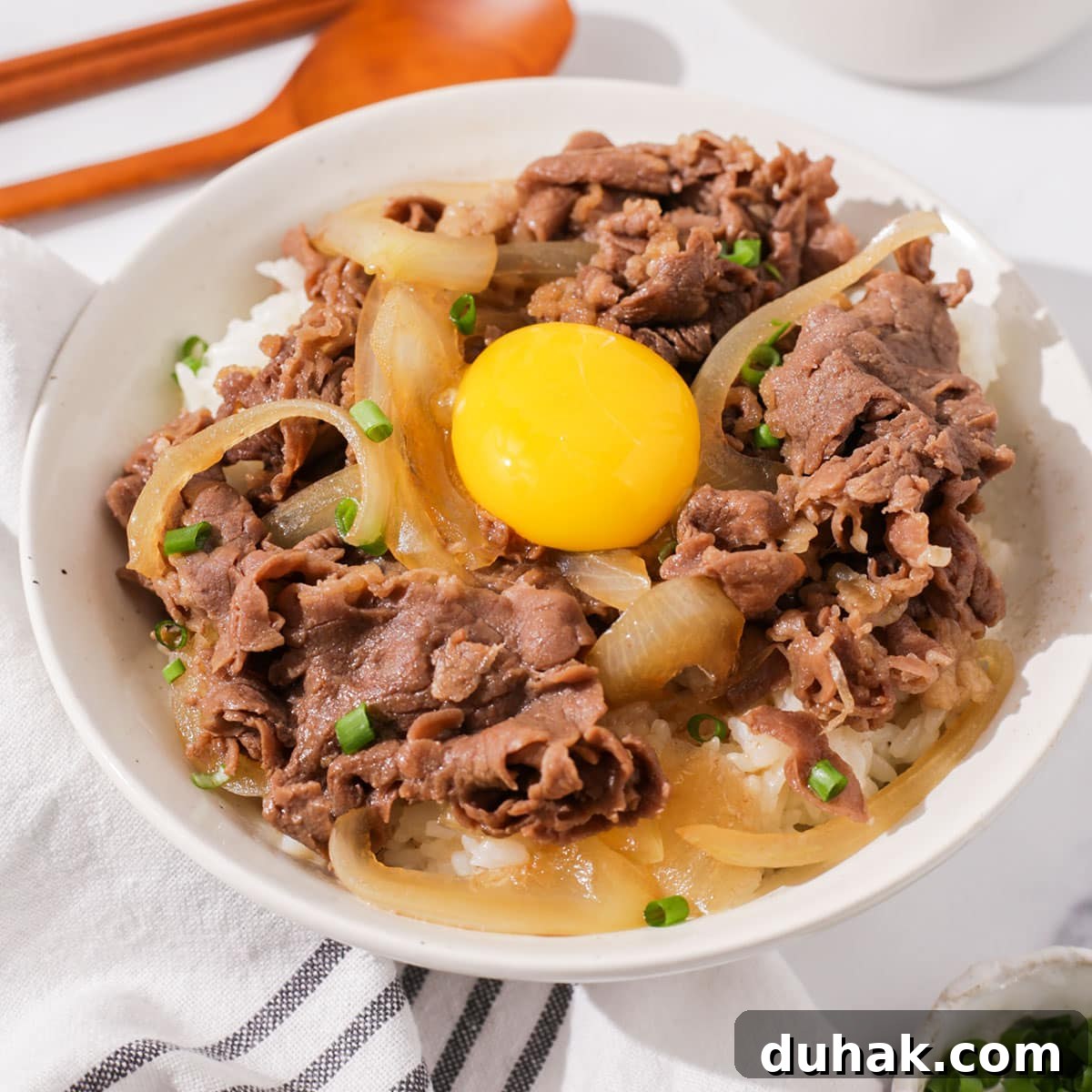
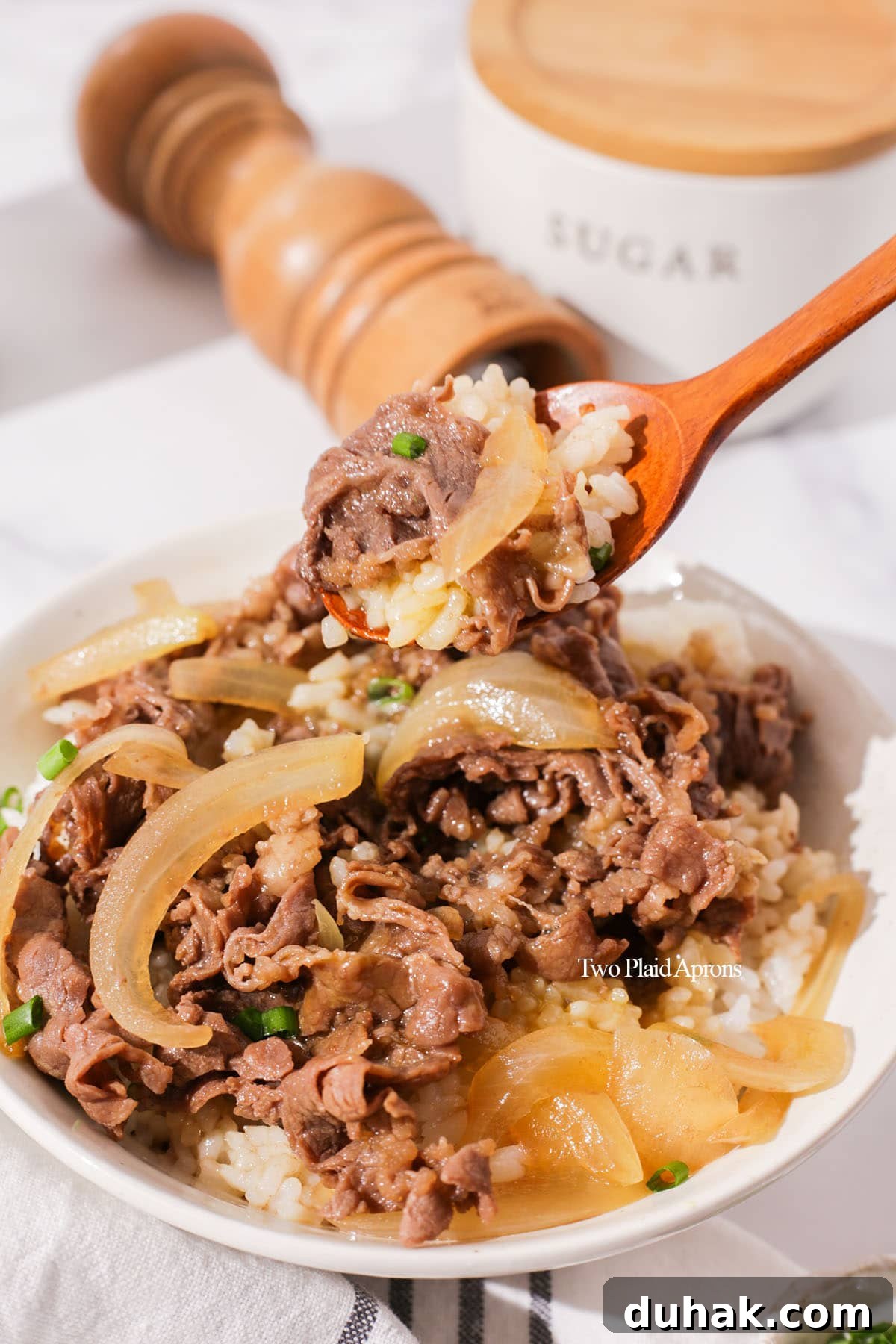
Gyudon, or Japanese beef bowl, is a sweet-and-savory comfort dish made from thinly sliced beef simmered with onion in a soy-mirin sauce and served over steamed rice. Fast and satisfying, this bowl is ideal for a weekday lunch or dinner and can be ready in about 10 minutes.
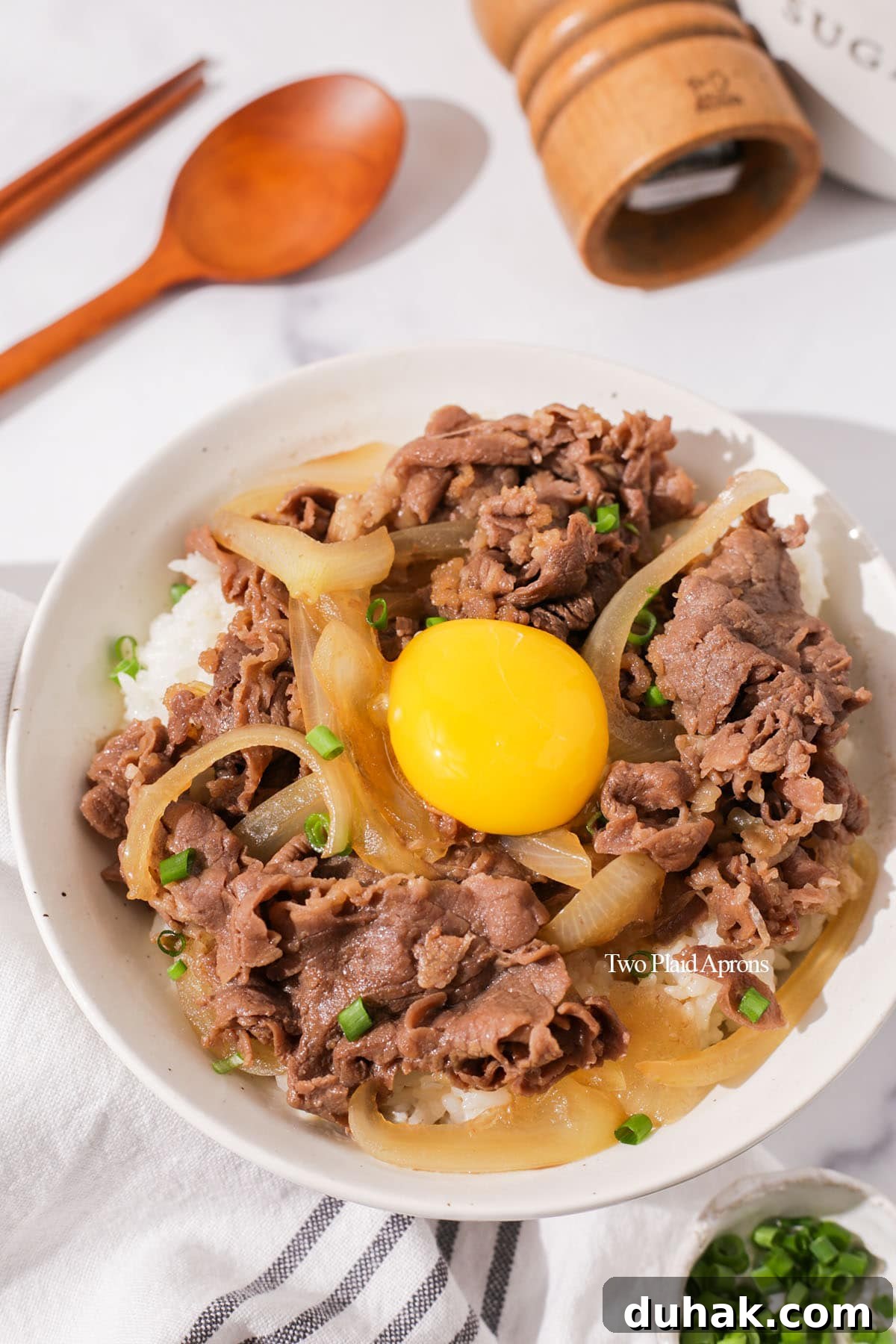
Comfort dishes that are quick to prepare become weekday staples, and gyudon fits right in. The basic technique is simple: combine mirin, soy sauce, sugar and a dashi base, simmer sliced onions until tender, then add very thinly sliced beef so it cooks quickly in the flavorful broth. Serve the beef and onions over hot short- or medium-grain rice and finish with your favorite toppings.
Ingredients
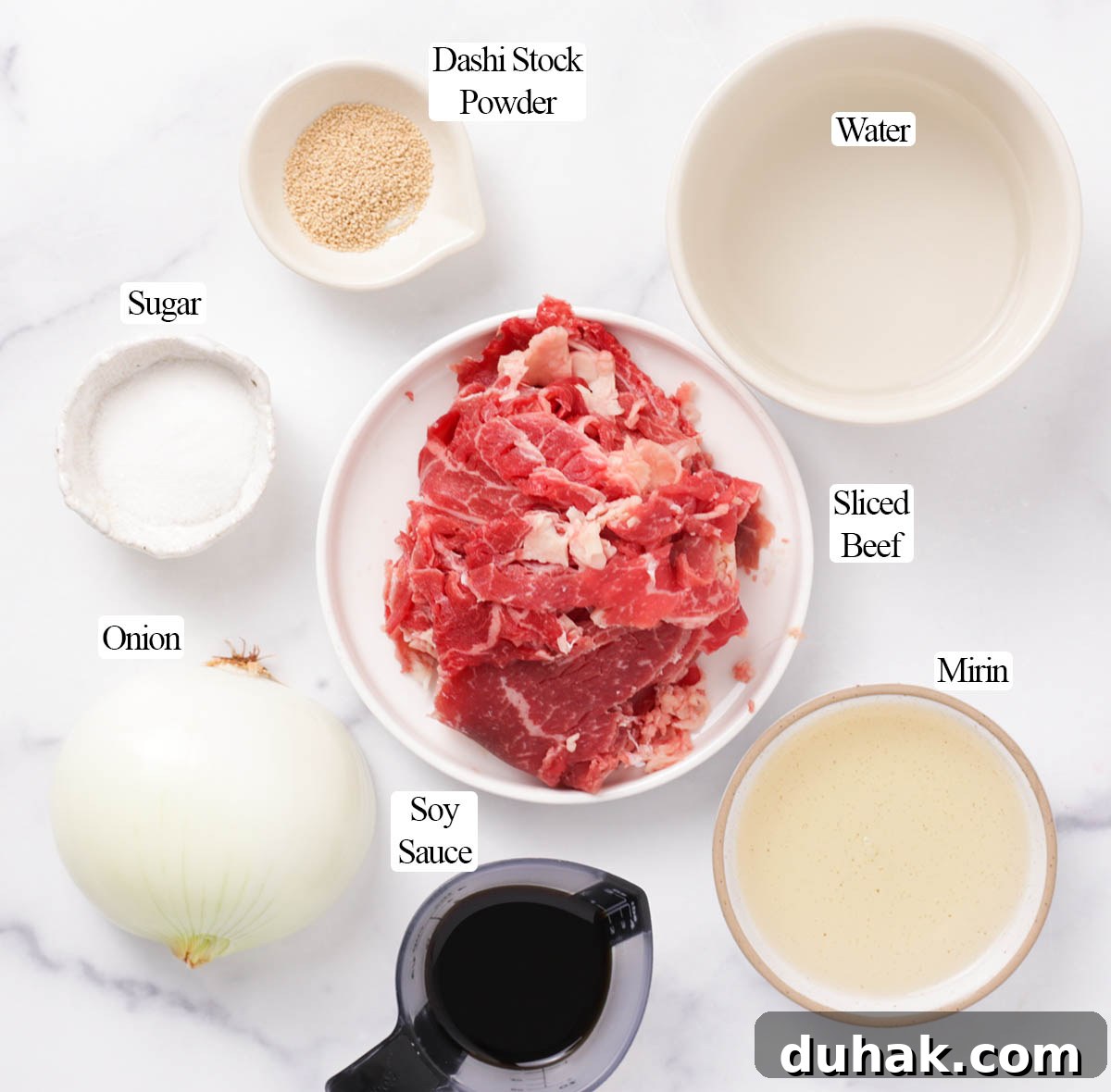
Scroll to the recipe card for exact ingredient amounts.
- Thinly sliced beef – Choose a well-marbled cut such as ribeye or chuck eye. Asian markets sell pre-sliced beef for hot pot or shabu-shabu that’s ready to use.
- Yellow onion – Thinly sliced; it adds sweetness and depth to the dish.
- Mirin – A sweet Japanese rice wine used in the sauce. If you prefer non-alcoholic options, use a non-alcoholic mirin substitute.
- Soy sauce – Adds savory balance and color. Low-sodium soy sauce is recommended; reduce the amount if using regular soy sauce.
- Sugar – Granulated sugar to round out the sauce.
- Water or dashi broth – Dashi gives the most authentic flavor, but water plus hondashi powder works well when you don’t have prepared dashi.
- Hondashi powder – Instant bonito-based powder used as a dashi substitute when needed.
- Rice – Short- or medium-grain white rice is ideal for texture and to catch the sauce.
How to make gyudon
1. In a saucepan with tall sides, combine water (or dashi), mirin, soy sauce, sugar and hondashi powder. Stir to dissolve the sugar, then add the sliced onion.
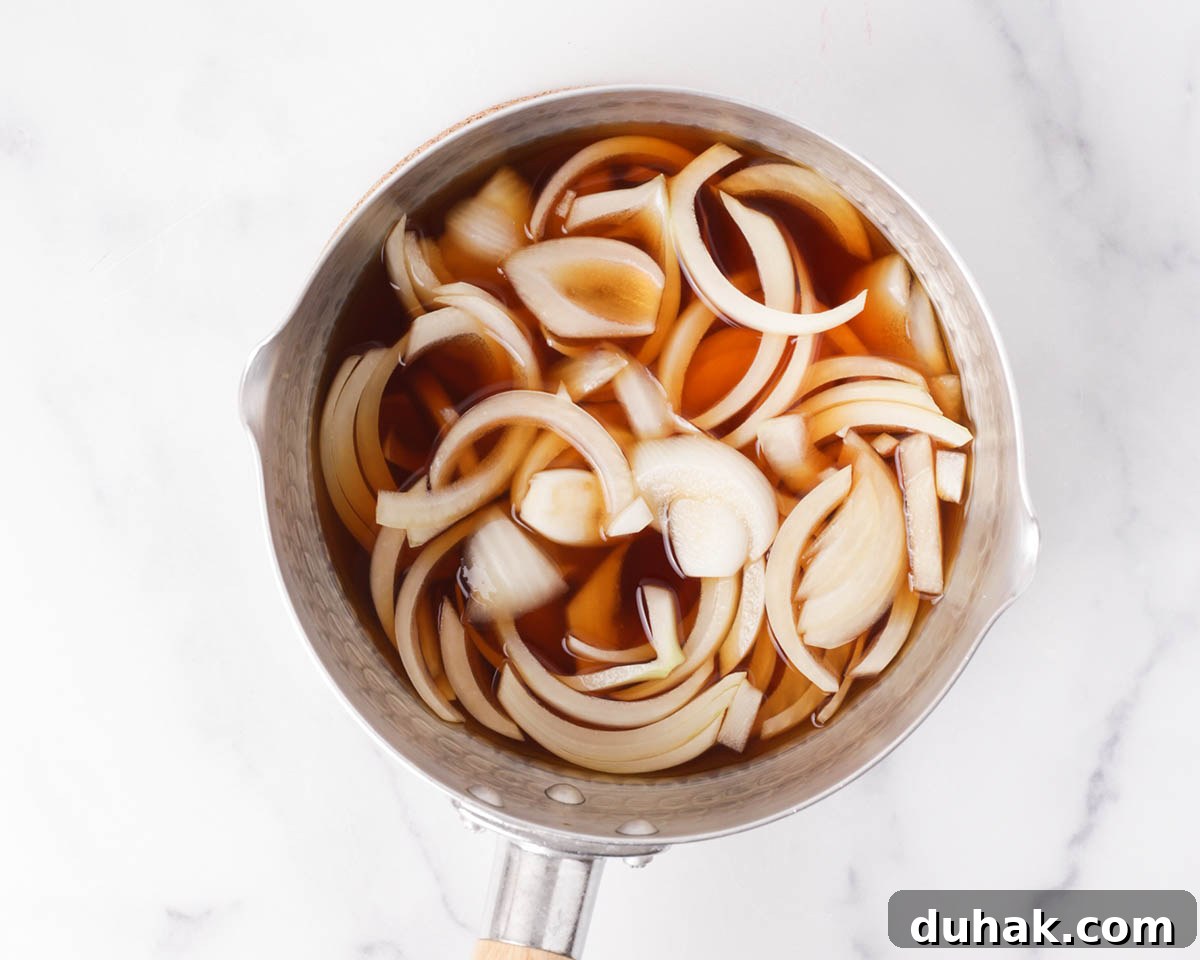
2. Cover and bring the mixture to a gentle simmer over medium heat, allowing the onion to soften and release sweetness.
3. Once simmering, arrange the thinly sliced beef on top of the onions, spreading it evenly so every piece cooks in the sauce.
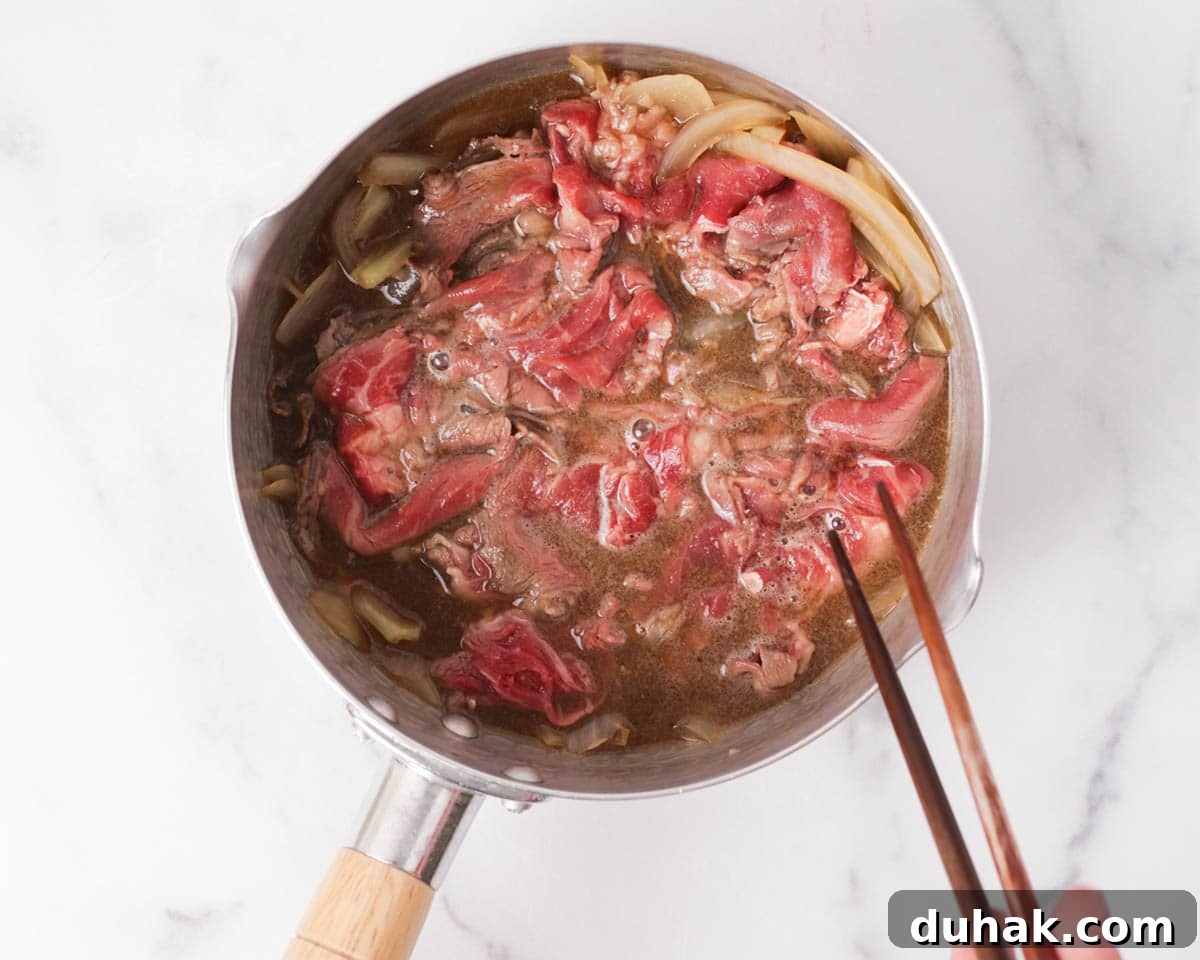
4. Cook the beef just until it loses its pink color. If foam or scum appears, skim it off for a cleaner presentation. Remove the pan from heat when the beef is done.
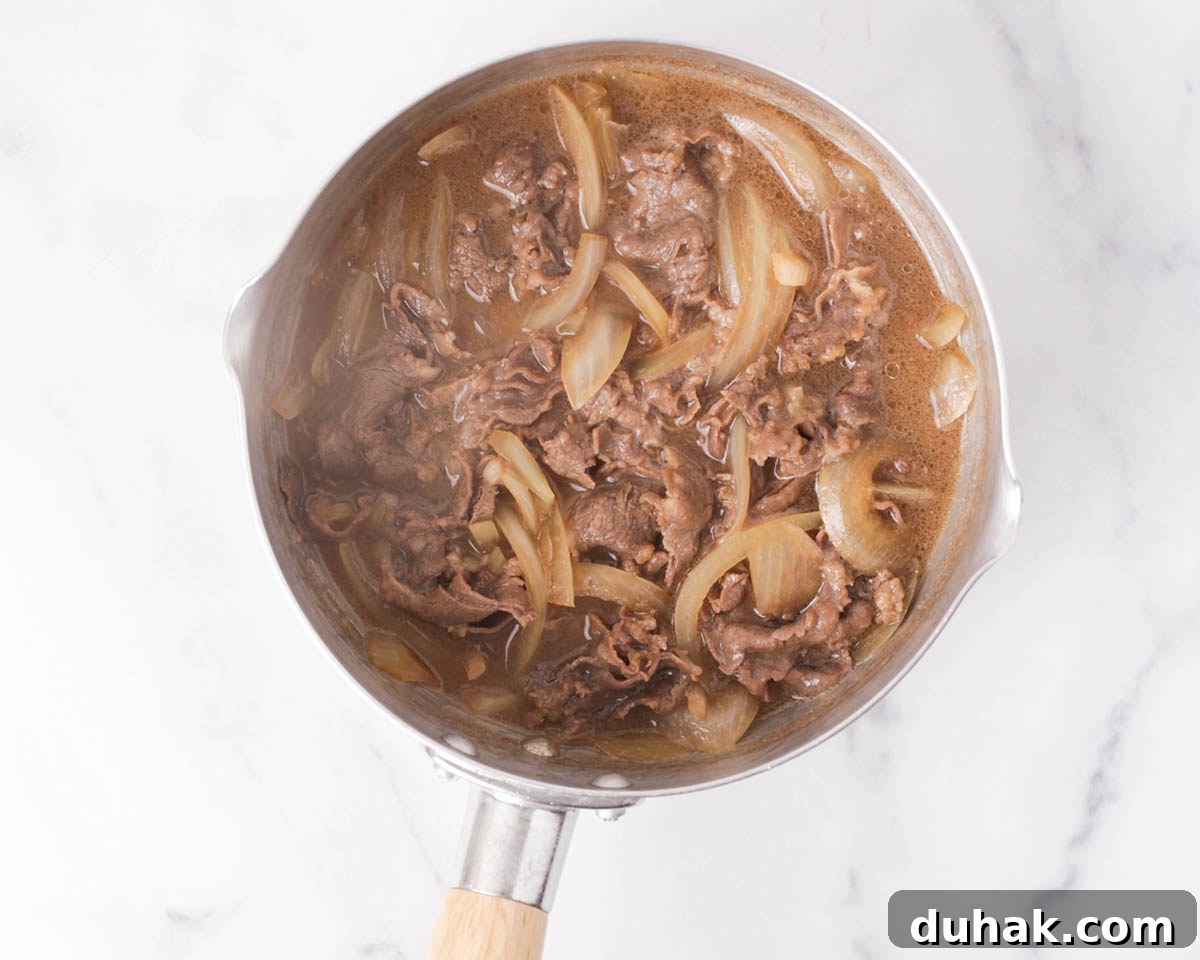
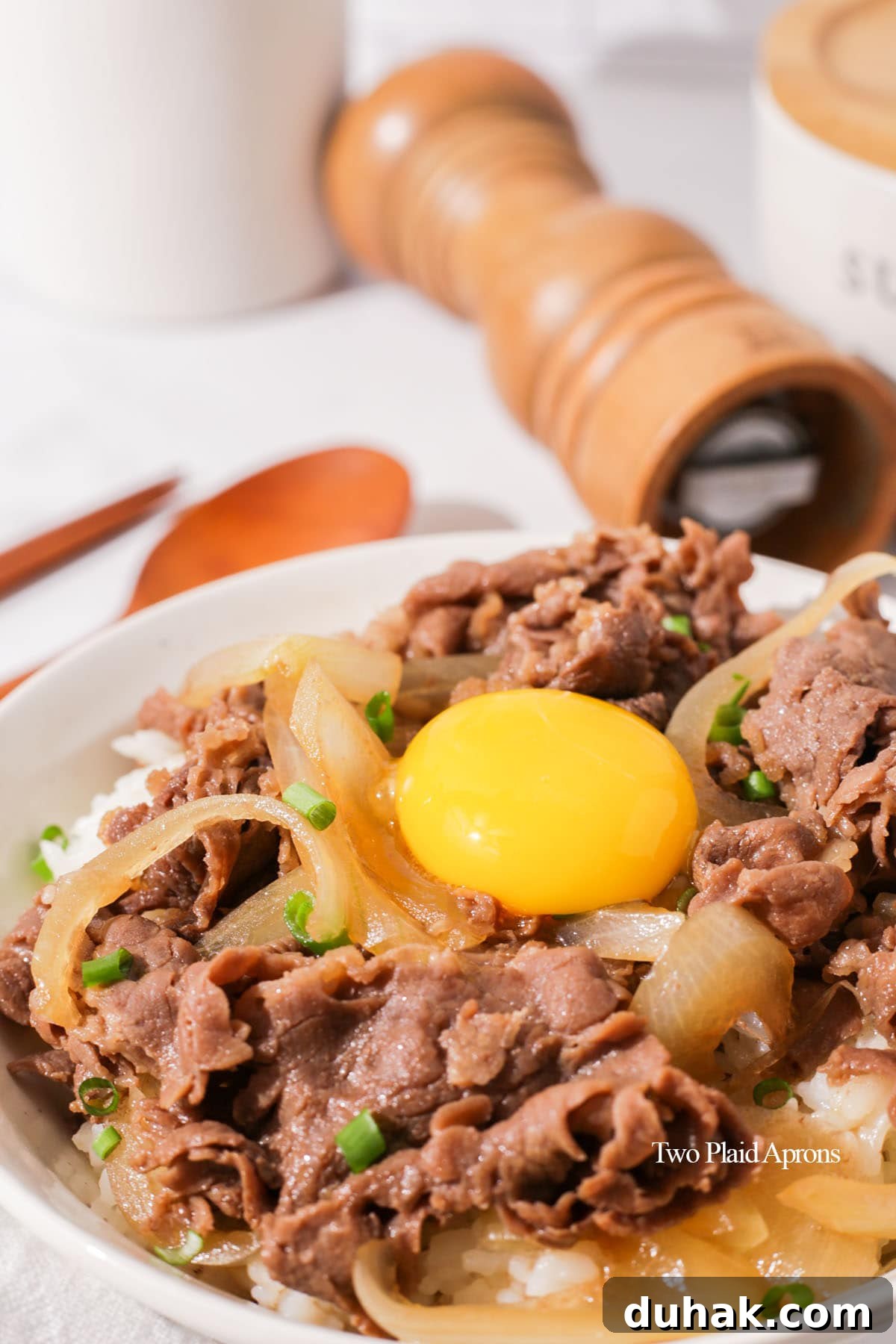
5. Divide hot cooked rice into bowls, spoon the beef and onions on top, and pour some of the sauce over each bowl to taste.
Variation
A popular variation adds a beaten egg to make a beef-and-egg bowl. When the beef is just cooked, drizzle one beaten egg per serving over the pan (after skimming any scum, if desired), cover and let the egg set briefly. This produces a richer, silkier topping similar to katsudon-style eggs.
What to eat with gyudon
Gyudon is delicious on its own, but these toppings and sides enhance the meal:
- Egg – A raw egg yolk or an onsen tamago (soft-cooked “hot spring” egg) adds creaminess and richness.
- Green onions and pickled red ginger – Thinly sliced green onion and beni shoga (pickled red ginger) are classic toppings; the ginger refreshes the palate between bites.
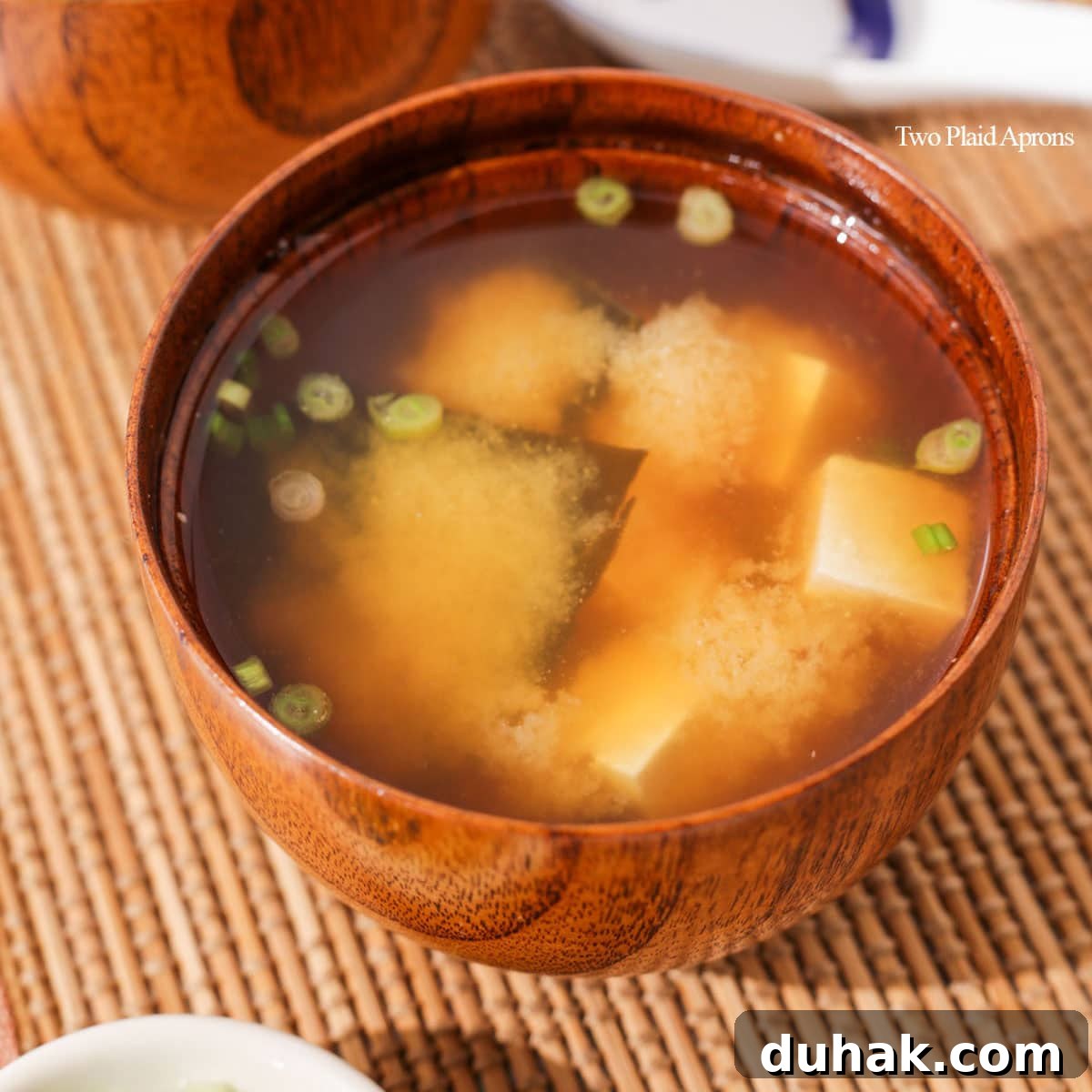
- Miso soup – A warm bowl of miso complements the rice bowl and rounds out the meal.
- Kimchi – Though not traditional, kimchi’s acidity and spice pair nicely with the savory-sweet beef.
Recipe tips
- Choose well-marbled beef. Fat keeps the meat tender and flavorful—thinly sliced ribeye is ideal.
- Avoid overcooking. Thin beef cooks quickly; stop when it’s no longer pink to keep it tender.
- Skim any scum for a cleaner finish. This step improves presentation and mouthfeel but is optional.
- Keep extra rice ready. The sauce is flavorful and you may want more rice to enjoy every drop.
Storage and reheating
Cool leftovers completely before placing them in airtight containers. Store beef and sauce separately from rice when possible to avoid soggy rice. Refrigerated gyudon will keep 3–4 days; freeze up to 1 month. Reheat in a microwave until hot or warm gently in a pan until simmering.
FAQ
Thinly sliced ribeye is recommended for its marbling and tenderness; chuck eye is a good alternative if ribeye isn’t available.
Typical gyudon sauce combines mirin (or sake), soy sauce, sugar and a dashi base made from dashi broth or instant hondashi powder.
Non-alcoholic mirin substitutes are available. If you prefer sake, mix three parts sake to one part sugar to approximate mirin’s sweetness.
Gyudon is a rice bowl of beef and onions simmered briefly in a soy-mirin sauce. Sukiyaki is a hot-pot style dish that includes thinly sliced meat and various vegetables simmered in a similar sauce, typically served from a shared pot.
If you try this recipe, tag us on Instagram with #twoplaidaprons or mention @two_plaid_aprons—we’d love to see your photos!
📖 Recipe
Gyudon (Japanese Beef Bowl)
Prep time: 3 mins • Cook time: 7 mins • Total: 10 mins • Yield: 2 servings
Ingredients
- ½ pound thinly sliced beef (ribeye or chuck eye)
- ½ large yellow onion, thinly sliced
- For the sauce:
- ½ cup water (or dashi)
- 4 tablespoons mirin
- 3 tablespoons soy sauce (low sodium preferred)
- 1 tablespoon granulated sugar
- ¼ teaspoon hondashi powder (if not using dashi)
- To serve:
- 2 cups cooked white rice, hot
- 2 egg yolks or onsen eggs (optional)
- Pickled red ginger (beni shoga) and sliced green onion for garnish (optional)
Instructions
- In a saucepan, combine water (or dashi), mirin, soy sauce, sugar and hondashi powder. Stir to dissolve, then add the sliced onion.
- Cover and bring to a gentle simmer over medium heat until the onion softens.
- Lay the thinly sliced beef over the onions, spreading it evenly so it cooks in the simmering sauce.
- Cook just until the beef is no longer pink; skim any foam if desired. Remove from heat.
- Divide rice between bowls, top with beef and onions, and spoon sauce over each serving. Add a raw egg yolk or onsen egg and garnish with pickled ginger and green onion if desired. Serve immediately.
Notes
- Egg safety: Do not serve raw or undercooked eggs to young children, elderly people, pregnant individuals, or anyone with a compromised immune system.