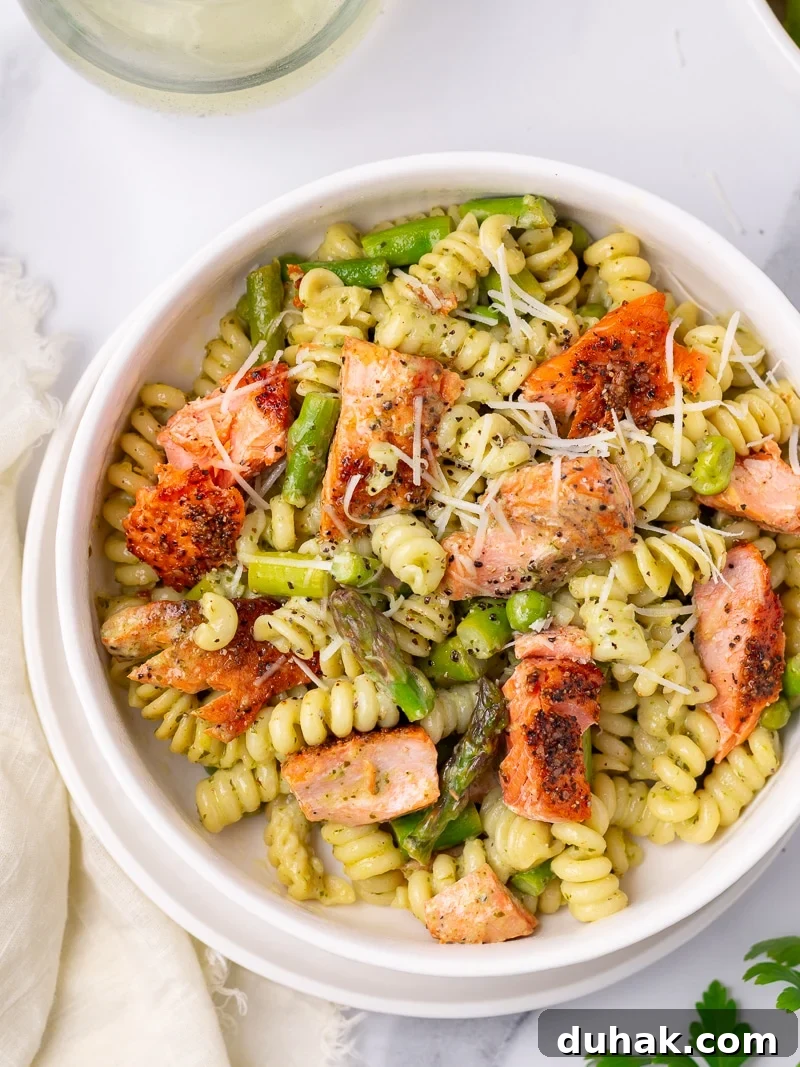
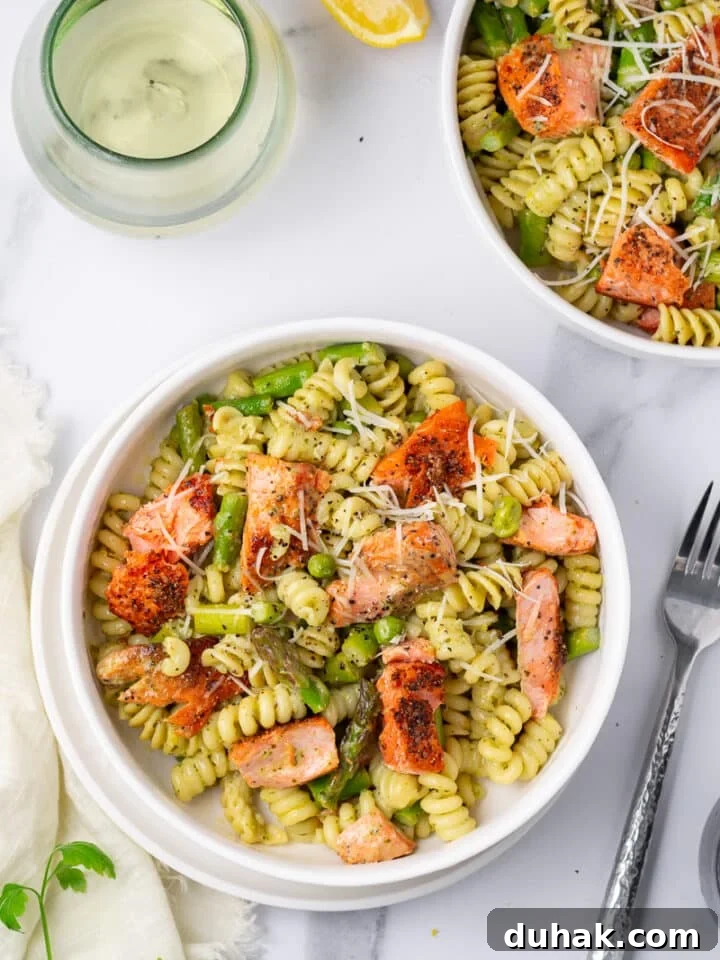
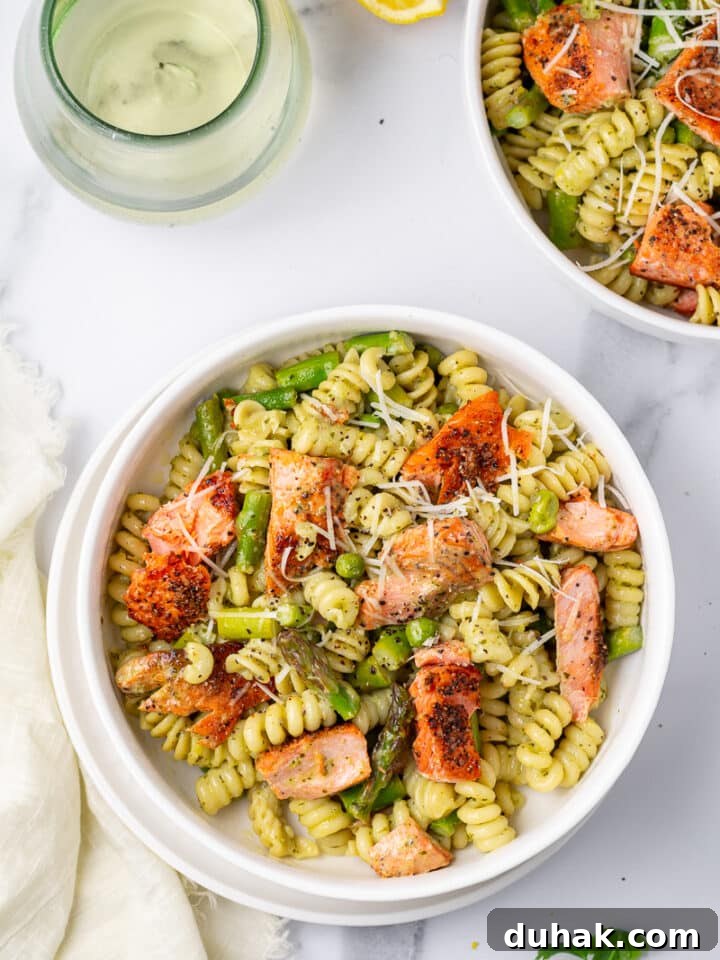
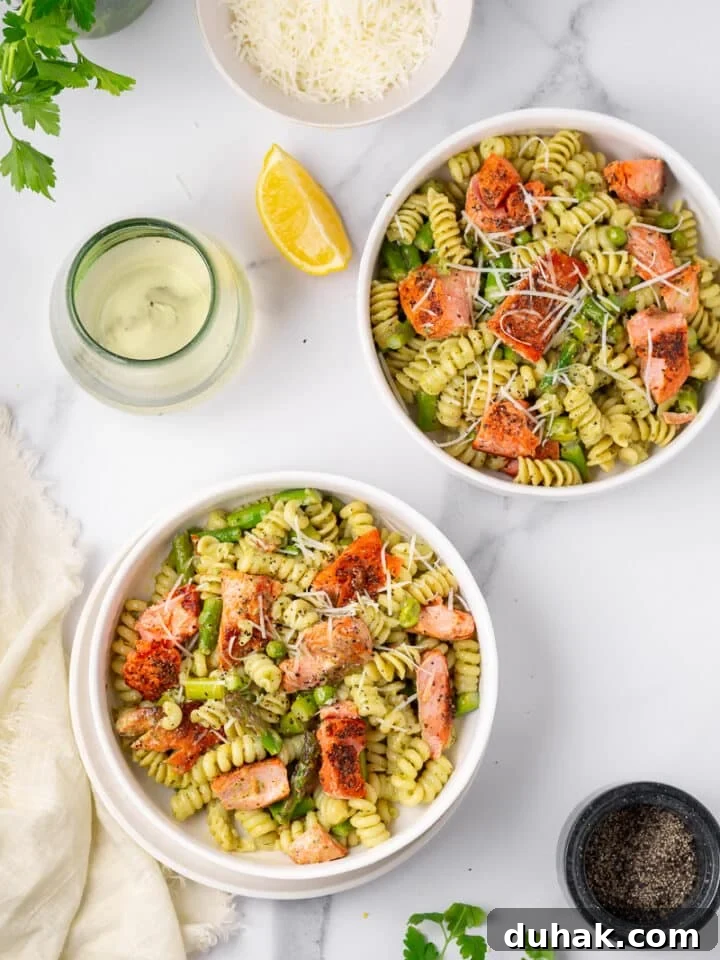
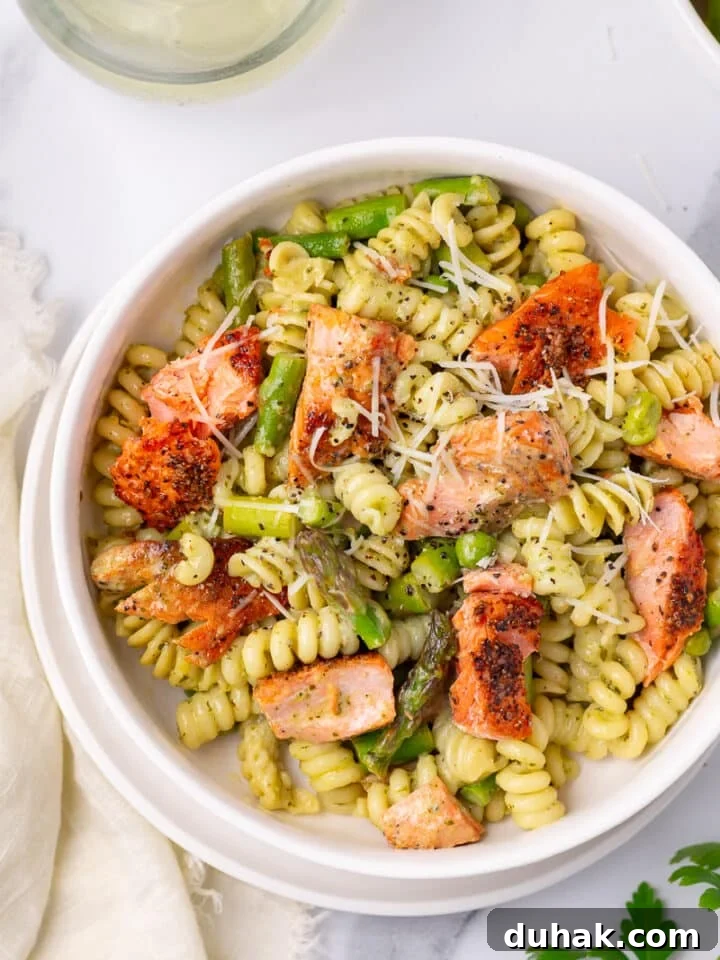
Tender salmon, vibrant spring vegetables, and aromatic basil pesto come together in a bright, satisfying salmon pesto pasta. Easy to prepare and full of fresh flavor, this creamy pasta is perfect for weeknights or a casual dinner with friends.
Erica’s Thoughts
With the first hints of spring—melting snow, birdsong, and a touch of warmth in the air—I love dishes that feel light, bright, and celebratory. This salmon pesto pasta does exactly that: protein-rich salmon, a squeeze of lemon, fresh spring vegetables, and plenty of pesto. It’s an easy classic I turn to again and again.
Why I love this salmon pesto pasta:
- Balanced. Lean protein, healthy fats, and satisfying carbohydrates all in one skillet.
- Quick and simple. Ready in under 30 minutes with basic pantry ingredients.
- Flexible. Make your own pesto or use store-bought. Swap asparagus for broccoli or spinach, add red pepper flakes for heat, or substitute protein to suit your pantry.
Pour a glass of wine and enjoy—this pasta is full of fresh, spring-forward flavor.
What You’ll Need to Make Salmon Pesto Pasta
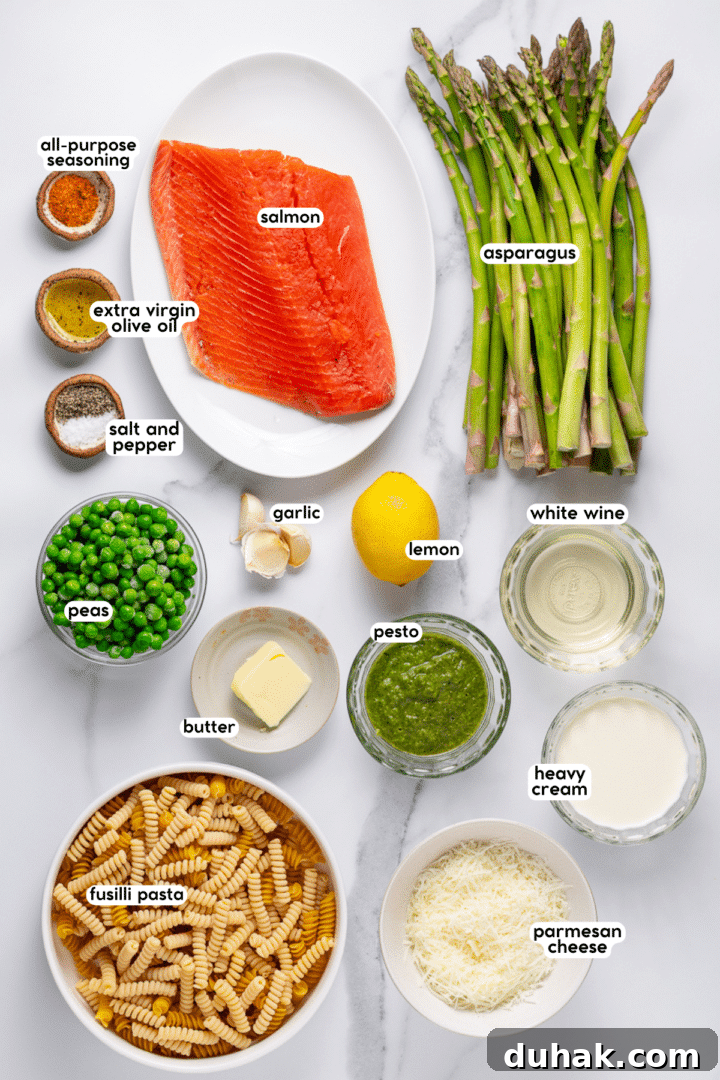
Short pasta: Fusilli, rotini, or penne work best for holding the sauce.
Salmon: Wild-caught is lean and flavorful; fresh or previously frozen both work. Cut into large chunks so it stays moist.
Seasonings: Kosher salt, black pepper, and a simple all-purpose seasoning (such as Kinders or 21 Seasoning Salute) for a boost of savory flavor.
Cooking fat: A tablespoon each of olive oil and butter to sear salmon and sauté vegetables.
Garlic: Fresh garlic gives the best aroma and depth.
Vegetables: Asparagus (thicker stalks are preferable) and peas. Frozen peas are fine—thaw slightly before using.
White wine: Used to deglaze the pan and add acidity; choose a dry white you’d enjoy drinking, like Sauvignon Blanc or Pinot Grigio.
Pesto: Homemade basil pesto is ideal (see recipe), or use fresh deli pesto from the store over jarred canned varieties.
Heavy cream: Creates a silky, luscious sauce. Half-and-half can be used as a lighter option.
Parmesan: Freshly grated from a block for best texture and flavor.
Lemon zest: Zest from a whole lemon brightens the finished dish.
Variation Ideas
- Swap salmon for grilled chicken or shrimp to change the protein.
- Use whole-grain or certified gluten-free pasta for dietary needs; legume pastas work but may soften in leftovers.
- Add other vegetables—cherry tomatoes, zucchini, or kale—to vary flavors and texture.
- Make it vegetarian by omitting the salmon and adding chickpeas or white beans for protein.
How to Make Salmon Pesto Pasta
Bring a large pot of salted water to a boil and cook the pasta according to package directions. Reserve 1/4–1/2 cup of the starchy pasta water before draining.
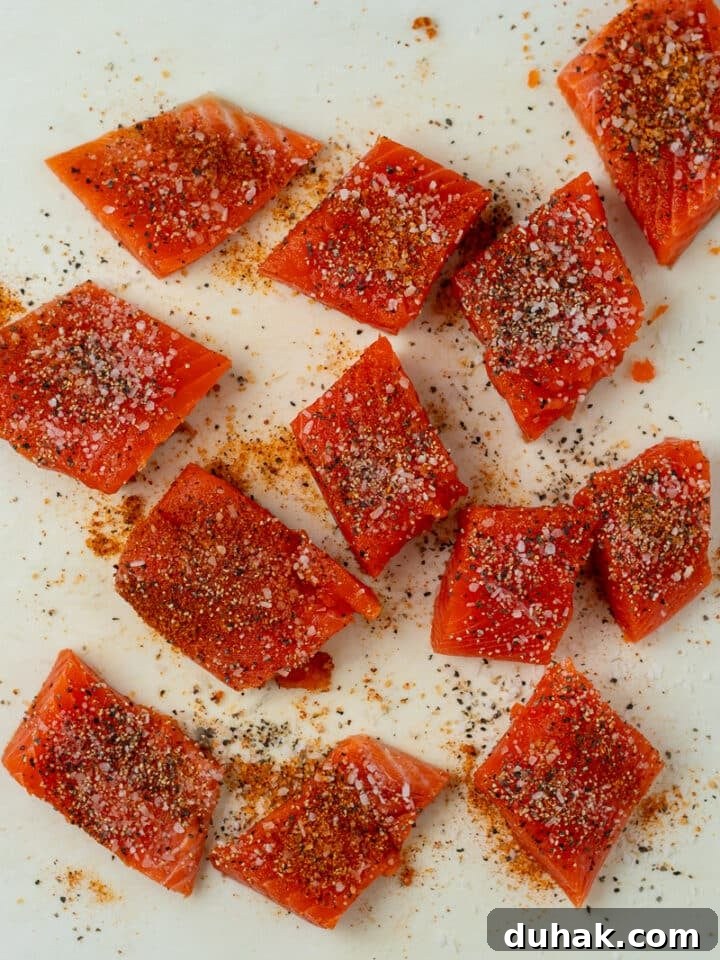
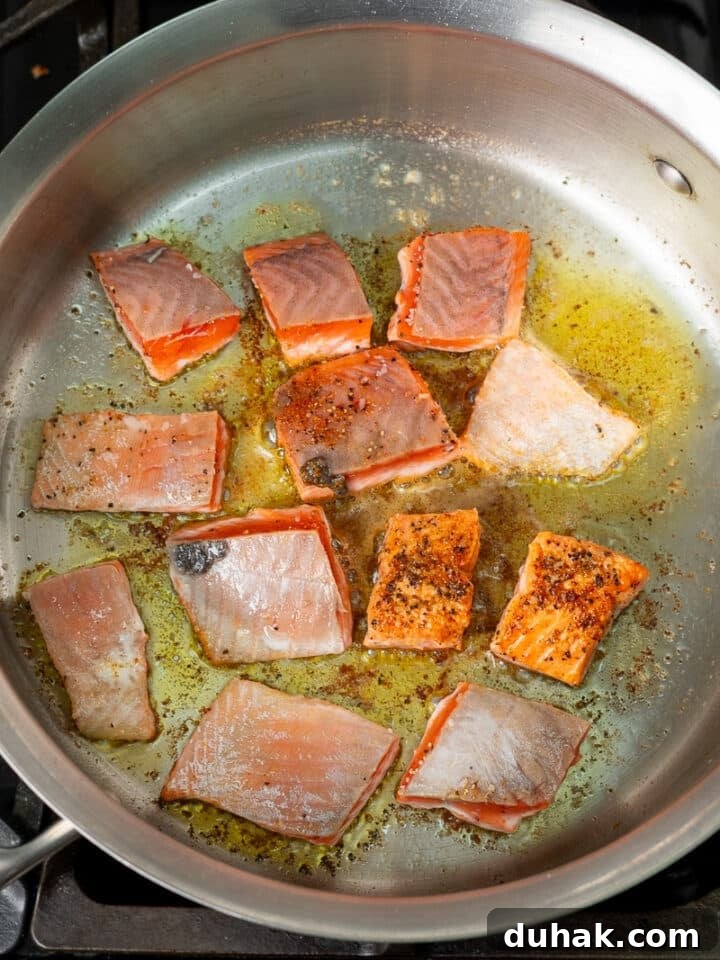
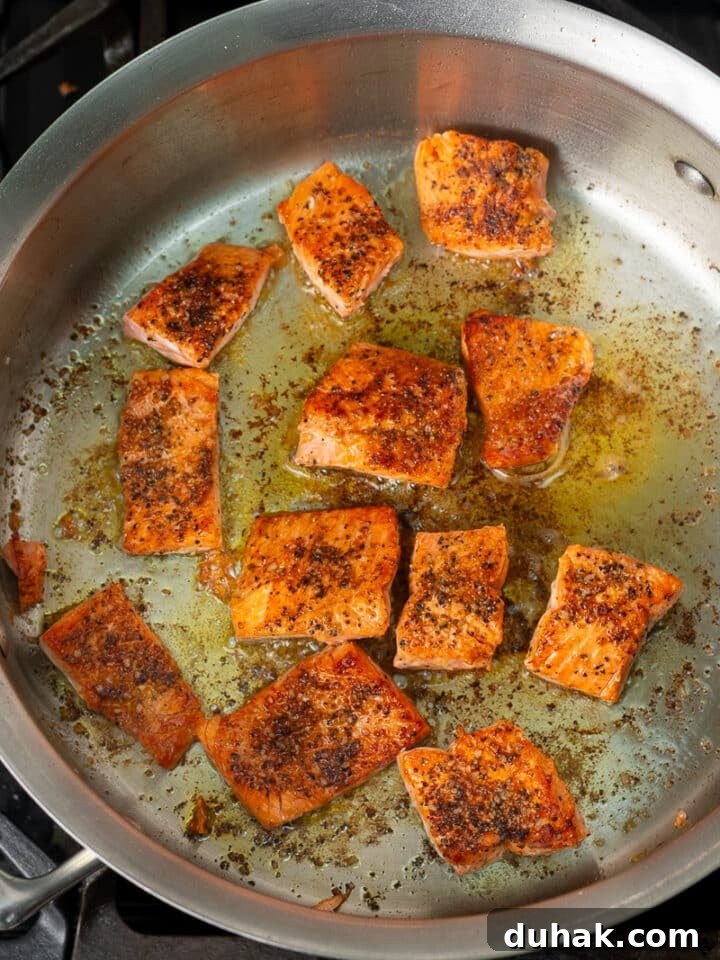
If the salmon has skin, run very hot water briefly over it to loosen the skin and peel it off, or leave the skin on and remove it after cooking. Cube the salmon into 2-inch pieces and season with salt, pepper, and a teaspoon of all-purpose seasoning. Heat olive oil and butter in a skillet over medium heat. Sear the salmon, flesh side down first, about 2 minutes, then flip and sear 2–3 minutes more until just cooked. Remove and set aside.
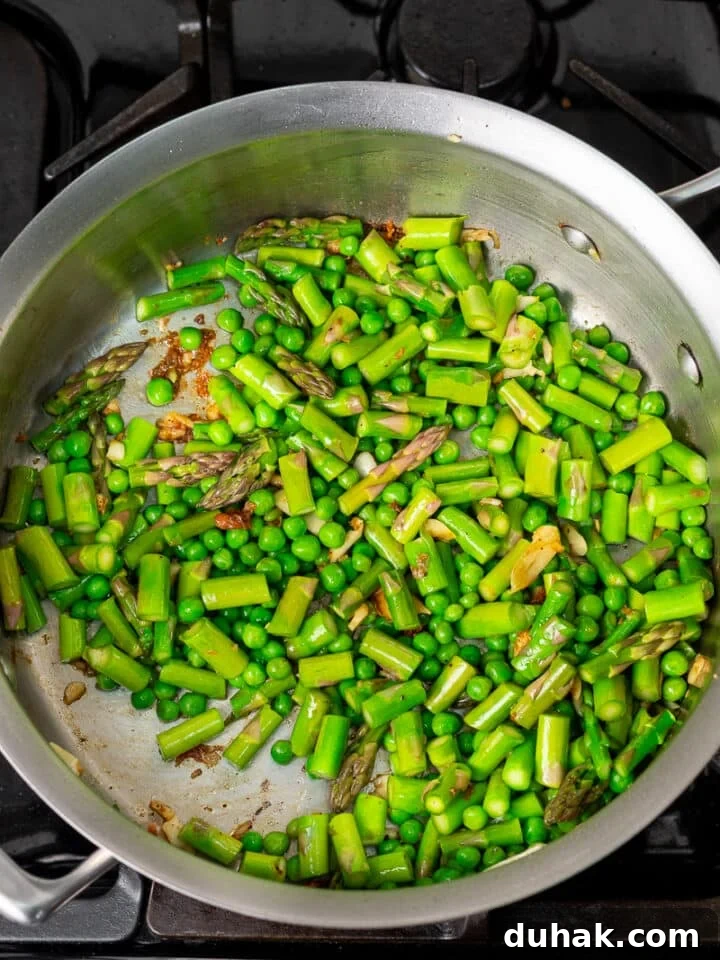
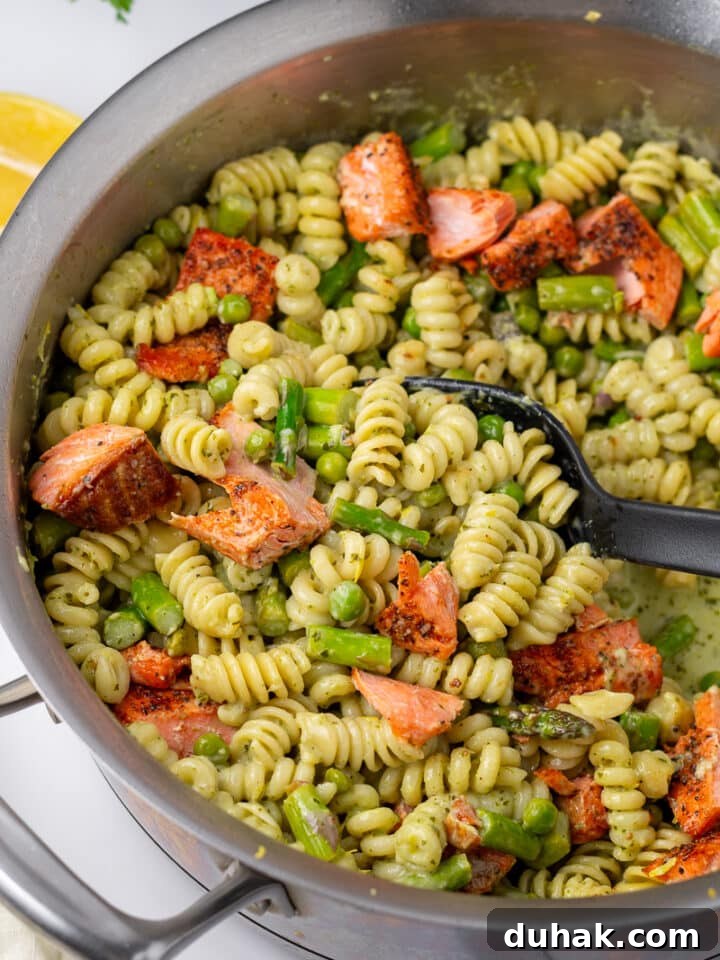
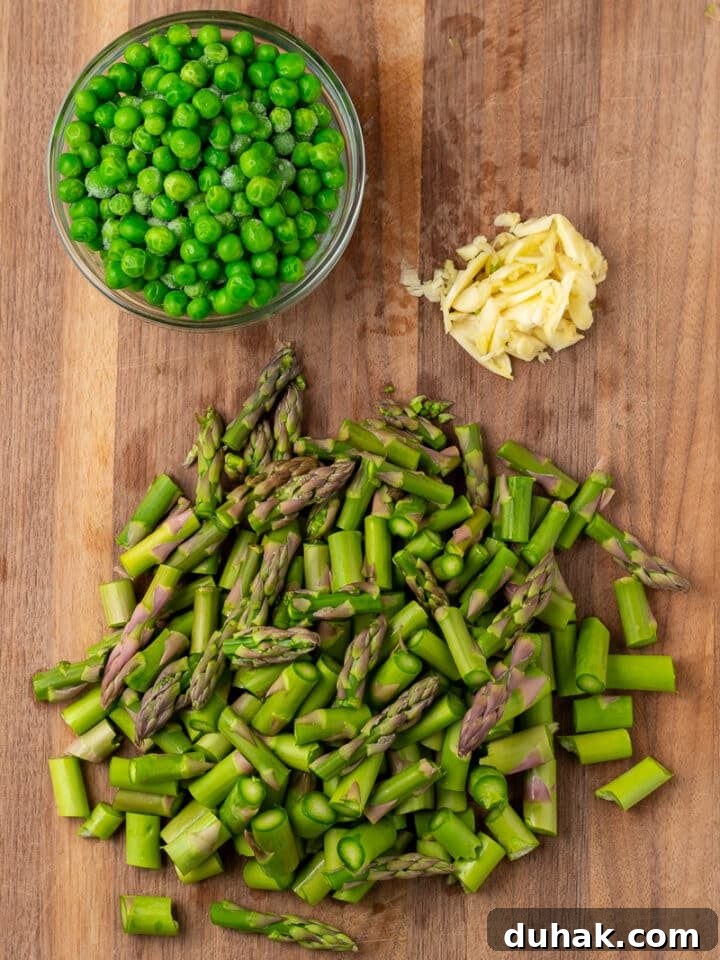
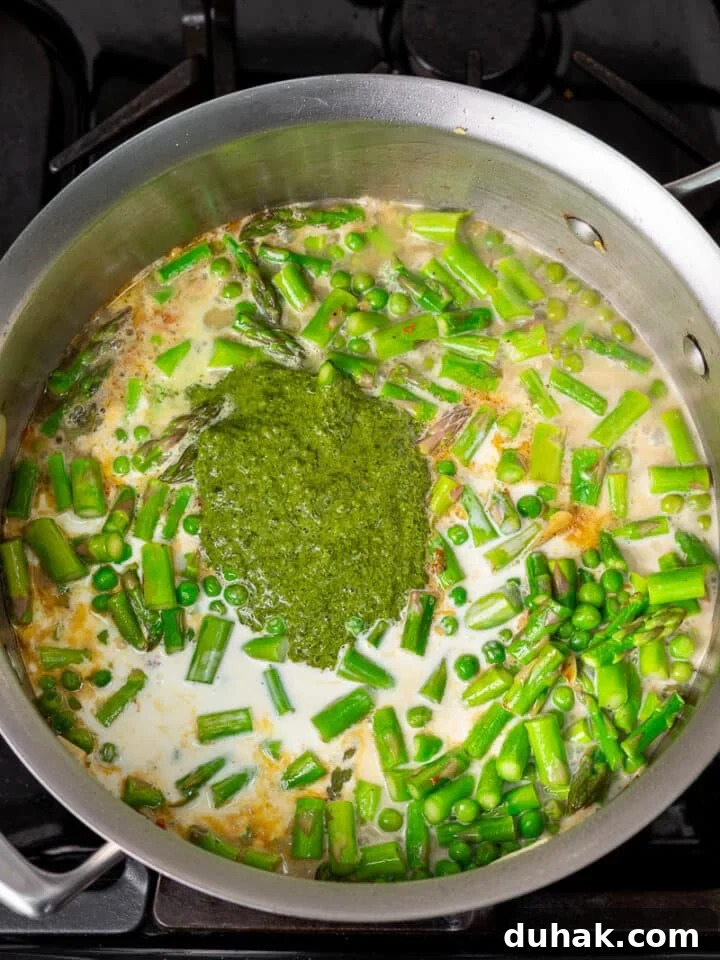
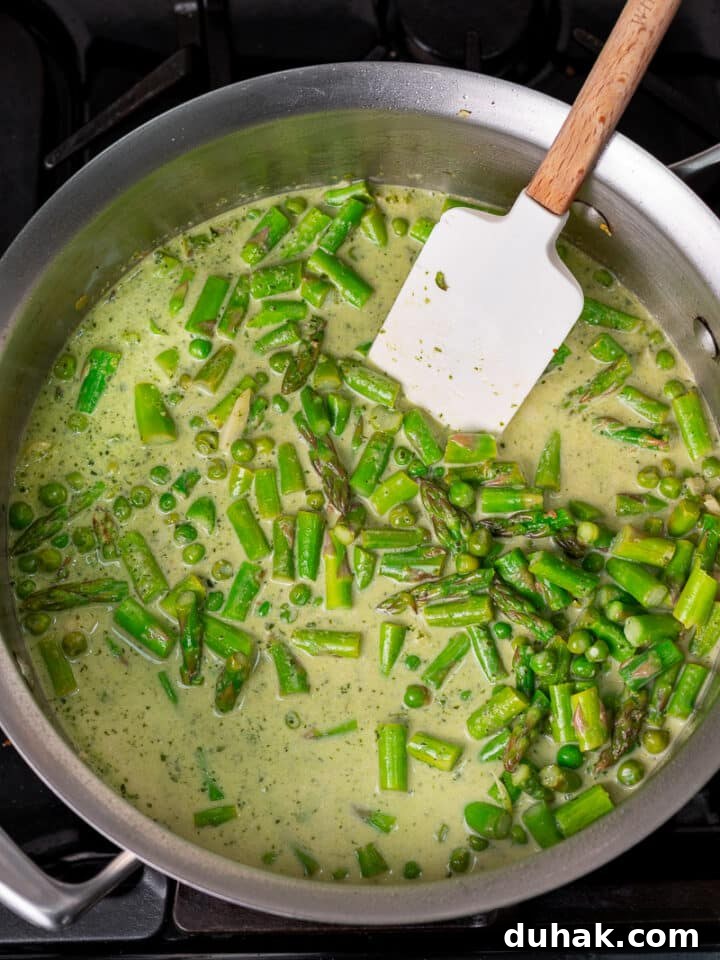
In the same skillet, sauté minced garlic, chopped asparagus, and peas for about 2 minutes, seasoning with salt and black pepper. Deglaze the pan with white wine, scraping up any browned bits. Stir in pesto, heavy cream, and freshly grated Parmesan, whisking until a smooth, creamy sauce forms. Add the drained pasta and toss to coat, thinning the sauce with reserved pasta water if needed.
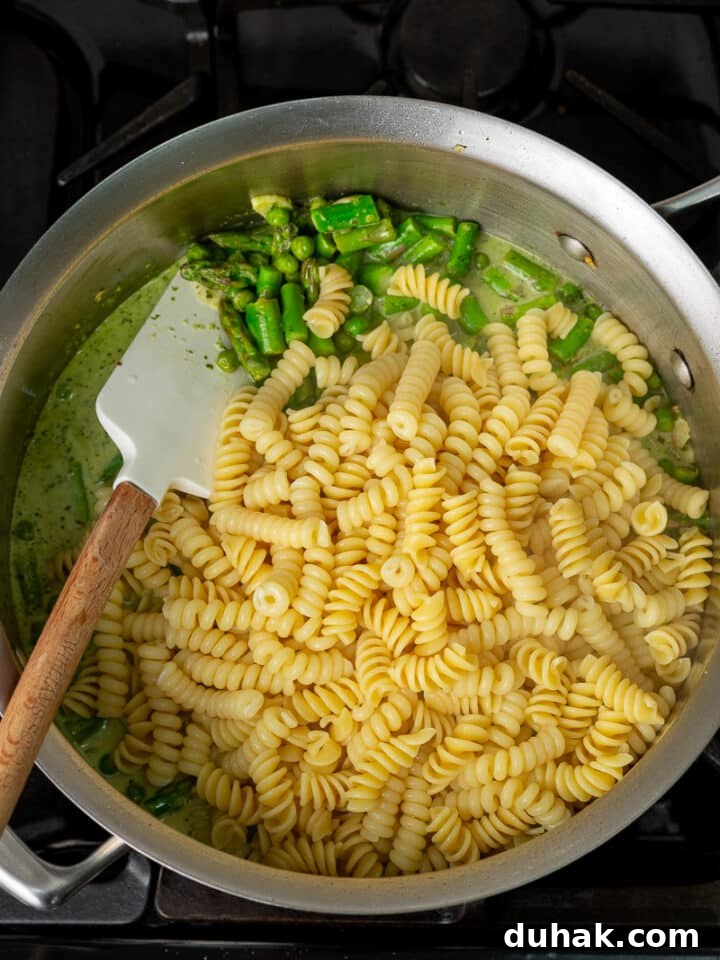
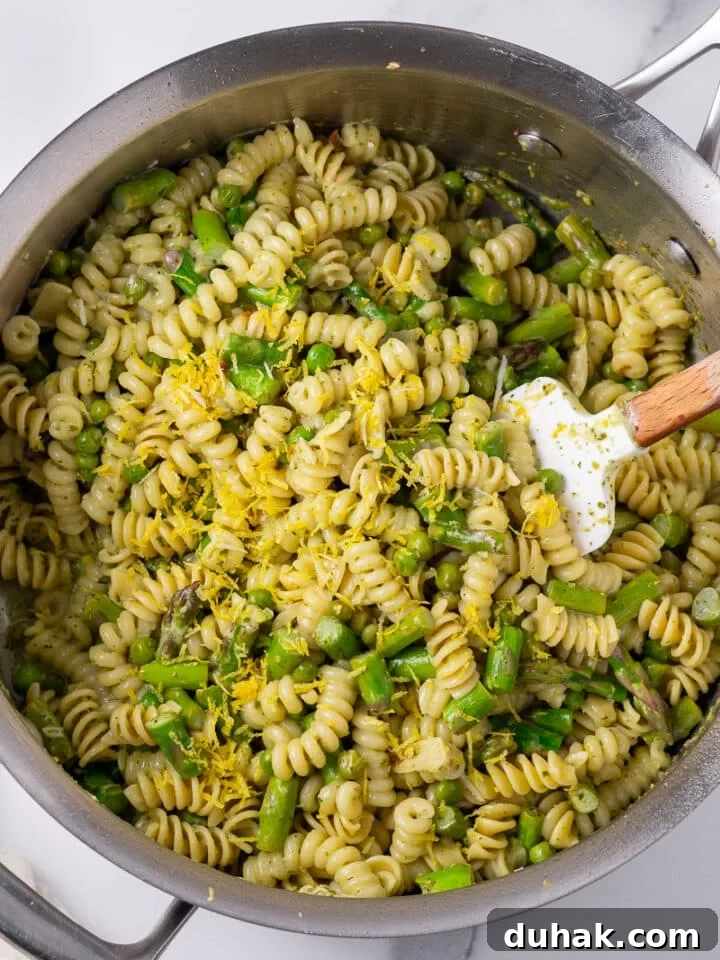
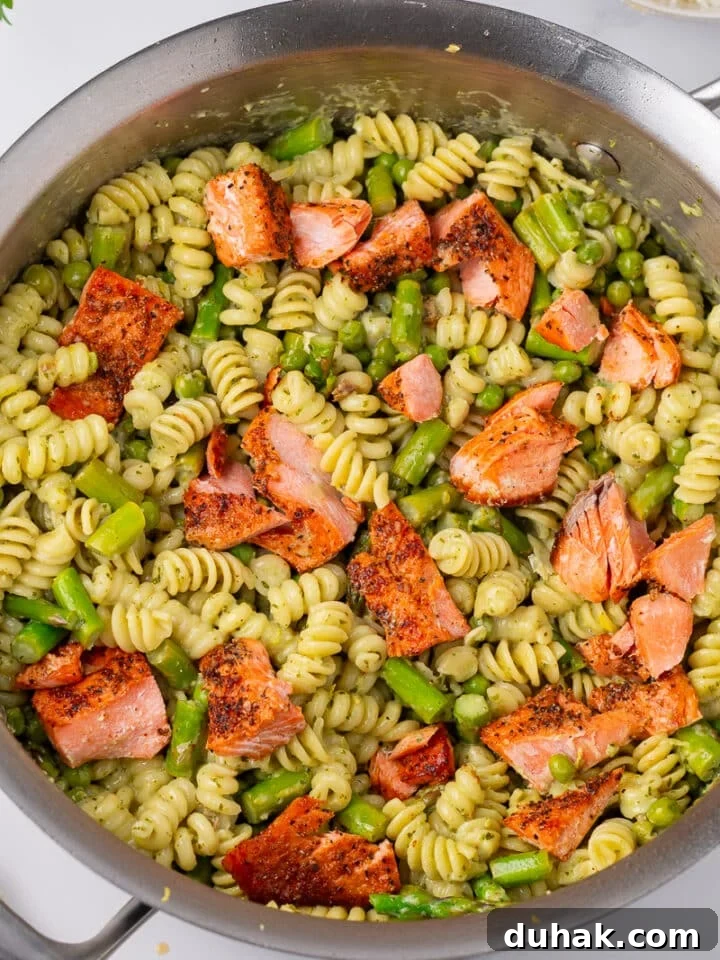
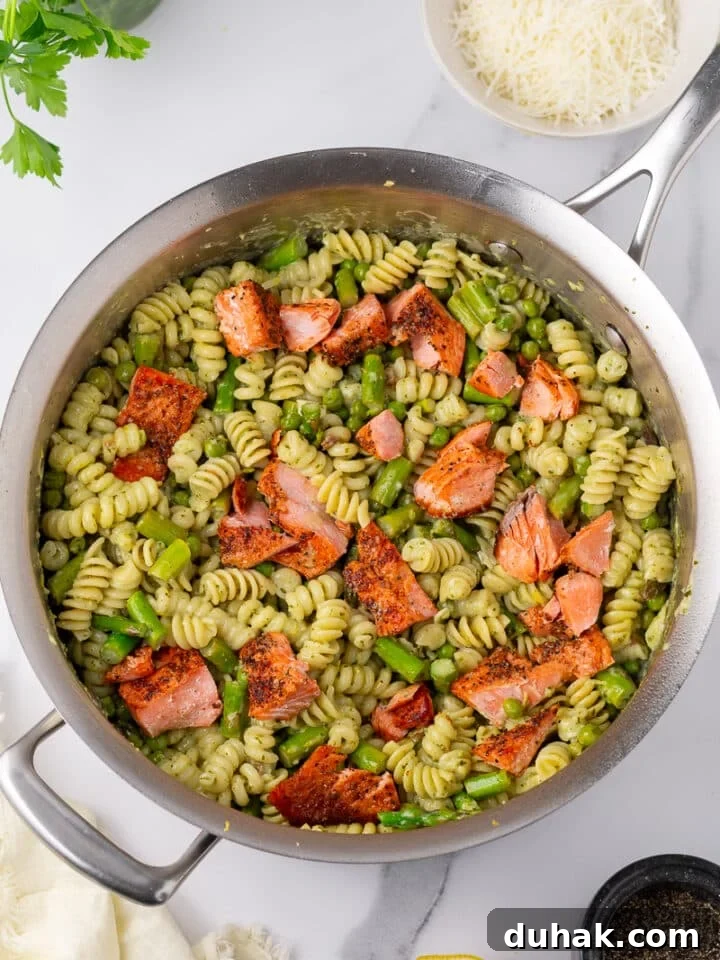
Gently fold the seared salmon and lemon zest into the pasta. Serve immediately with extra Parmesan, lemon wedges, cracked black pepper, and fresh herbs like basil or parsley.
Expert Tips
- Cook the pasta until just al dente so it holds up in the sauce and reheating.
- Don’t overcook the vegetables. They’ll continue to soften in the sauce and with the hot pasta.
- Use freshly grated Parmesan for the best flavor and silky texture.
- Cook salmon until the internal temperature reaches about 140°F for moist, flaky fish.
- Make your own pesto when possible—fresh herbs make a big difference.
- Use a good-quality white wine that you’d enjoy drinking; it will improve the sauce’s flavor.
FAQs
A dry white like Sauvignon Blanc or Pinot Grigio works well for deglazing and adds bright acidity.
Keep leftovers in an airtight container in the refrigerator for up to 3 days. Reheat gently in a skillet with a splash of water or in the microwave with a little liquid to prevent drying out.
Yes—use chicken or vegetable broth to deglaze the pan for a similar savory lift.
Swap heavy cream for coconut cream, omit the Parmesan, and use a dairy-free pesto.
Yes—choose a certified gluten-free pasta.
Absolutely. Let them thaw slightly before adding so they heat through evenly.
More delicious salmon recipes:
Smoked salmon risotto
Salmon fillets with sweet chili glaze
Salmon and quinoa salad with jalapeño vinaigrette
Chipotle roasted salmon taco bowls
Honey garlic salmon bites
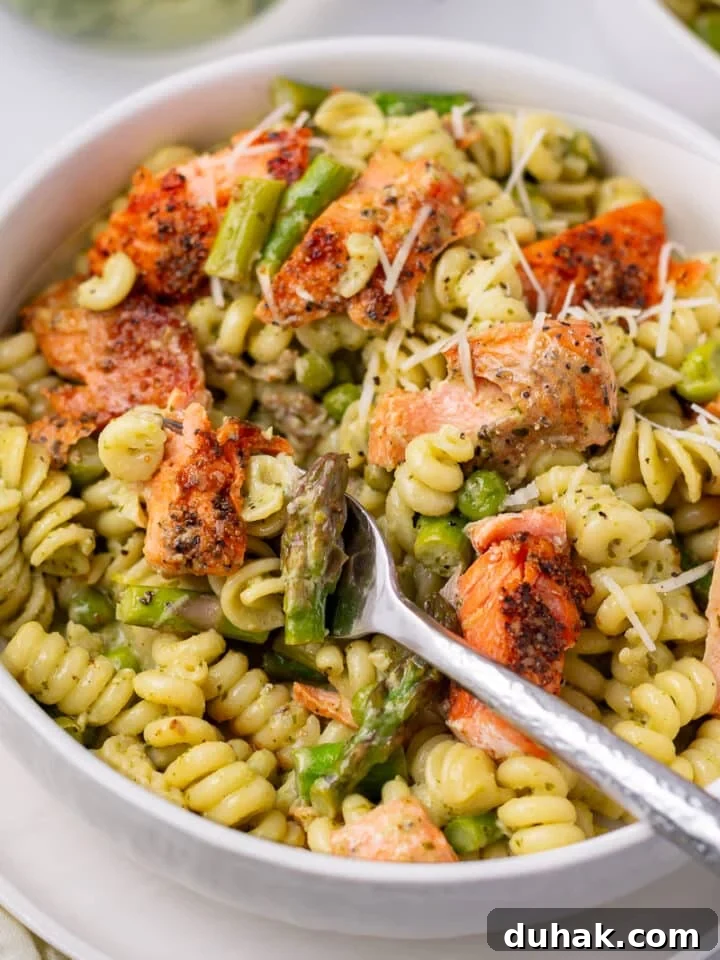
Cheers to a seriously tasty meal. 🥂
Salmon Pesto Pasta
5 from 7 reviews
- Author: Erica
- Prep Time: 10 minutes
- Cook Time: 15-20 minutes
- Total Time: 25-30 minutes
- Yield: 4 servings
- Category: Pasta
- Method: Stovetop
- Cuisine: Italian
Description
Light, lemony, and full of basil and spring vegetables, this salmon pesto pasta is a weeknight winner that will have you going back for seconds.
Ingredients
- 10 oz short pasta (fusilli or rotini)
- 1/4–1/2 cup reserved pasta water
- 1 lb salmon, cubed into 2-inch pieces
- 1 teaspoon kosher salt
- 1/2 teaspoon black pepper
- 1 teaspoon all-purpose seasoning
- 1 tablespoon olive oil
- 1 tablespoon butter
- 3 cloves garlic, minced
- 1 lb asparagus, chopped into 1/2-inch pieces
- 1 cup peas
- 1/2 cup white wine
- 1/3 cup pesto
- 1/2 cup heavy cream
- 1 cup freshly grated Parmesan
- Zest of one lemon
- For serving: extra Parmesan, lemon wedges, and fresh herbs
Instructions
- Bring a large pot of salted water to a boil and cook pasta according to package directions.
- If the salmon has skin, pour very hot water over the skin briefly to ease removal, or leave skin on and remove after cooking.
- Cut salmon into 2-inch chunks and season with salt, pepper, and all-purpose seasoning. Heat olive oil and butter in a large skillet over medium heat. Sear salmon flesh-side down for 2 minutes, flip and sear another 2 minutes until just cooked. Remove to a plate.
- Add garlic, asparagus, and peas to the skillet and sauté for 2 minutes, seasoning with salt and pepper.
- Deglaze the pan with white wine, scraping up browned bits. Whisk in pesto, heavy cream, and Parmesan. Turn off the heat and add the cooked pasta, tossing until the sauce thickens and coats the pasta. Use reserved pasta water to loosen the sauce if needed.
- Fold in lemon zest and the salmon pieces. Serve hot with extra Parmesan, a squeeze of lemon, cracked pepper, and fresh herbs.
Notes
Pasta water: I didn’t add pasta water at first when serving immediately, but adding about 1/2 cup later helped loosen the sauce and improved leftovers.
Refer to the recipe post for step-by-step photos and additional tips.
Nutrition
- Serving Size: 1/6 recipe
- Calories: 479
- Sugar: 4.5 g
- Sodium: 801.9 mg
- Fat: 18.9 g
- Carbohydrates: 43.7 g
- Fiber: 4.4 g
- Protein: 30.7 g
- Cholesterol: 57.1 mg
If you try this recipe, please leave a comment and star rating below. For more behind-the-scenes and everyday food content, follow on social platforms and subscribe to the site.