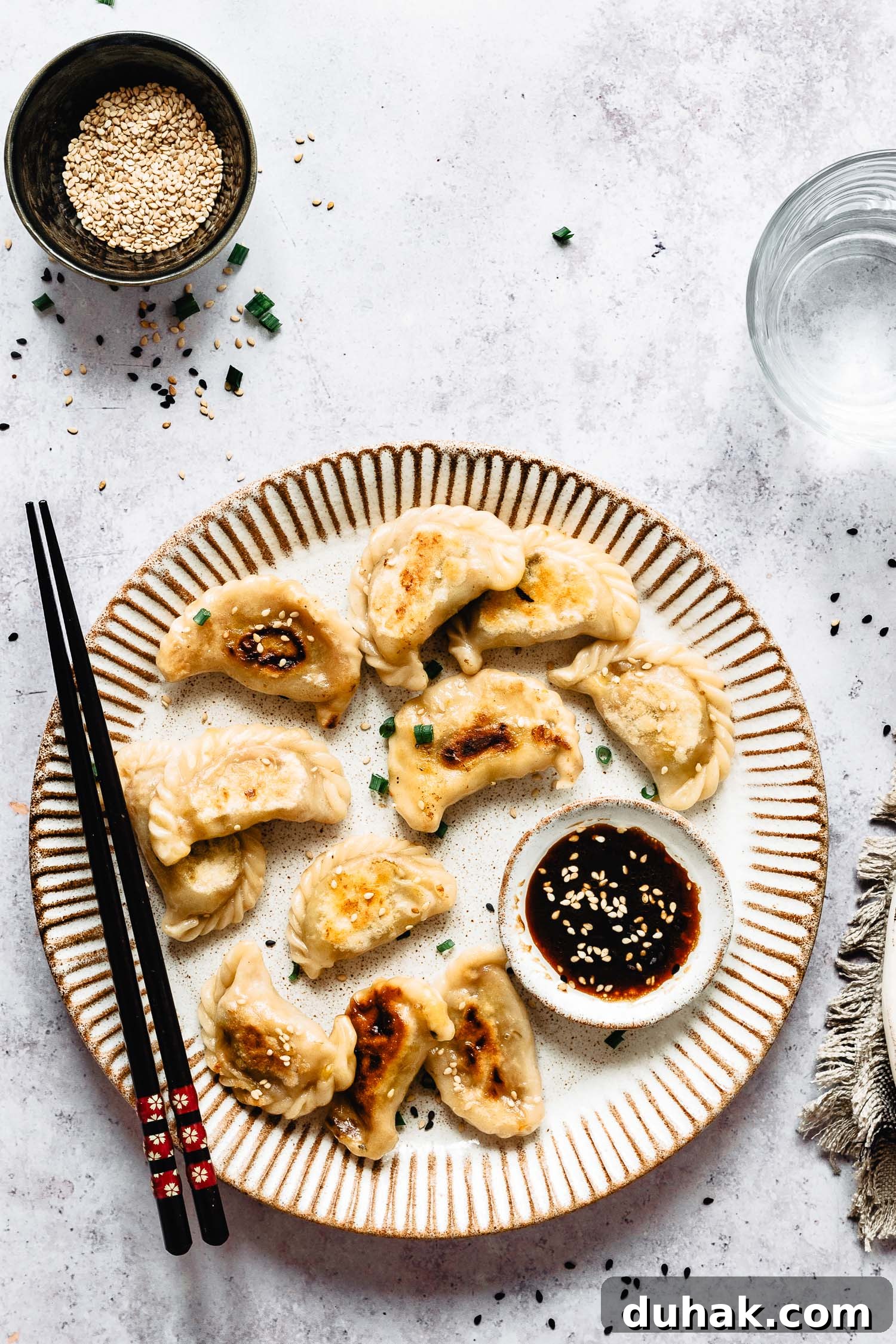
Some recipes take five minutes; others require time and become almost therapeutic. This is the case with these ravioli (more precisely, potstickers).
Fold one, fold another — it becomes a really pleasant pastime.
I’m always excited to share simple, accessible recipes: these Chinese ravioli filled with cabbage and Asian aromatics will win you over. Curious?

Beginner-friendly Chinese ravioli recipe
I have to admit: this was my first time making Chinese-style ravioli too.
Luckily, some recipes work on the first try.
My boyfriend (who, as you probably know by now, is my official taste-tester and critic) loved them. I wish I could record his reactions so you’d understand how good some dishes really are.
Back to the ravioli — rest assured: they are truly easy. The dough is like any other homemade pasta: a mix of flour and water kneaded until smooth. Let it rest, then roll it out.
The filling is simple yet very flavorful: cabbage is cooked in a pan with aromatics that enhance its taste. Ginger, chives, and garlic are perfect here. No salt is needed — just soy sauce.
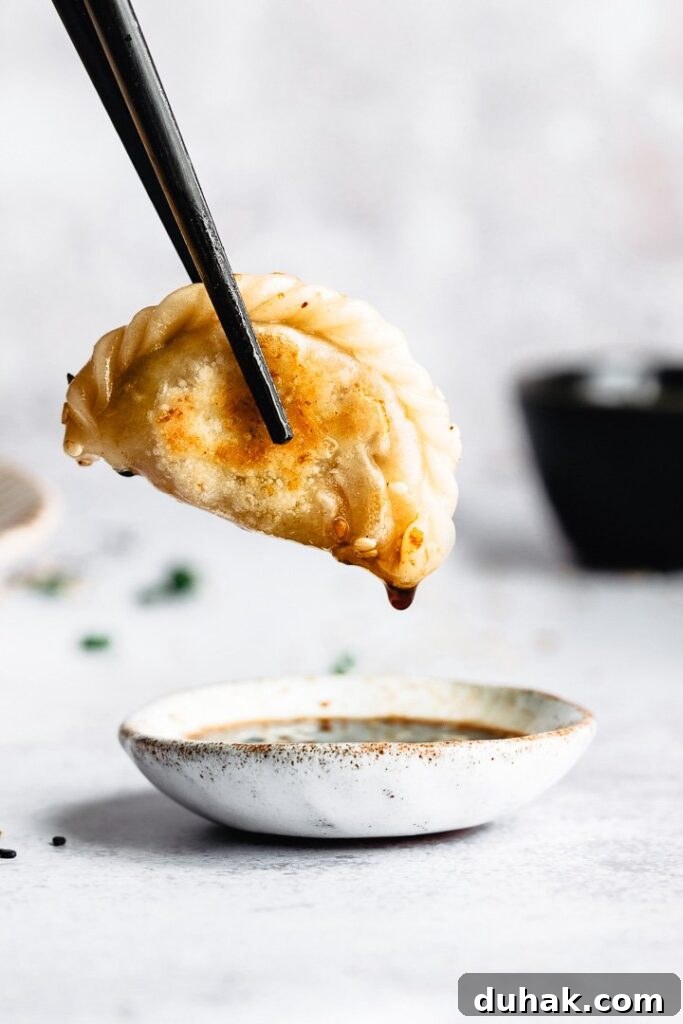
Then there’s the dipping sauce: I gave it an Italian twist with balsamic vinegar from Modena, but you can use rice vinegar for a more authentic Asian touch.
Ready to try them?
Potstickers FAQs – questions and answers
When I started researching dumplings, gyoza, potstickers and similar types, I had a few doubts — you might too. Here are answers to the most common questions:
In English, “dumplings” is the umbrella term for filled dough items. Within that category you find wontons, potstickers, gyoza, and more. Potstickers are one variety of Chinese dumpling.
In English “stick” means ‘to stick’. These ravioli are traditionally cooked with a method Andrea Nguyen calls “fry-steam-fry”: first they are pan-fried so the bottoms stick and brown, then steamed, then briefly pan-fried again — that initial sticking gives them their name.
Cook them the same way as fresh potstickers: pan-fry the bottoms in a little oil until golden, add water, cover to steam, then uncover and cook a bit more so both sides turn crisp.
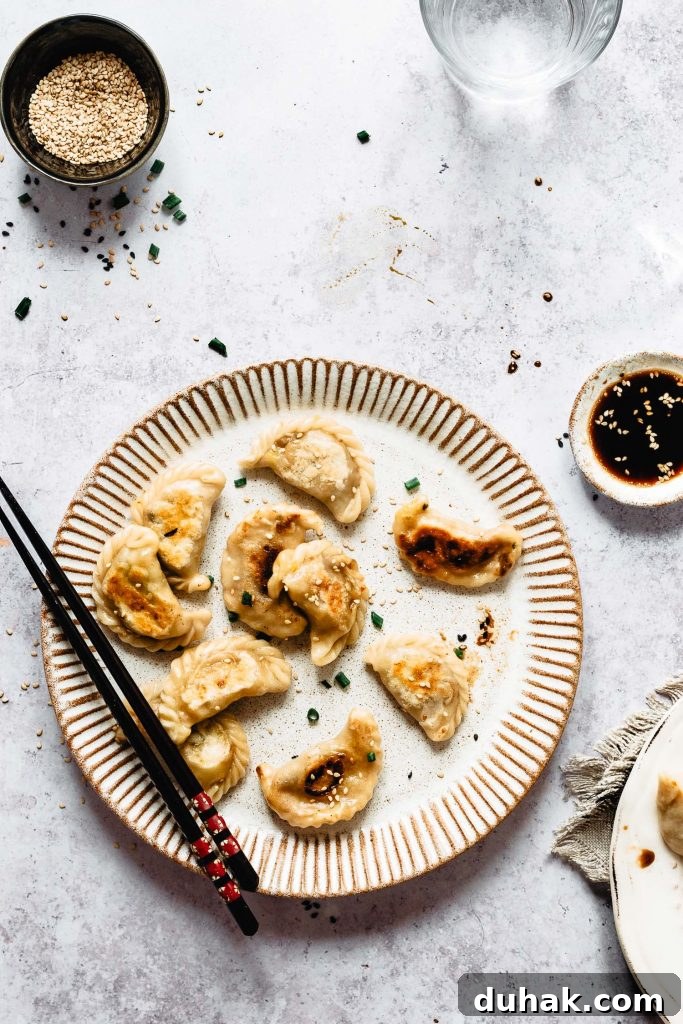
Yes — the ones in these photos were made, frozen, then cooked. You may need to cook them a couple of minutes longer. To freeze: line a tray or plate with parchment, place freshly made ravioli spaced so they don’t touch, freeze until solid, then transfer to a freezer bag.
It doesn’t take long; it depends on the amount of water and the heat. Add enough water to cover the bottom of the pan, close with a lid and let it evaporate over medium-low heat. Mine took about 5–7 minutes because they were frozen beforehand.
How to fold and seal the ravioli
This might seem like the trickiest part, but once you get the hang of it, making them becomes — as I said earlier — almost therapeutic. There are many creative folding styles; choose the one you prefer. Don’t forget these essential steps:
- Take a dough disk and hold it between thumb and forefinger;
- Place about a teaspoon of filling in the center;
- Moisten half the edge of the disk with a little water;
- Pinch the edges together to seal, choosing your preferred pleat or pattern.
It’s hard to explain creative folding in words, so I found a video that makes it easier.
VIDEO: folding demo
For this batch I chose the half-moon fold!
If you like this recipe, please give it 5 stars — it would make me so happy!

If you recreate this recipe or make your own version, tag me on Instagram or send me a DM — I love seeing your photos!

EASY CHINESE RAVIOLI
Ingredients
For 30 ravioli (2–3 people):
Dough:
- 200 g All-purpose flour (00)
- 100 g Hot water
Filling:
- 1 Spring onion – about 50 g
- 1 small carrot
- 1 small garlic clove
- 300 g Cabbage
- 1 Tbsp Fresh grated ginger
- 2 Tbsp Soy sauce
- 4 g or more Dried shiitake mushrooms
- Chives, to taste
Dipping sauce:
- 2 Tbsp Soy sauce
- 1 tsp Rice vinegar (I used balsamic)
- 2 tsp Unrefined brown sugar
- 1/2 Tbsp Neutral oil
- 1 Tbsp Water
- Sesame seeds
Instructions
For the dough:
-
You can make it by hand or with a mixer. I used a bread machine.
-
Put flour in the machine bowl and add hot water. Knead for about 10–15 minutes until a smooth ball forms.
-
Let the dough rest in the fridge for about 30 minutes.
Meanwhile, prepare the filling:
-
Soak dried shiitake mushrooms in room-temperature water.
-
Chop spring onion, carrot and garlic, then sauté in a little oil over medium heat.
-
Add cabbage cut into thin strips and cook for a couple of minutes, then cover with a lid.
-
Drain the mushrooms and chop them.
-
Add grated ginger, soy sauce, chives and chopped mushrooms to the pan. Mix and cook covered for about 10 minutes, until the cabbage softens.
-
Let the filling cool.
To assemble the ravioli:
-
Dust your work surface with cornstarch.
-
Divide the dough into 30 balls and roll each into a disk with a rolling pin.
-
Place about a teaspoon of filling in each disk and seal (follow the folding instructions earlier in the post).
-
Repeat with all dough balls.
To cook the ravioli:
-
Heat a couple of tablespoons of oil in a large pan, then cook the ravioli until their bases are golden (medium heat).
-
Add enough water to cover the bottom of the pan, cover with a lid and let them steam. The steam will finish the cooking.
-
When the water has evaporated, uncover and cook another couple of minutes until done and crisp.
For the sauce:
-
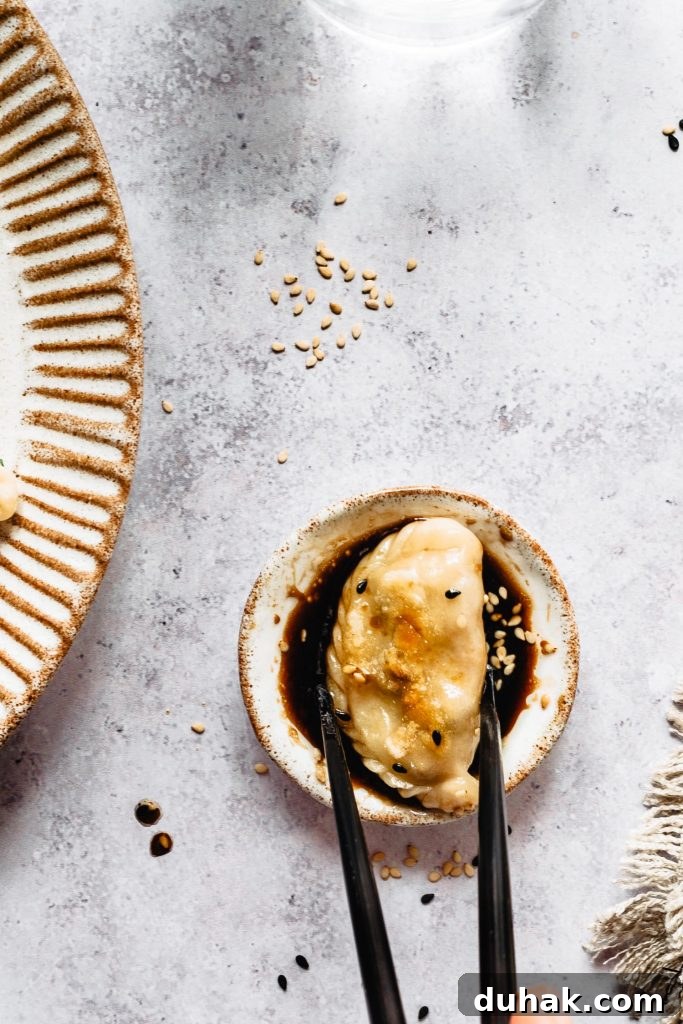
Combine all sauce ingredients. Dip the ravioli and enjoy.