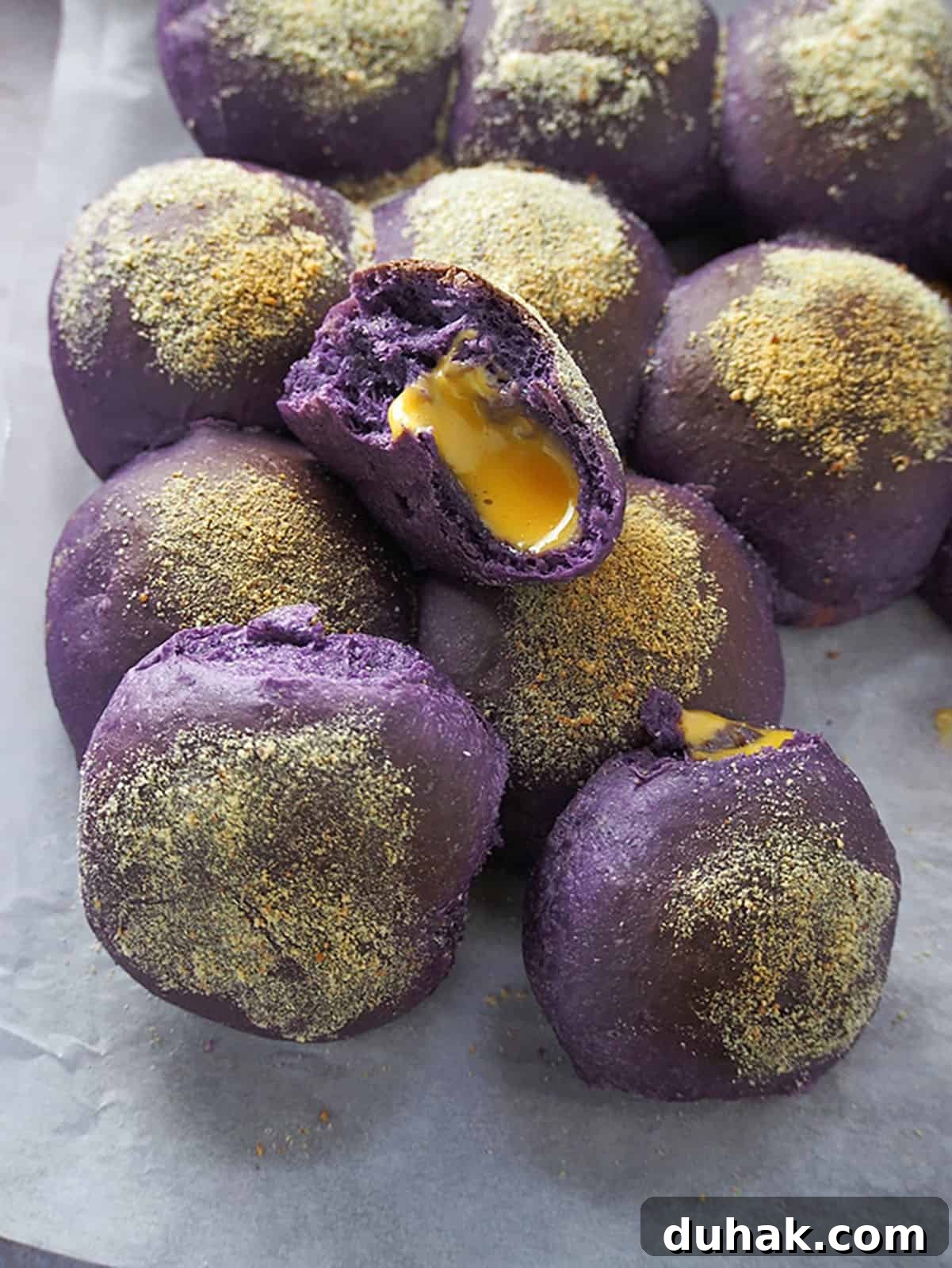
Ube Cheese Pandesal are a flavorful variation of the classic Filipino dinner roll. These soft, fluffy buns are infused with purple yam and filled with melty cheese, making them perfect for breakfast or a satisfying snack.

Hi, I’m Sanna from Kawaling Pinoy. I love experimenting with bakery favorites, and ube cheese pandesal has become one of the most popular mashups online. If you enjoy traditional pandesal, this ube version will charm you with its vivid color, rich yam flavor, and pockets of gooey cheese.
This recipe builds on our tested sweet potato dinner rolls, swapping mashed kamote for ube, coating the rolls in breadcrumbs before baking, and stuffing each ball with cheese. The result is tender, slightly sweet buns with a savory center—delicious fresh from the oven.
How to make ube cheese pandesal
Below is a clear, step-by-step guide so you can make these at home. Use the ube form you prefer—fresh, frozen, halaya, or powder—and follow the dough and assembly instructions for best results.
Step 1: prepare purple yam
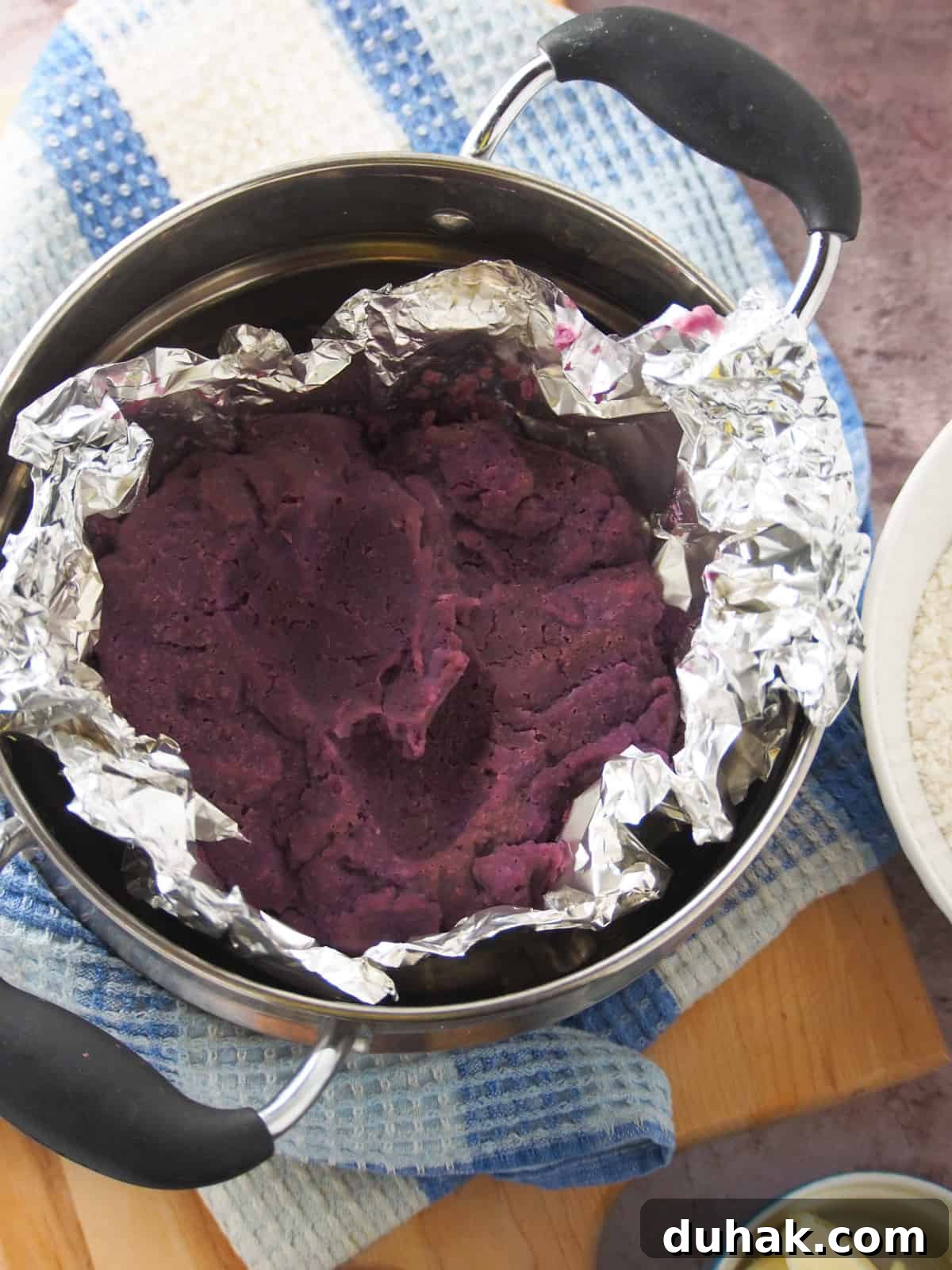
- If using frozen grated ube, thaw completely, wrap in foil with a small vent, and steam 10–15 minutes until soft. Cool slightly and mash smooth. Use ½ cup.
- For fresh ube, simmer one medium purple yam in water until fork-tender. Drain, cool enough to handle, peel, and mash until smooth. Use ½ cup.
- If using ube halaya (prepared jam), use ½ cup and reduce the sugar in the recipe to 4 tablespoons.
- For ube powder, reconstitute ¼ cup powder with ¾ cup hot water and stir until smooth.
Step 2: make the dough
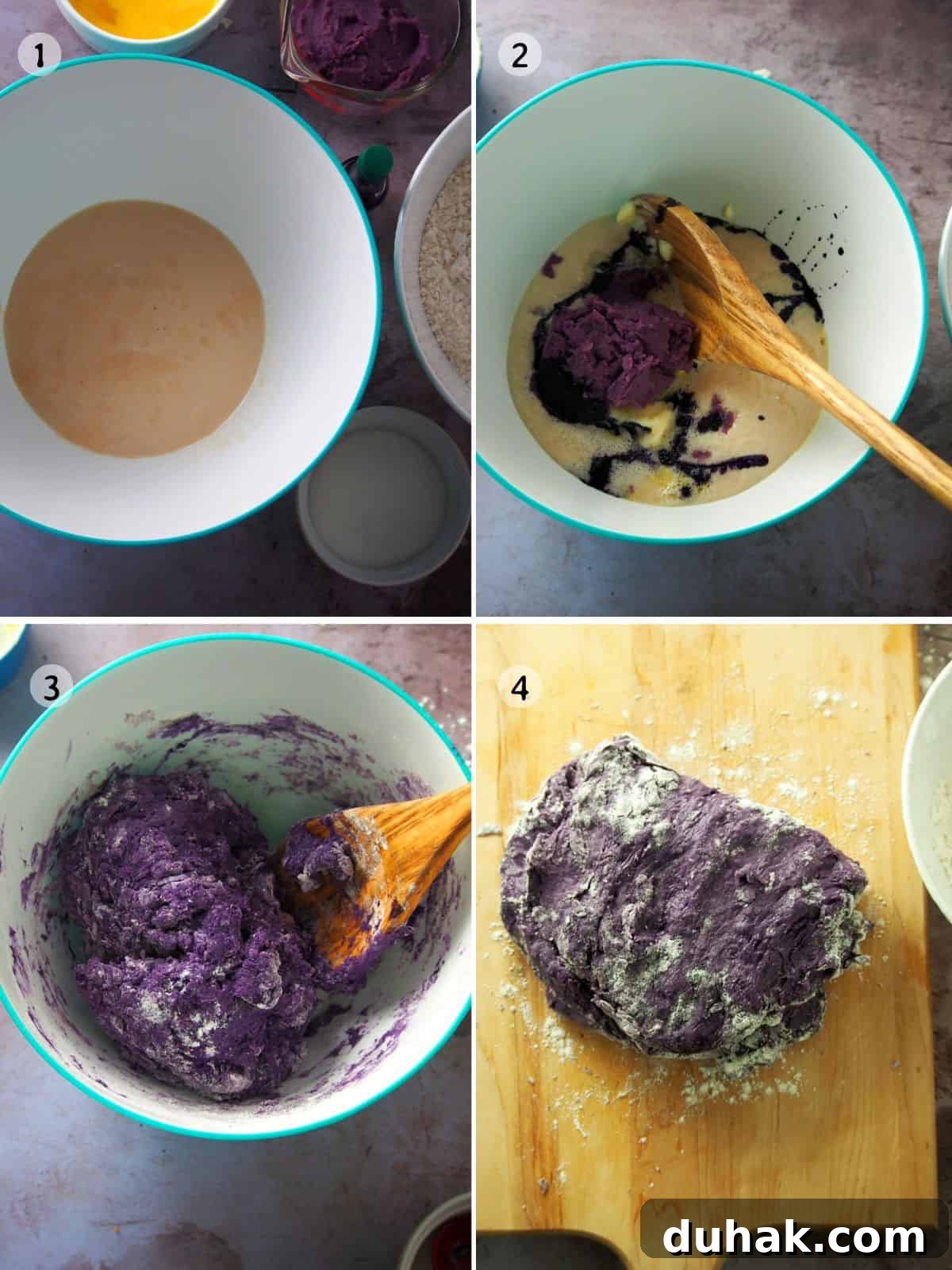
- Proof the yeast: mix ¼ cup warm water (about 105–115°F) with the active dry yeast and 1 tablespoon sugar. Let sit 5–10 minutes until foamy.
- Stir in softened butter, eggs, remaining sugar, warm milk, mashed ube, ube flavoring (if using), and salt until combined.
- Add 3 cups of flour one cup at a time, mixing after each addition until a shaggy dough forms. Add just enough of the remaining flour to manage stickiness; you may not need the full amount.
- Grease a work surface lightly with oil and turn the dough out. Use a little oil and just enough flour on your hands and surface to knead without over-drying the dough.
Step 3: knead, proof, and assemble
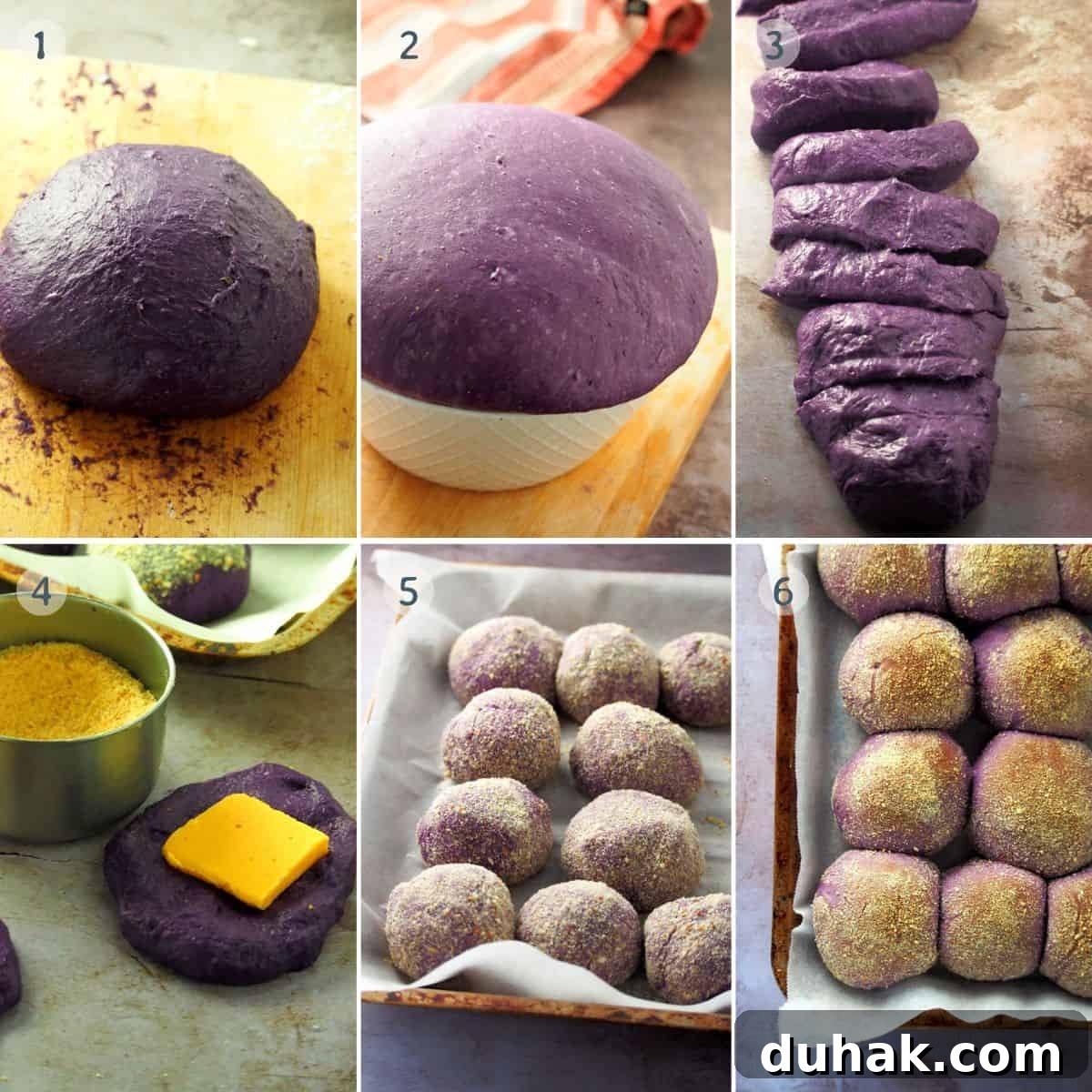
- Knead until the dough is smooth and elastic but still slightly tacky. Perform the windowpane test: stretch a small piece into a thin film without tearing to confirm adequate gluten development.
- Place the dough in a lightly oiled bowl, cover, and let rise until doubled in size (about 1½–2 hours).
- Punch down gently, form into a 20–22 inch log, cut in half lengthwise, then divide each half into 7 portions (14 total).
- Flatten each portion with your palm, place a square of cheese in the center, wrap the dough around the cheese, and shape into a smooth ball, tucking seams under to seal.
- Roll each ball in breadcrumbs and arrange on a parchment-lined baking sheet about ½ inch apart. Cover loosely and let rise 30–60 minutes until puffy and nearly doubled.
- Preheat the oven to 350°F and bake the rolls 20–23 minutes, or until lightly golden. Allow to cool slightly before eating—the filling will be very hot.
Baking tips
- Make sure proofing water is 105–115°F. If the yeast mixture doesn’t foam within 5–10 minutes, discard and start again with fresh yeast.
- The dough will lose most stickiness as you knead but remain slightly tacky—that’s normal.
- Slice cheese into thin rectangles or squares rather than cubes to distribute more cheesy filling throughout each bun.
Frequently Asked Questions
How do you use ube powder?
If fresh or frozen purple yams aren’t available, reconstitute ¼ cup ube powder with ¾ cup hot water, whisk until smooth, and use in place of mashed ube.
How to serve and store
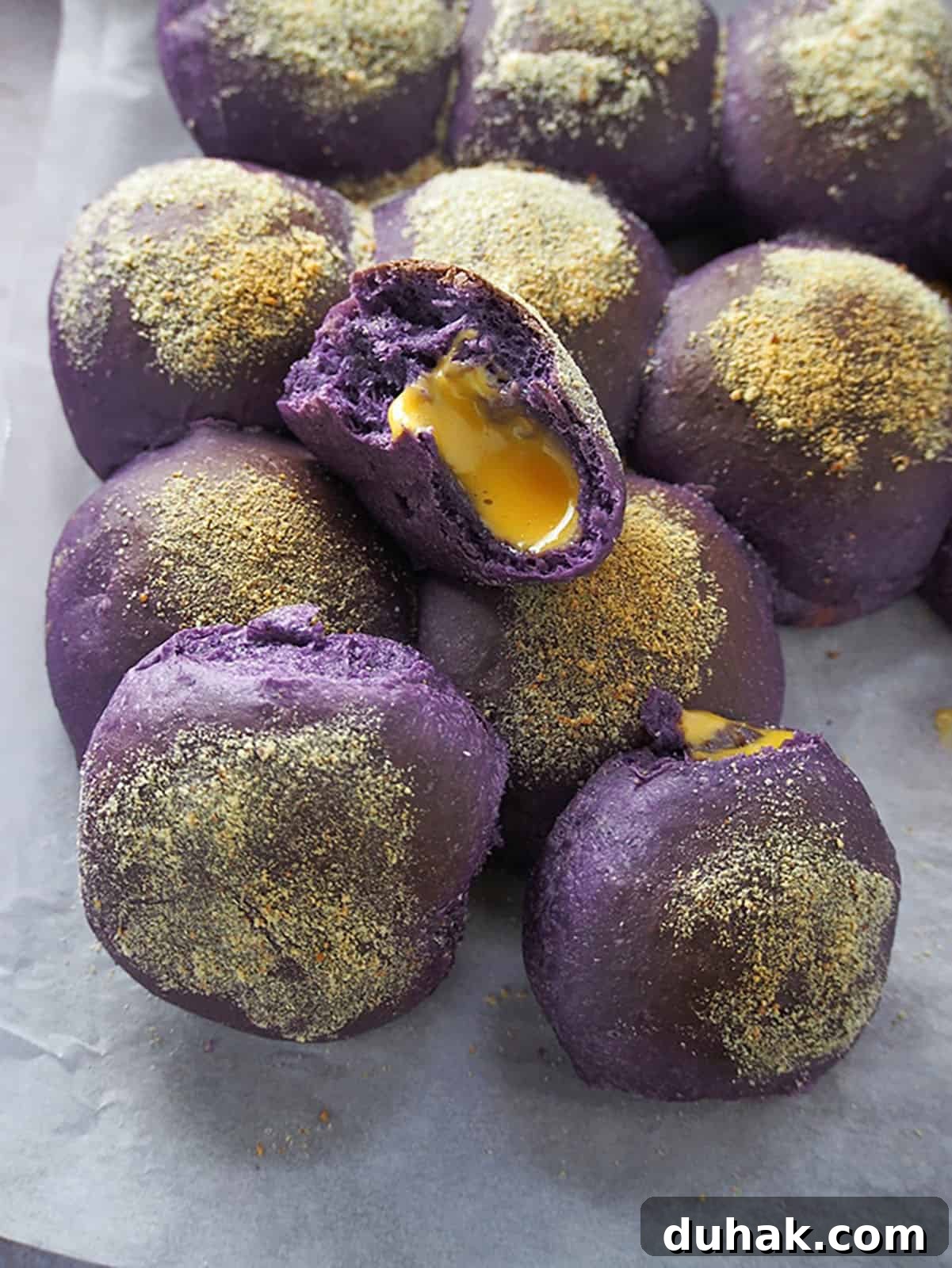
- Serve warm with coffee, tea, or your preferred drink. Fresh from the oven they’re best, but exercise caution—the cheese is hot.
- Store at room temperature in a tightly sealed container for up to two days, or refrigerate for up to one week to extend freshness.
- Reheat in a 350°F oven for 5–7 minutes until warm. For a quick reheating, microwave on a plate covered with a slightly damp towel for 30–40 seconds—watch carefully to avoid making the bread chewy.
Did you make this? Leave a review if you try the recipe and share your photos on social media to show off your ube pandesal.
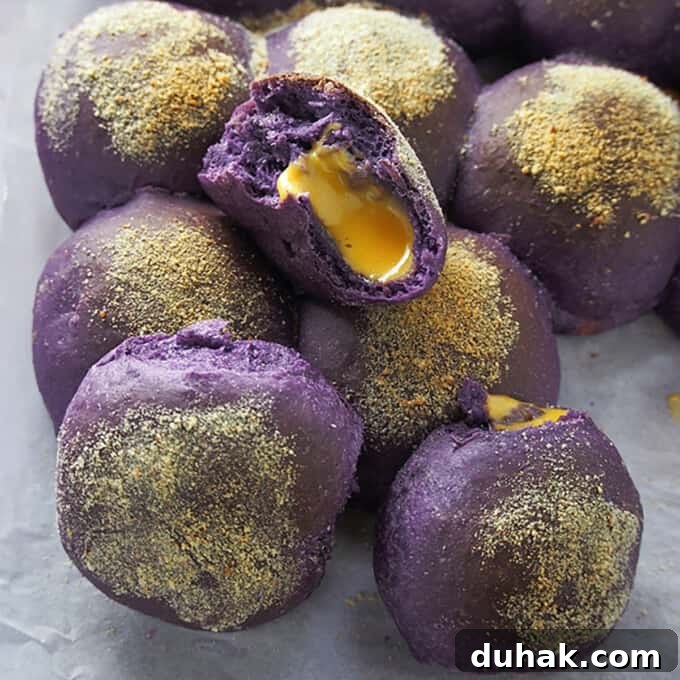
Ube Cheese Pandesal
Ingredients
- ¼ cup warm water
- 1 packet (2¼ teaspoons) active dry yeast
- 6 tablespoons white granulated sugar
- 3 tablespoons butter, softened
- 2 eggs, lightly beaten
- ¼ cup warm milk
- ½ cup mashed cooked ube
- 1½ tablespoons liquid ube flavoring (optional)
- 1 teaspoon salt
- 3½ cups flour
- 1 tablespoon vegetable oil, for kneading
- ½ pound Velveeta or other melty cheese, cut into 14 two-inch squares
- ½ cup bread crumbs
Equipment
- Baking sheets
Instructions
- In a mixing bowl, combine warm water and yeast with 1 tablespoon sugar. Let stand 5–10 minutes until foamy.
- Add butter, eggs, remaining sugar, warm milk, mashed ube, ube flavoring (if using), and salt. Mix until combined.
- Add 3 cups flour, one cup at a time, stirring until a shaggy dough forms. Add just enough of the remaining flour to manage stickiness.
- Grease a work surface with oil and turn out the dough.
- Grease your hands and knead until smooth and elastic but still slightly tacky.
- Place dough in a lightly oiled bowl, cover, and let rise 1½–2 hours until doubled.
- Deflate and shape into a 20–22 inch log. Cut into 14 portions.
- Flatten each portion, add a cheese square, wrap and seal into a ball.
- Roll each ball in breadcrumbs and arrange on a parchment-lined sheet ½ inch apart.
- Cover and let rise 30–60 minutes until puffy and nearly doubled.
- Preheat oven to 350°F.
- Bake 20–23 minutes until lightly golden. Cool slightly before serving.
Notes
- Ensure proofing water is 105–115°F so yeast activates without being killed by excessive heat.
- Use a small amount of oil and flour while kneading to keep the dough soft; too much oil prevents proper rise and too much flour dries the dough.
- Do the windowpane test to confirm the dough is well-kneaded: stretch a small piece until it forms a thin translucent film without tearing.
- Cut the cheese into thin squares for more even cheesy pockets inside each bun.
Video
Nutrition Information
This nutrition information is approximate and provided for convenience.