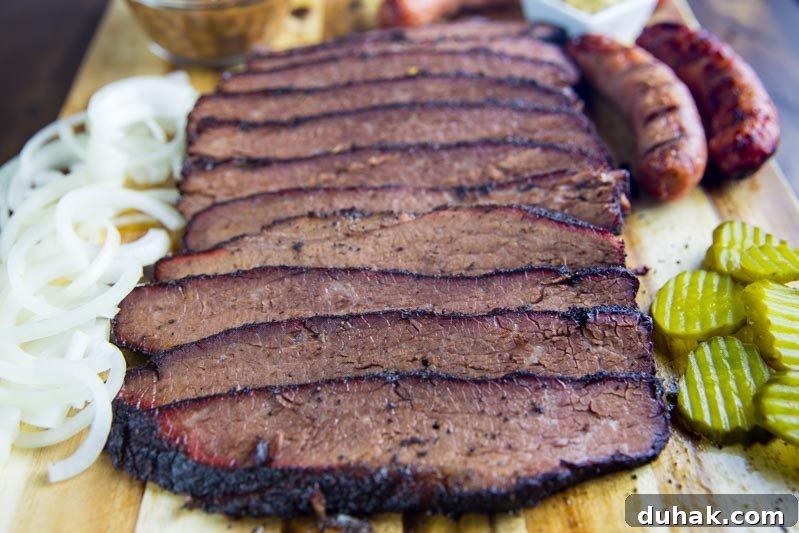
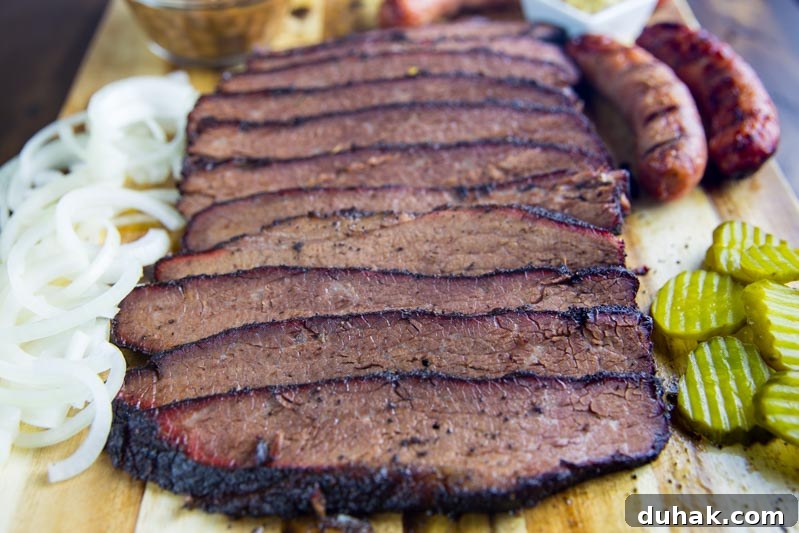
Combining modernist cooking with classic barbecue isn’t simple. I spent a weekend working out how to pair my Sous Vide Supreme with a brisket flat so I could get both perfect texture and real smoke flavor. Sous vide produces reliably tender, moist meat, but I wanted that traditional bark and smokiness from the pit. In this article I’ll explain the process I used and the results for Smoked Sous Vide Brisket Flat.
What is Sous Vide?
Sous vide, French for “under vacuum,” means sealing food in a bag and cooking it in a precisely controlled water bath. Unlike ovens or smokers, a sous vide device holds temperature within a fraction of a degree. For a lean, sometimes temperamental cut like brisket flat, that control is invaluable: it lets collagen slowly turn into gelatin at a steady temperature without pushing the muscle fibers into dryness.
That steady environment is the reason sous vide is so useful for flat cuts that otherwise have a tiny window between tough and dry in a traditional long smoke.
The Strategy: Smoke vs. Bath
The big debate is whether to smoke before or after the sous vide bath. For this cook I chose to sous vide first, then finish with smoke.
Starting with the water bath allows you to focus on texture: holding the brisket at a steady temperature for 36 hours tenderizes the lean flat without drying the exterior. After the sous vide, the brisket is chilled and then finished on the Big Green Egg to add real smoke flavor and develop a crispy bark.
Chilling the cooked meat before smoking helps it absorb smoke as it warms, and finishing on the Egg creates the crusty bark BBQ fans expect. The sous vide takes care of tenderness; the smoker provides smoke and bark.
Why the Brisket Flat?
The flat is the leanest part of the brisket, which makes it easy to dry out during a long smoke. Using sous vide removes that risk by stabilizing the interior texture so the smoker only needs to add flavor and bark.
Step 1: Trimming the Brisket Flat
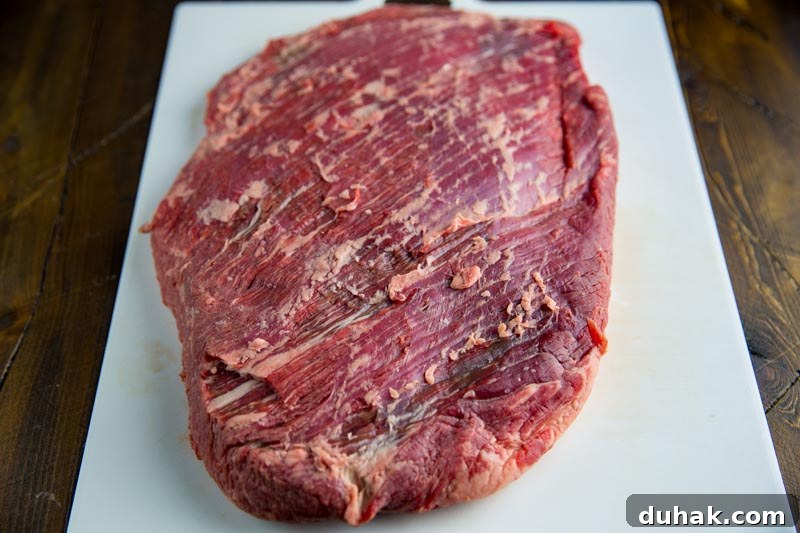
Trimming and sizing the flat
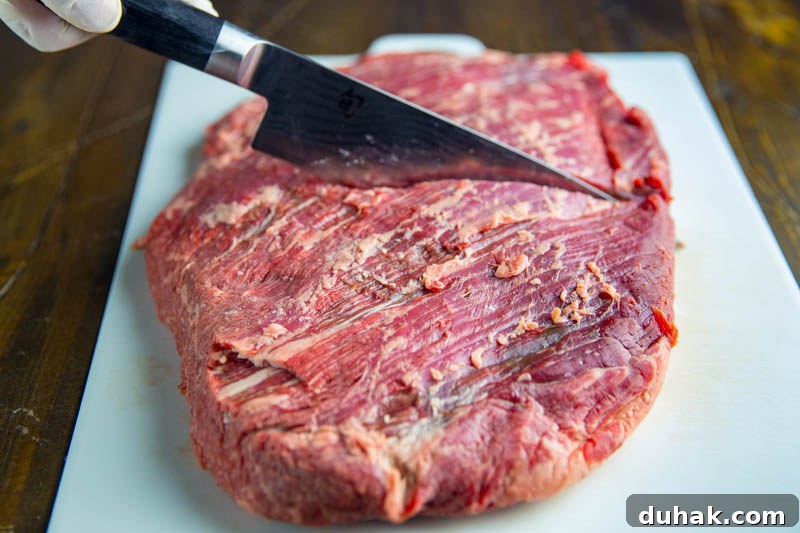
Trimming a brisket flat requires precision. Without a fatty point to rely on, you must leave just enough fat to protect the meat during smoking while exposing the meat so rub and smoke can work effectively.
- The Fat Cap: Flip the brisket and trim the fat cap to a uniform 1/4 inch. This shields the meat on the Egg and supplies just enough rendered fat as it cooks.
- The Meat Side: Remove silver skin and hard fat so the rub and smoke can directly season the muscle.
- The Sizing: Cut the flat into two pieces so it fits easily into sous vide bags and the water bath. Smaller pieces also increase exposed surface area for better bark development.
Why Cut the Flat?
Dividing the brisket helps ensure each piece is fully submerged and cooks evenly in the water bath, eliminating cold spots or trapped air in the bag.
Step 2: The Seasoning
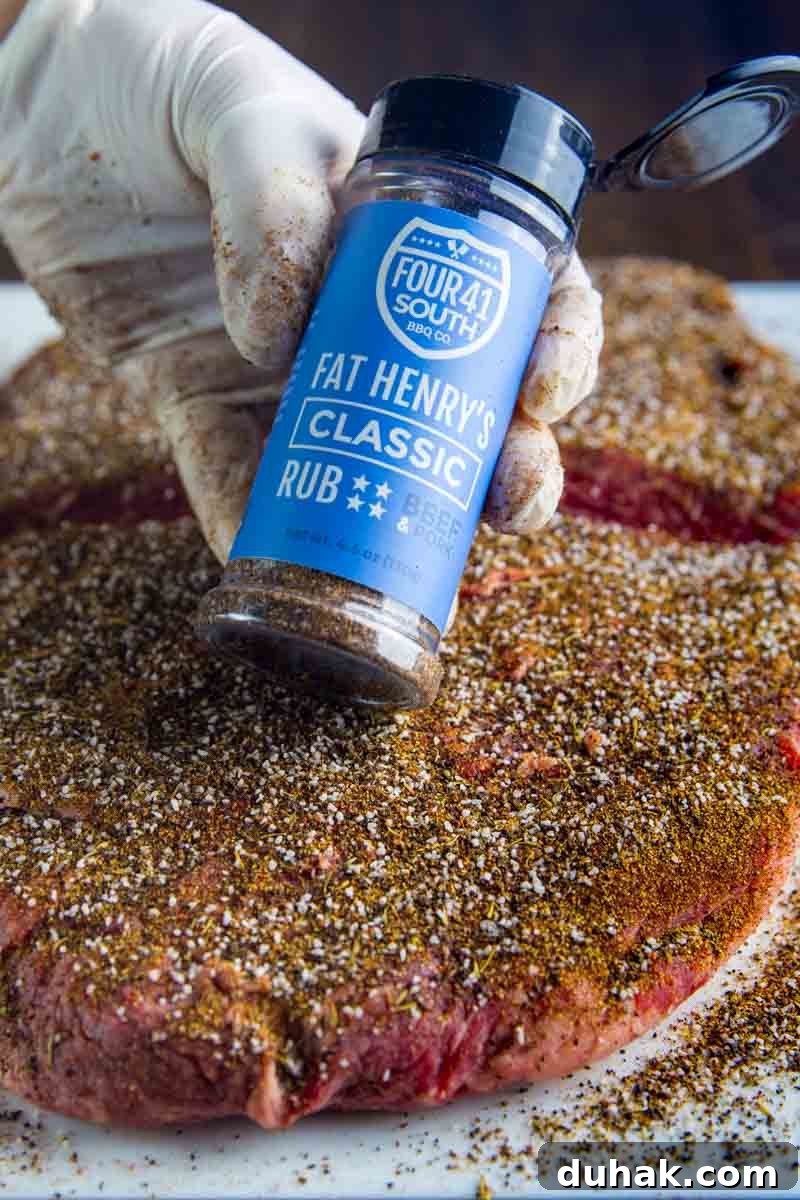
With the flat trimmed, build a robust seasoning profile. Brisket can handle generous seasoning, so apply the rub liberally on all sides.
- Choice of Rub: I used a savory commercial rub that complements beef without overpowering smoke. Plenty of store-bought brisket rubs work well.
- Traditional SPG: For a classic option, use a simple mix of Kosher salt, coarse black pepper (16-mesh), and garlic powder in roughly a 1:1:0.5 ratio.
Why Liberal Application?
Seasoning forms the basis of the bark: salt draws moisture to the surface while pepper and spices trap smoke. A generous coating ensures flavor reaches every bite of the thick flat.
Step 3: Sealing for the Bath
After seasoning, prepare the brisket for its extended sous vide cook. Proper sealing preserves flavor and prevents water ingress.
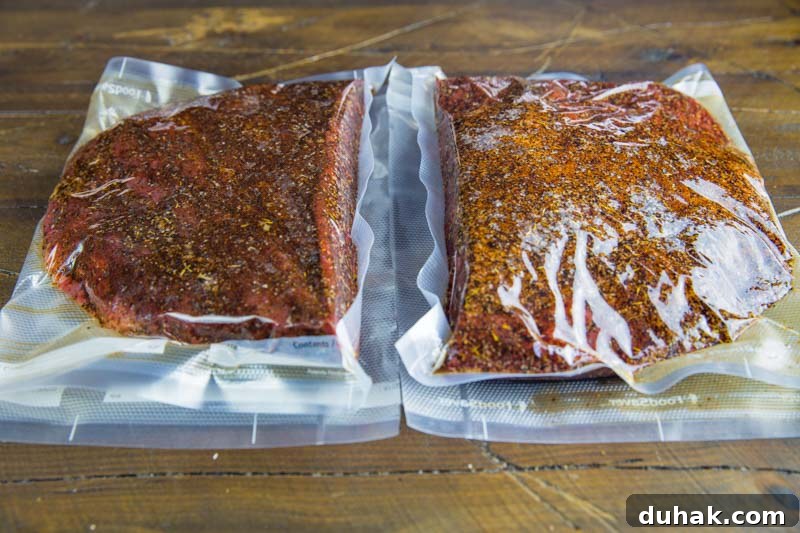
- Vacuum Seal: Place each seasoned half in a heavy-duty sous vide bag and vacuum seal tightly.
- Double Check: For a 36-hour cook, use a double seal to avoid failures that let water into the bag.
- Flavor Lock: Sealing the meat raw allows the rub to begin dry-brining and concentrates juices that will mingle with the spices during the bath.
Why Seal Before Smoking?
Sealing before sous vide starts the dry-brine effect and locks moisture into the muscle during the long low-temperature tenderizing step. This preserves juiciness for the final smoke.
Step 4: The 36-Hour Water Bath
This is the patience phase where the sous vide works its magic and does the heavy lifting that a long smoker normally would.
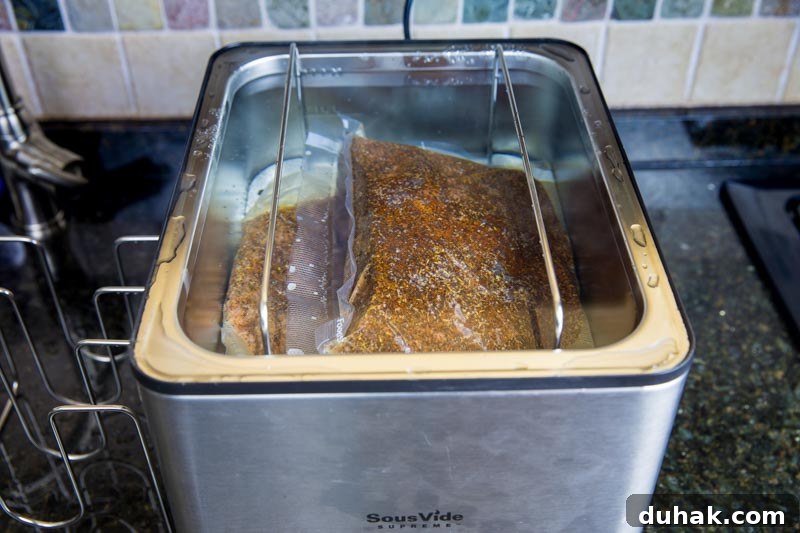
- Temperature: Preheat the water bath to 155°F. That temperature is high enough to break down collagen but low enough to avoid drying the muscle fibers.
- Submerge: Put the vacuum-sealed brisket into the bath and ensure it stays fully submerged. Use a rack or weight if bags float.
- Duration: Cook for 36 hours to achieve a tender texture that still slices cleanly.
Why 155°F for 36 Hours?
Instead of driving the meat to very high temperatures, sous vide uses time to convert collagen to gelatin. Holding the brisket at 155°F for 36 hours yields comparable tenderness to a long smoke but keeps the meat much juicier because it never undergoes the moisture loss of high-heat cooking.
A Pro Tip for the Long Haul
Cover the water bath to reduce evaporation during the long cook. Use plastic wrap, a lid, or sous vide balls to maintain water level and prevent your device from running dry.
Step 5: The Chill and Prep
After the bath, the brisket is tender but needs to be chilled and dried before smoking.
- The Cold Crash: Remove sealed bags and refrigerate overnight. Chilling firms the meat so it’s easier to handle and helps prevent overcooking on the smoker.
- Save the Liquid: When you open the bags, collect the juices. This concentrated beef essence makes a great jus, mop, or sauce base — don’t discard it.
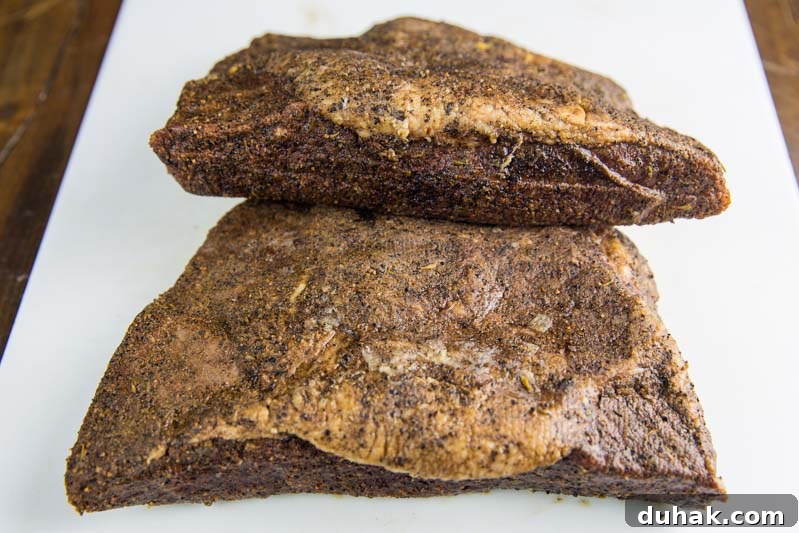
- Dry the Surface: Pat the brisket dry with paper towels. Surface dryness is essential to forming a great bark. While the meat air-dries, heat the smoker.
Why the Overnight Chill?
A cold brisket gives the smoker more time to add smoke and develop crust without letting the interior temperature spike and overcook. It’s how you get classic pit appearance from a sous vide-first cook.
Step 6: Setting the Stage on the Big Green Egg
With the brisket chilled and dried, it’s time to add the element sous vide can’t provide: real wood smoke and a crusty bark.
- Setup: Configure the Big Green Egg for indirect cooking using the convEGGtor (legs up).
- Temperature: Heat the Egg to a steady 250°F — classic low-and-slow for warming the chilled brisket while forming bark.
- Wood Choice: Use hickory for bold beef flavor and pecan for a touch of sweetness and color.
- Moisture: Place a drip pan filled with water above the convEGGtor. The humidity helps smoke adhere and prevents the lean flat from becoming too dry on the surface.
Why the Drip Pan?
A water pan stabilizes dome temperature and keeps the airflow from drying the meat. Since the brisket is already cooked, the goal is to protect those juices while building flavor and bark.
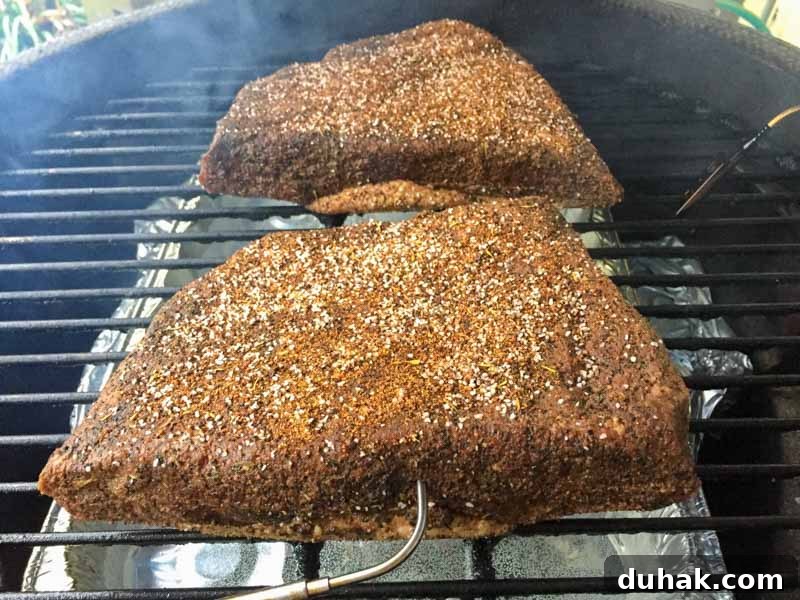
Step 7: The Final Smoke and The Rest
Now it’s the finishing stage: we’re working for color, bark, and serving temperature rather than tenderness.
- The Smoke: Place the chilled brisket halves on the cooking grid and smoke for about 3.5 hours with hickory and pecan until the bark turns dark and textured.
- The Pull: Remove the brisket once the internal temperature reaches 185°F. This ensures the meat is warm through and the exterior is set without drying the lean flat.
- The Rest: Tent the brisket loosely with foil for 30 minutes to let juices redistribute before slicing.
Why 185°F?
Because the connective tissue was already converted during the sous vide bath, 185°F is enough to soften fat and bring the meat to serving temperature while preserving the moisture we worked to retain.
Serving Your Masterpiece
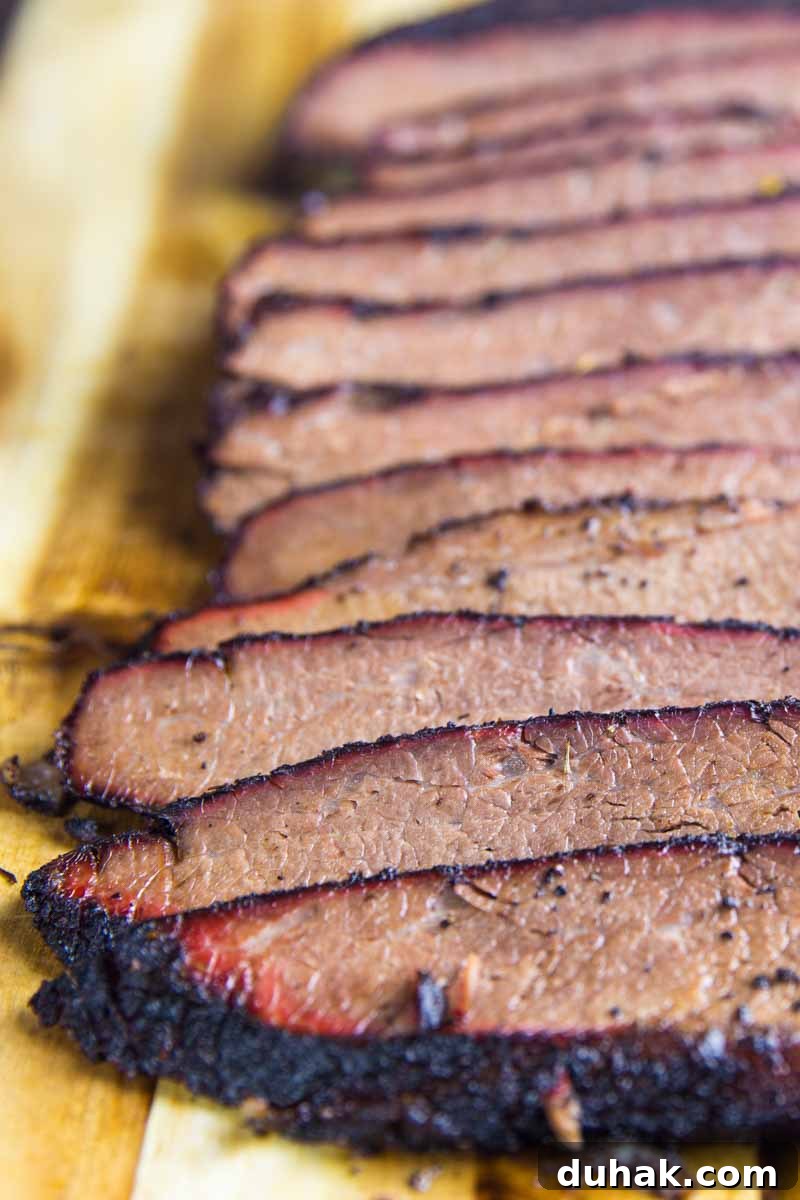
After resting, slice the brisket against the grain into pencil-thick slices. Warm the reserved sous vide juices and use them as a jus or drizzle a little over the slices for extra richness. The result combines the soul of a pit-smoked brisket with the precision and juiciness of sous vide.
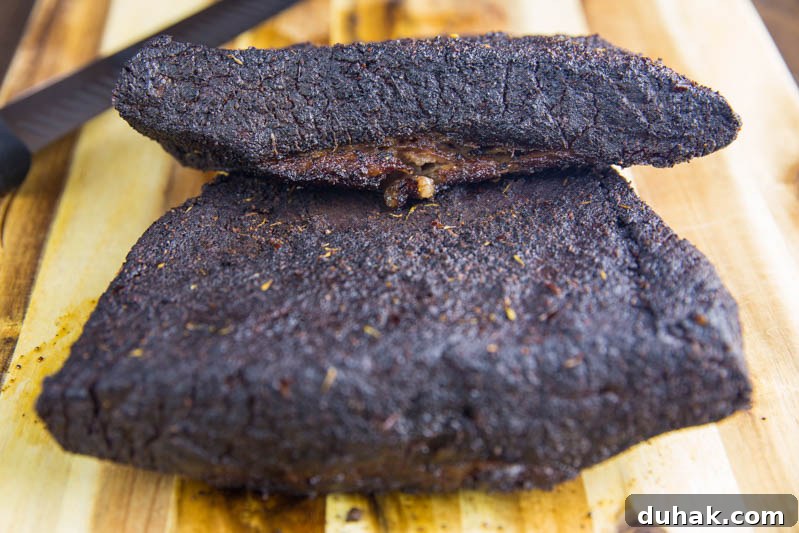
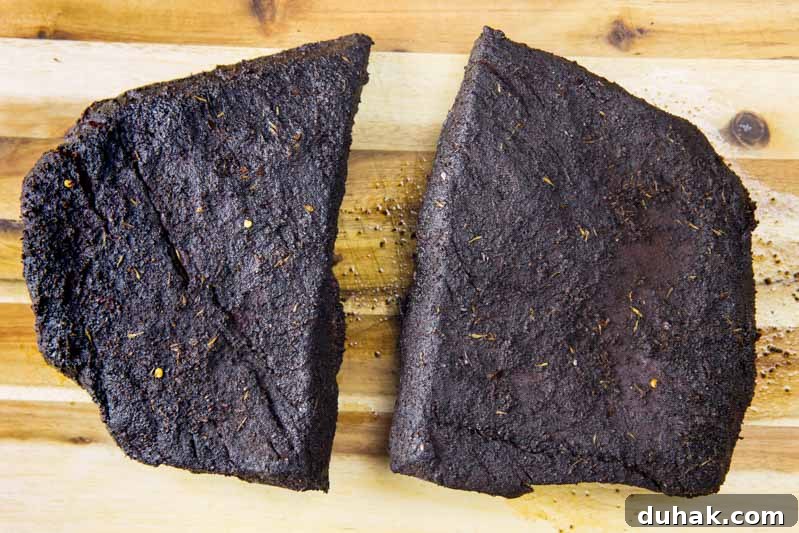
The Final Verdict: Modernist BBQ at Its Best
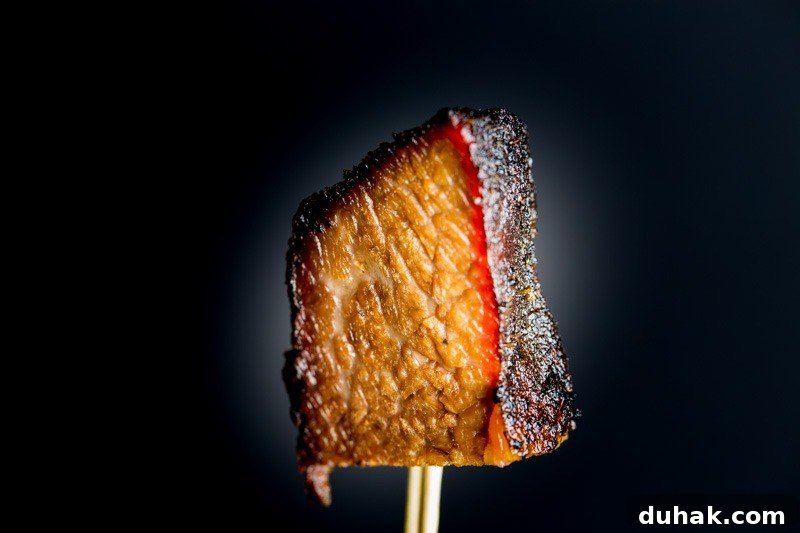
After 36 hours of sous vide and a final few hours on the Egg, the brisket flat turned out tender, moist, and nicely smoked — comparable to a traditional smokehouse result. Using the liquid from the sous vide bags to make a sauce boosted the beef flavor and tied the dish together.
Final Thoughts and Future Tweaks
I was impressed with how well the sous vide method solved the flat’s moisture issues while the final smoke provided authentic pit flavor. For future experiments I’m considering smoking first, then sous viding, and finishing briefly on the smoker to refresh the crust — more testing to come.
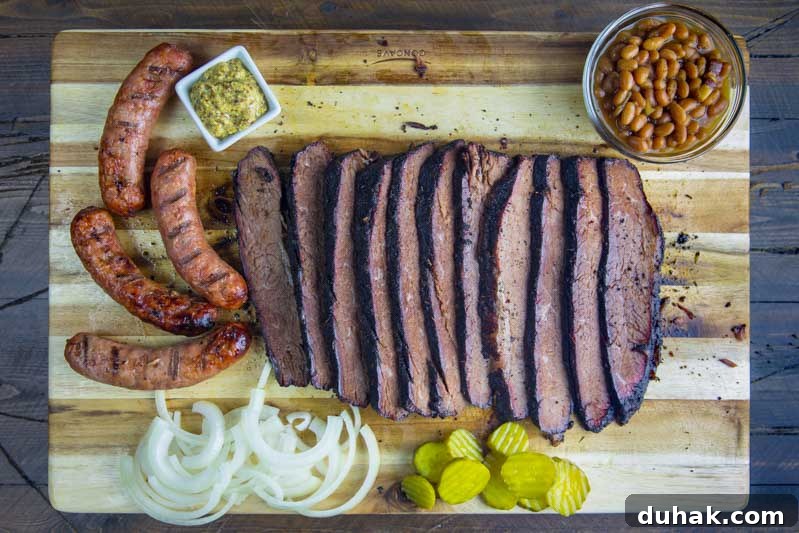
The Ultimate Sous Vide BBQ Brisket Flat on the Big Green Egg
Equipment
- 1 Sous Vide Machine
- 1 Vacuum Sealer
Ingredients
- 5-7 pound Brisket Flat
- 1/2 cup BBQ Rub
Instructions
- Trim & Size: Trim the fat cap to 1/4 inch, remove silver skin, and cut the flat in half to fit sous vide bags.
- Season & Seal: Apply rub liberally, vacuum seal each half, and rest in the refrigerator at least 1 hour or up to overnight.
- The Bath: Submerge in a 155°F water bath for 36 hours.
- The Chill: Refrigerate sealed bags overnight to firm the meat for smoking.
- The Smoke: Set the Big Green Egg to 250°F indirect with a water pan. Pat brisket dry and smoke 3.5 hours until internal temp reaches 185°F.
- The Rest: Tent with foil for 30 minutes, then slice against the grain and serve.
Nutrition information is approximate.