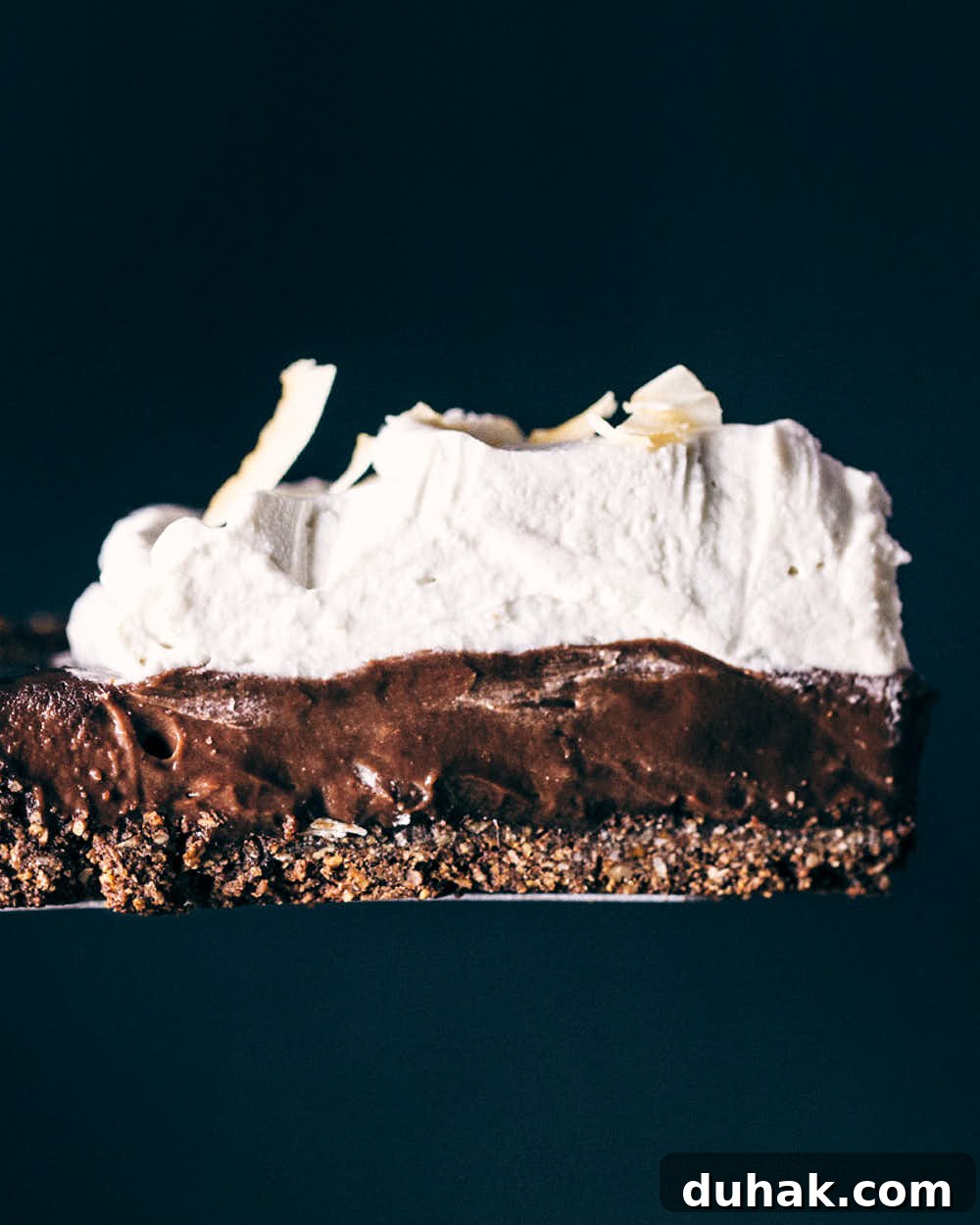
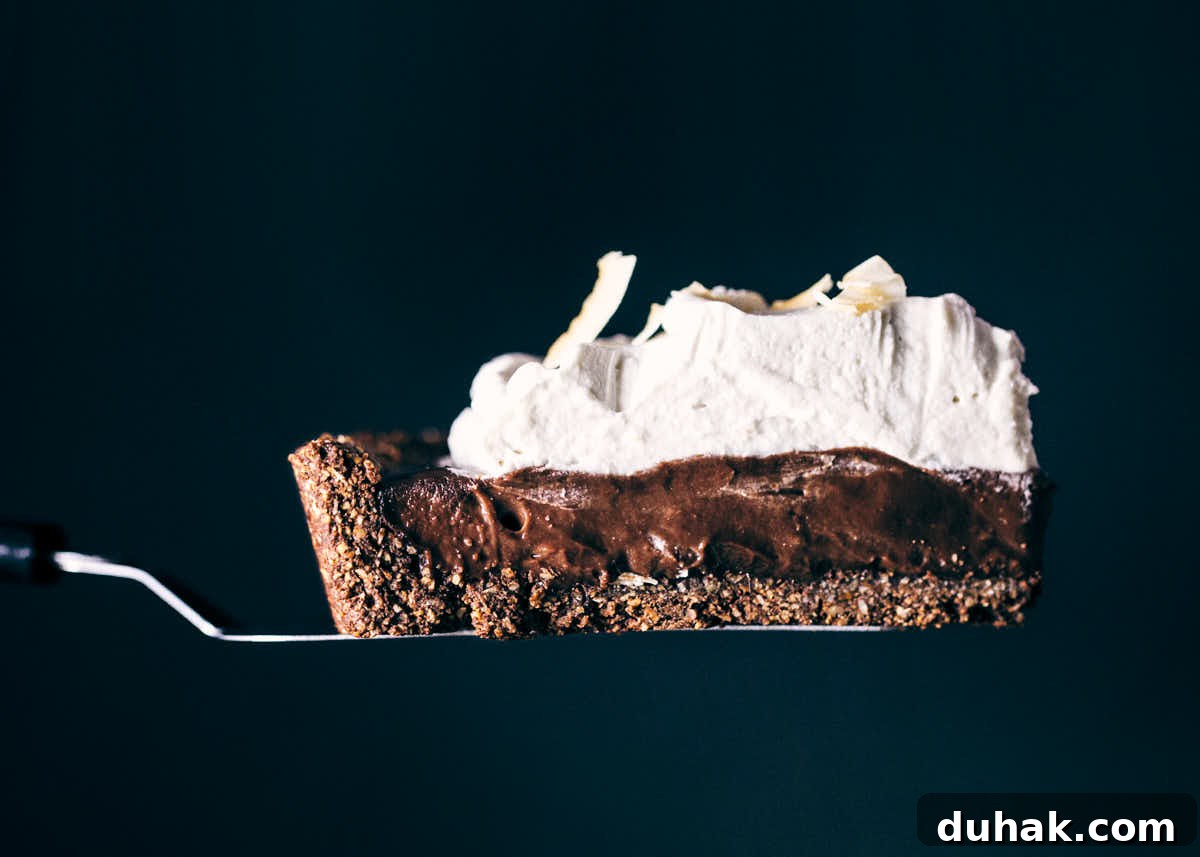
I have a mild obsession with coconut cream pie, and this recipe only reinforced it. I first made it as a test for my mom’s birthday a few months ago. She isn’t big on rich desserts or chocolate (yes, those people exist), but she loves coconut. I love coconut and chocolate, so I decided to try a chocolate coconut cream pie that would please both of us. In the worst case, Anguel and I would have a whole pie to ourselves — and since Mom doesn’t usually choose dessert, we didn’t feel too guilty. Fortunately, the pie was a hit. My mom even snuck a second slice while I wasn’t looking.
She’s been asking me to publish the recipe for months, but I wanted to test it a few more times first. That translated into many extra slices of pie (too many, honestly). I stopped adjusting the recipe after the second version but still made two more batches “just in case.” Now that I’m sharing it, I can stop using “recipe testing” as an excuse to eat pie for breakfast. Consider this your warning: this pie is dangerously good.
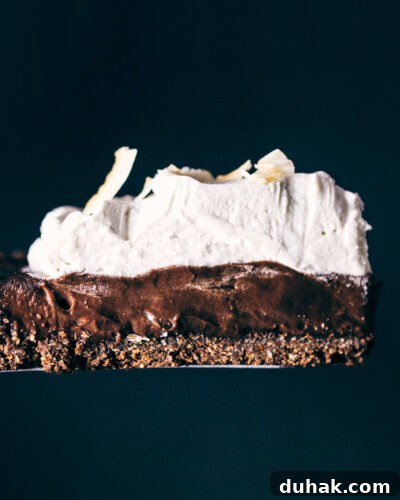
Visually, this dessert is gorgeous — and it’s both vegan and gluten free, making it a friendly option for groups with diverse dietary needs. I’ve served it to friends and family who don’t normally follow restrictions, and everyone loved it. Because it’s a chilled pie, it’s easy to prepare ahead: bake the crust, whisk up the filling, pour it in, and chill. It firms up in the fridge overnight and just needs a generous topping of coconut whipped cream before serving. It’s been my go-to holiday make-ahead dessert.
The crust is especially delicious, with chocolate and hazelnut notes that remind me of Nutella, plus the texture and flavor of shredded coconut. Press-in crusts are perfect for gluten-free and vegan baking: they use simple pantry ingredients like nuts and oats and require minimal fuss. Pulse the oats, hazelnuts, and coconut in a food processor, mix in cocoa, coconut oil, and maple syrup, press into a tart pan, and bake briefly. The result is a sturdy, flavorful base that complements the creamy filling.
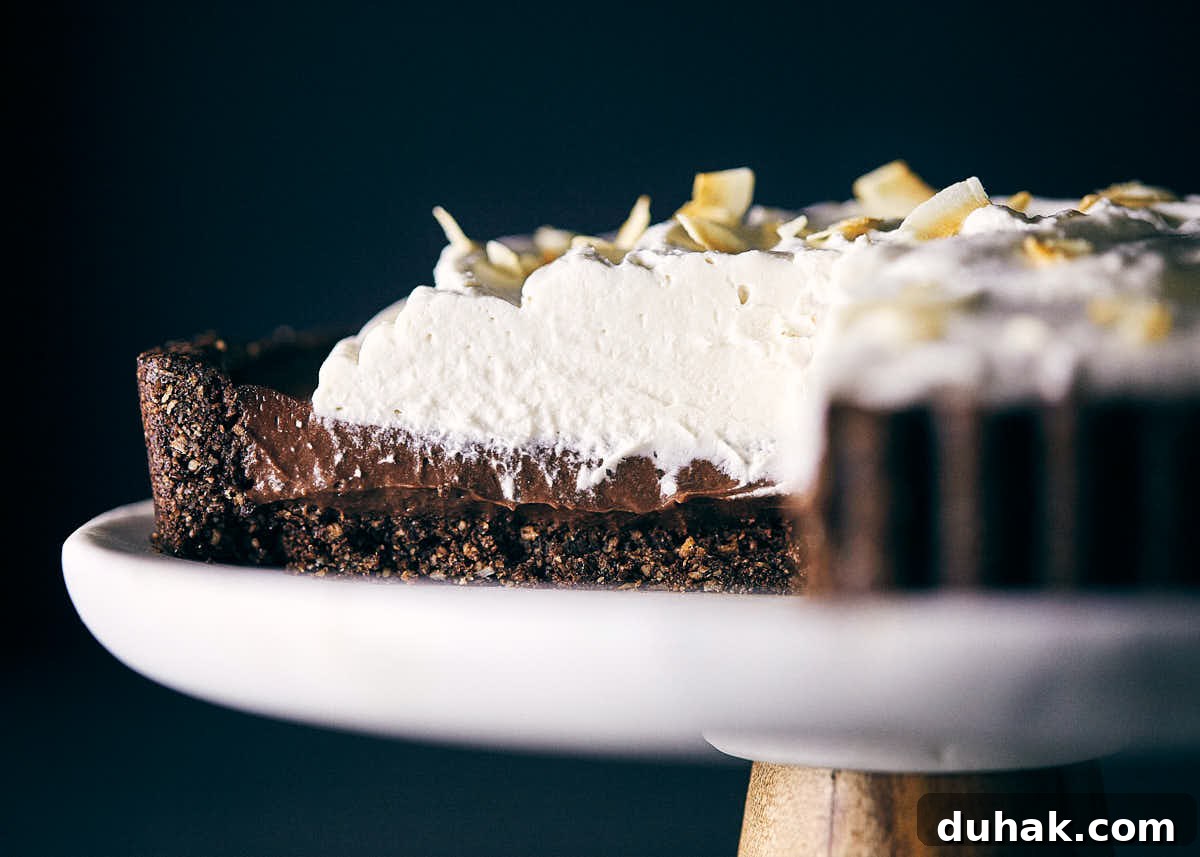
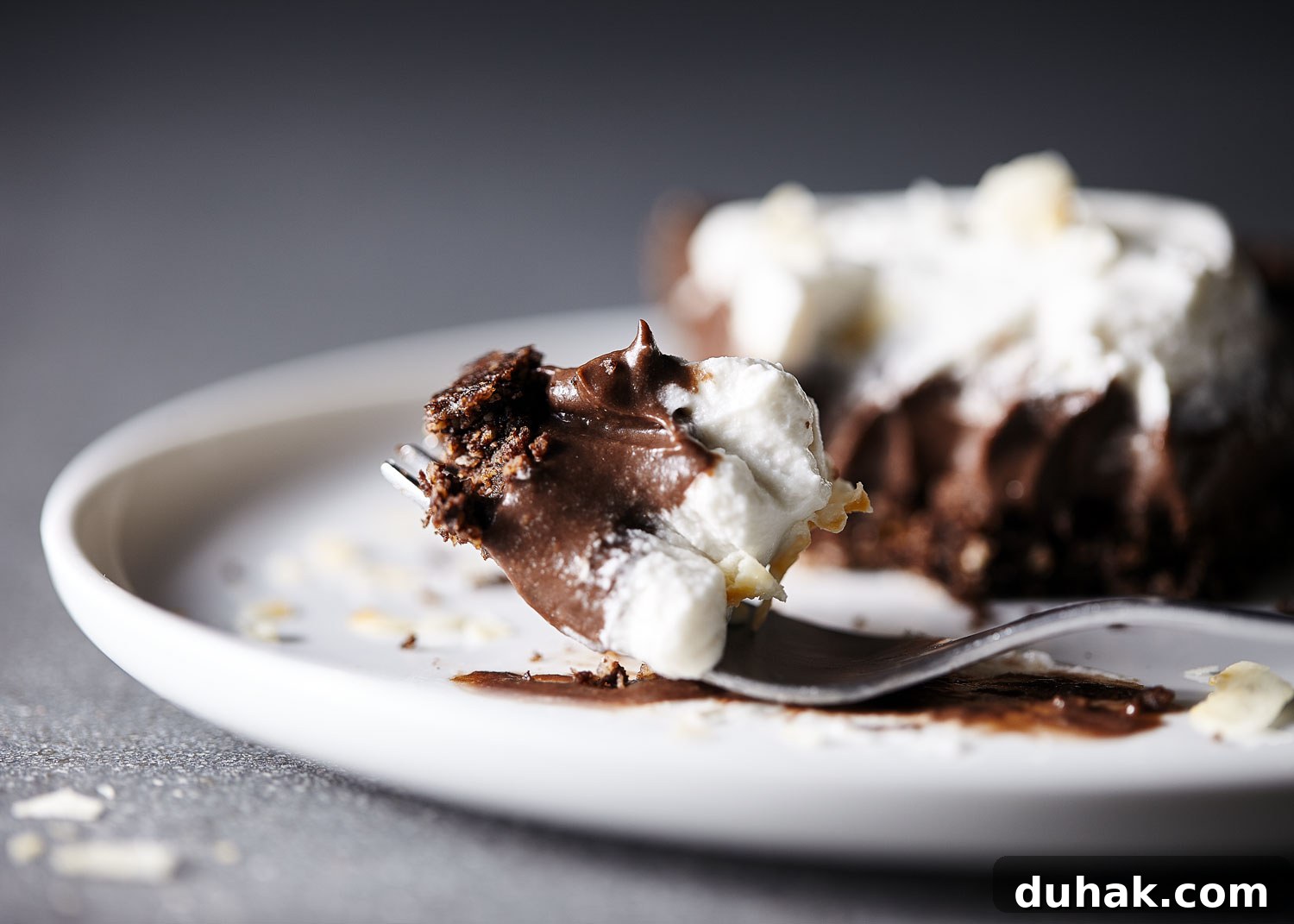
The texture of the filling is impressive for a dairy-free pie. Blended cashews and coconut milk create a silky, decadent cream that sets to the perfect pudding-like consistency — soft yet sliceable. I used arrowroot as the thickener because it forms a smooth slurry when mixed with liquid and heated. Whisk the filling constantly while cooking so it becomes lump-free and glossy; the coconut oil added at the end gives it extra shine. If you don’t have arrowroot, look for it in the health food or gluten-free section — it may be labeled arrowroot powder or arrowroot flour.
You could stop with the crust and filling and still impress guests, but I like to take it further with a fluffy layer of coconut whipped cream. One batch is usually enough, but you can double it if you prefer a taller topping. Toasted coconut flakes are optional but highly recommended for extra flavor and crunch — they take only a few minutes in the oven while the crust bakes.
📖 Recipe
Vegan Chocolate Coconut Cream Pie
Ingredients
Chocolate Hazelnut Crust
- ⅔ cup rolled oats
- ⅔ cup raw hazelnuts
- 1 cup shredded coconut (unsweetened)
- 3 tablespoons cocoa powder
- ¼ teaspoon fine sea salt
- ¼ cup melted coconut oil
- ¼ cup maple syrup
Chocolate Cream Filling
- 1 (14 fl oz/398 ml) can full-fat coconut milk, divided (room temperature)
- ¼ cup arrowroot powder
- ¼ to ½ cup non-dairy milk (unsweetened and unflavored)
- ⅔ cup raw cashews, soaked and drained
- ¾ cup maple syrup
- 6 tablespoons cocoa powder
- 1½ teaspoons vanilla extract
- ½ teaspoon fine sea salt
- 1 tablespoon coconut oil
Coconut Whipped Cream
- 1 (14 fl oz/398 ml) can full-fat coconut milk (refrigerated overnight or ideally 24 hours)
- 2 to 3 tablespoons maple syrup
- ½ teaspoon vanilla extract
- Toasted coconut flakes (optional)
Instructions
-
Preheat: Preheat oven to 350°F (177°C).
-
Mix crust: In a food processor, pulse oats until fine. Add hazelnuts and pulse until crumb-like. Add shredded coconut, cocoa powder, and salt; pulse to combine. Add melted coconut oil and maple syrup, and pulse until a dough forms.
-
Bake crust: Press the dough into a 9-inch tart pan or an 8-inch pie plate. Prick the bottom with a fork several times to release steam. Bake 20 to 25 minutes, until the crust is medium-firm and no longer looks moist. Let cool slightly.
-
Start filling: Shake the room-temperature can of coconut milk and pour 1 cup into a small bowl. Whisk in the arrowroot powder until smooth to make a slurry. Set aside.
-
Blend filling: Measure the remaining coconut milk from the can (about ½ to ¾ cup) and add enough non-dairy milk to equal 1 cup total liquid. Transfer to a blender with soaked cashews, maple syrup, cocoa powder, vanilla, and salt. Blend until completely smooth and creamy.
-
Cook filling: Pour the blended mixture into a small saucepan and bring to a gentle simmer over medium heat. Whisk in the arrowroot slurry and continue to whisk frequently until the mixture thickens to a pudding-like consistency, 5 to 10 minutes. Remove from heat, whisk in the coconut oil until glossy, then pour into the baked crust. Refrigerate until firm, 3 to 4 hours (or overnight).
-
Coconut whipped cream: Scoop the solid coconut cream from a chilled can (reserve or discard the liquid). Using an electric mixer, whip the solids until fluffy. Add maple syrup and vanilla and whip briefly to combine.
-
Assemble: Spread or pipe the coconut whipped cream over the chilled pie. Sprinkle toasted coconut flakes on top if desired. Slice and serve. Store leftovers covered in the refrigerator.
Notes
- Measuring arrowroot: If measuring by volume, gently spoon and level arrowroot powder. For best accuracy, use a kitchen scale.
- Soaking cashews: Soak cashews until soft. For a quick soak, cover with boiling water for 30 minutes. For a regular soak, cover with room-temperature water overnight.
- Toasting coconut: Spread flakes on a baking sheet and toast in the oven while the crust bakes, 2 to 5 minutes, stirring halfway and watching carefully to avoid burning.
- Pan options: A removable-bottom tart pan makes serving easy, but a pie plate also works; if using a pie plate, an 8-inch pan is a good choice since pie plates can have taller sides.