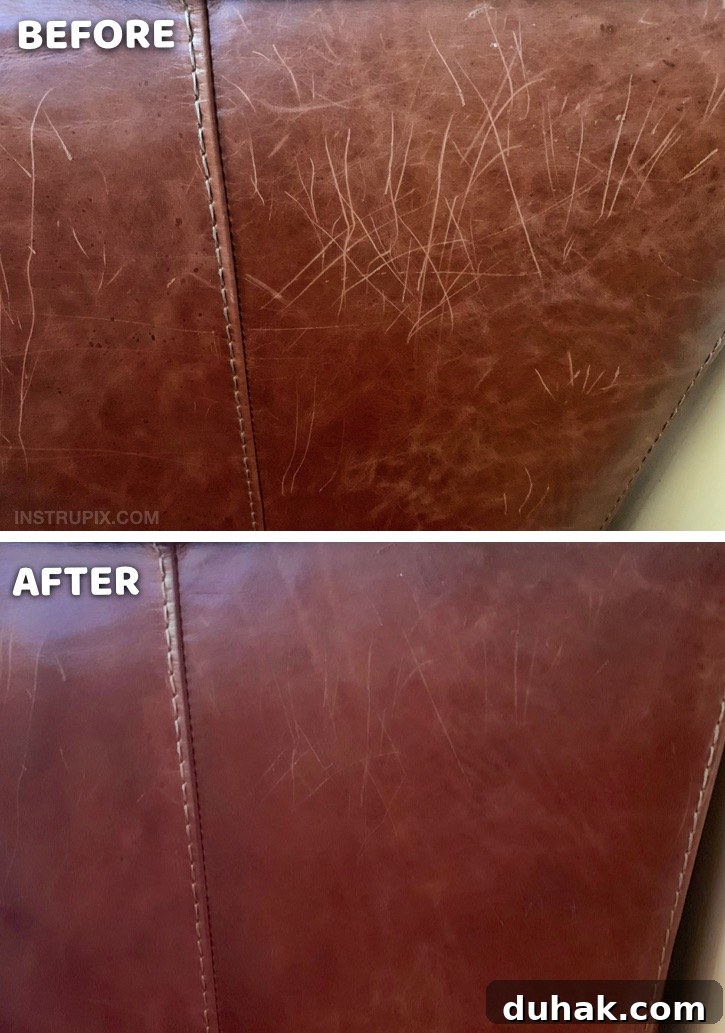
If you have scratches on your furniture or cabinets, you might be surprised how easily they can be minimized with a single common household ingredient: olive oil.
My cats left our leather sofa looking rough — the scratches were visible from across the room and it drove me nuts. After discovering that a little oil helps disguise those marks, I tried the same trick on scratched doors and cabinets. It worked remarkably well on both wood and leather.
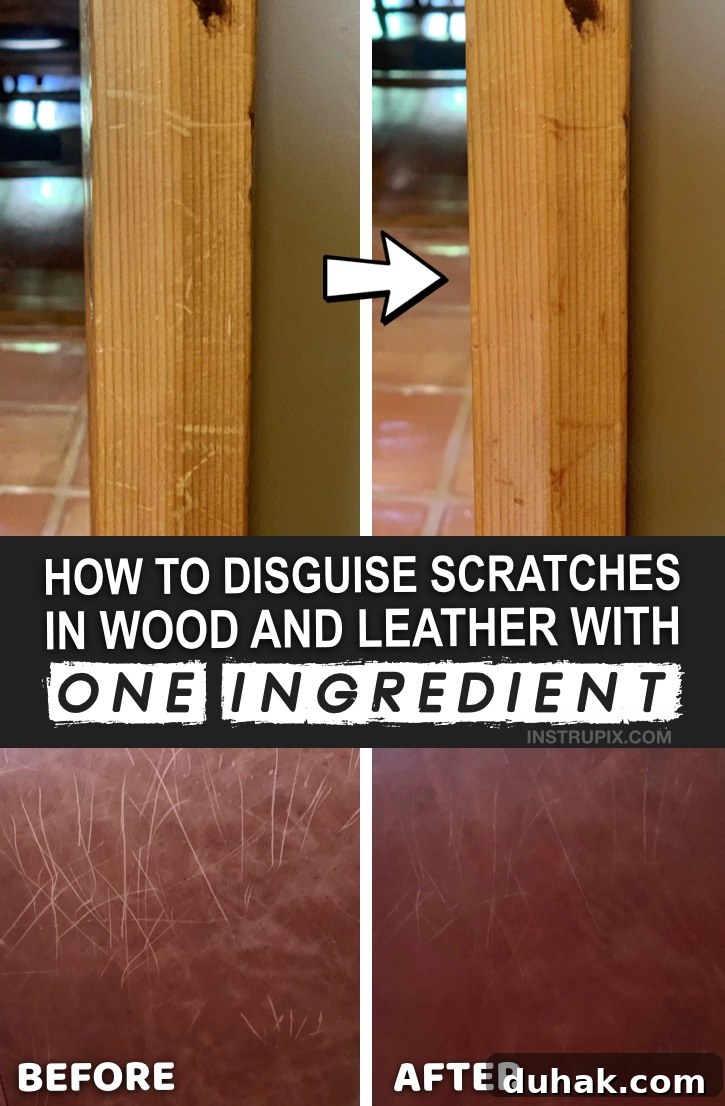
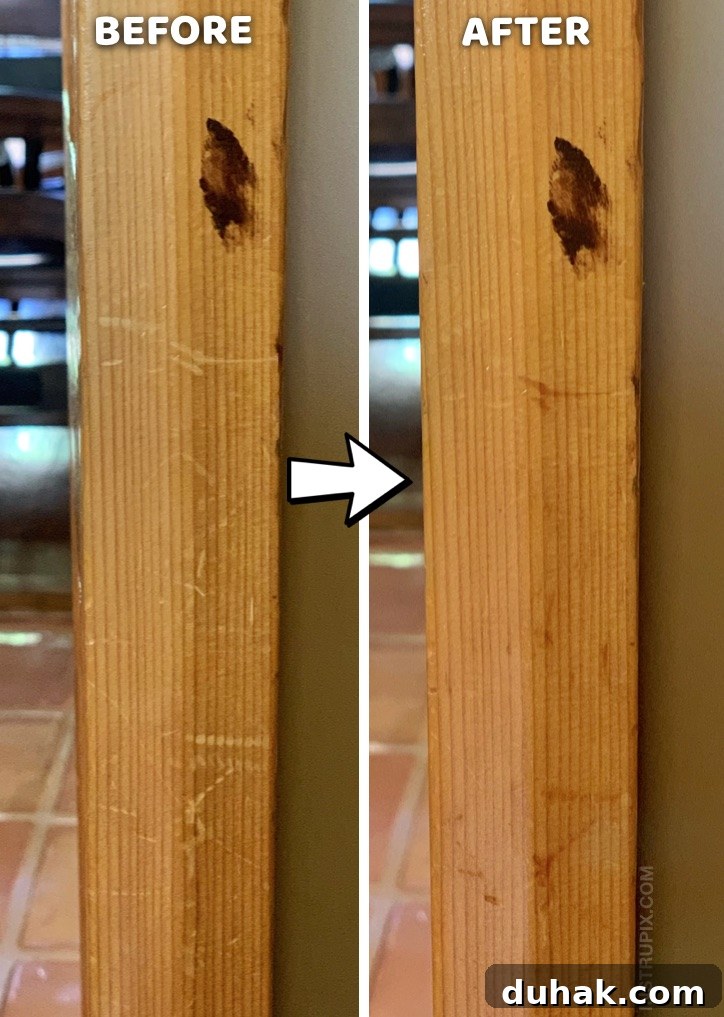
How to remove scratches on wood
Dab a soft cloth or rag in olive oil and rub the scratched wood surface, focusing on the damaged areas. This method works best on solid wood. It’s less effective on manufactured pieces that have only a thin veneer layer.
Helpful tips
Do other oils work? Yes. Canola and vegetable oil can produce similar results when used the same way.
What about vinegar? Some people mix a small amount of white vinegar with oil to help cut dirt. I haven’t noticed a significant difference, but if you want to try it, use a ratio of about 1 part vinegar to 4 parts oil (more oil than vinegar).
Will this work on every wood surface? Not always. It didn’t work on my dark-stained dining table — that likely comes down to the wood type and finish. In such cases, furniture markers or a tailored touch-up product can be more effective. The oil method, however, worked very well on built-in cabinetry and interior doors.
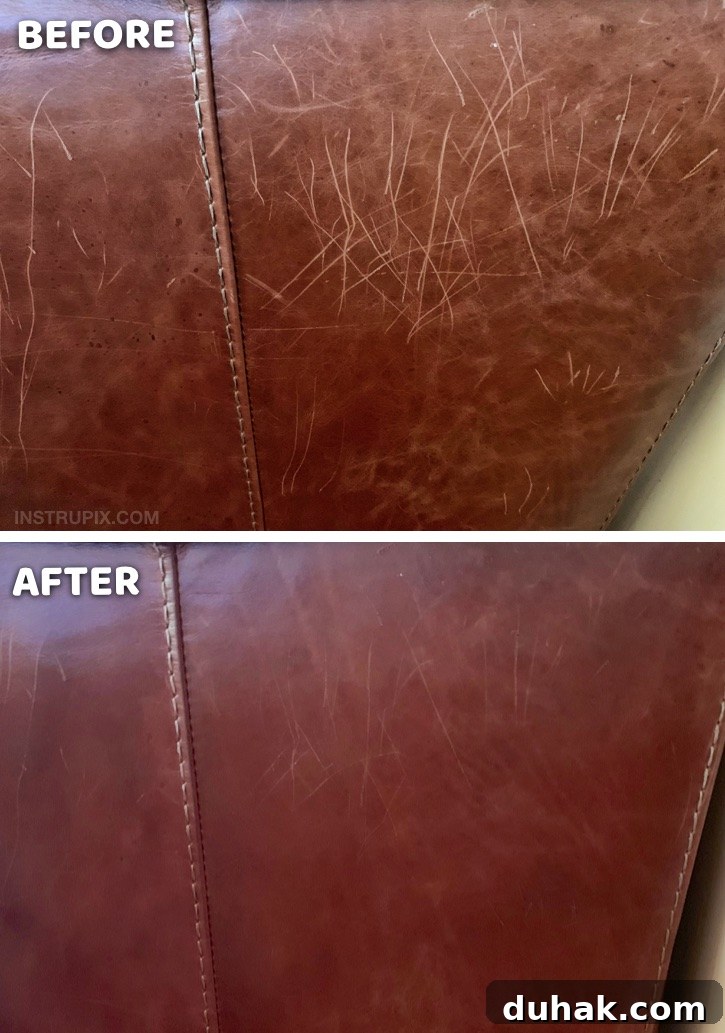
How to remove scratches on leather
It won’t make leather look brand new, but olive oil can significantly reduce the appearance of scratches. Because leathers vary widely, test a small, inconspicuous area first to ensure the oil won’t darken or stain the material. Light-colored leather may absorb the oil and darken.
After a successful spot test, apply a very small amount of olive oil to a soft cloth and rub the scratched area gently. Avoid letting oil pool on one spot — work quickly and spread it thinly and evenly. On leather, less is more: use more elbow grease than oil. A little goes a long way.
On my couch the improvement was noticeable. For larger areas or valuable leather pieces, always test first in a hidden spot before treating the whole surface.
Other useful uses for olive oil
- Removes eye makeup
- Moisturizes skin (a few drops added to bath water)
- Softens and helps repair cracked heels
- Acts as a simple hair mask for dry ends
- Helps remove sticker residue
- Can be used as a shaving lubricant in a pinch
Have you used olive oil for any other household tasks? Share your tips in the comments below.