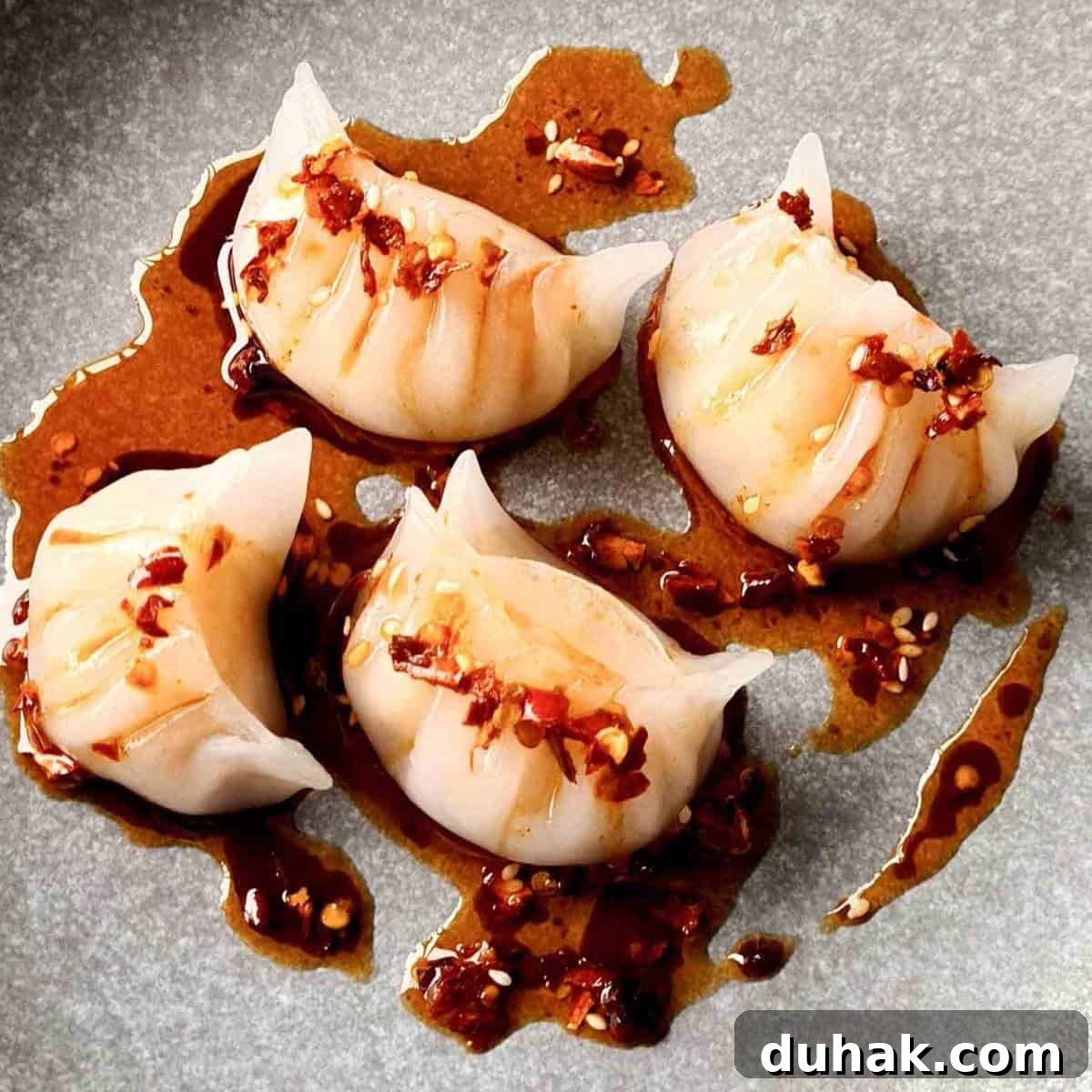
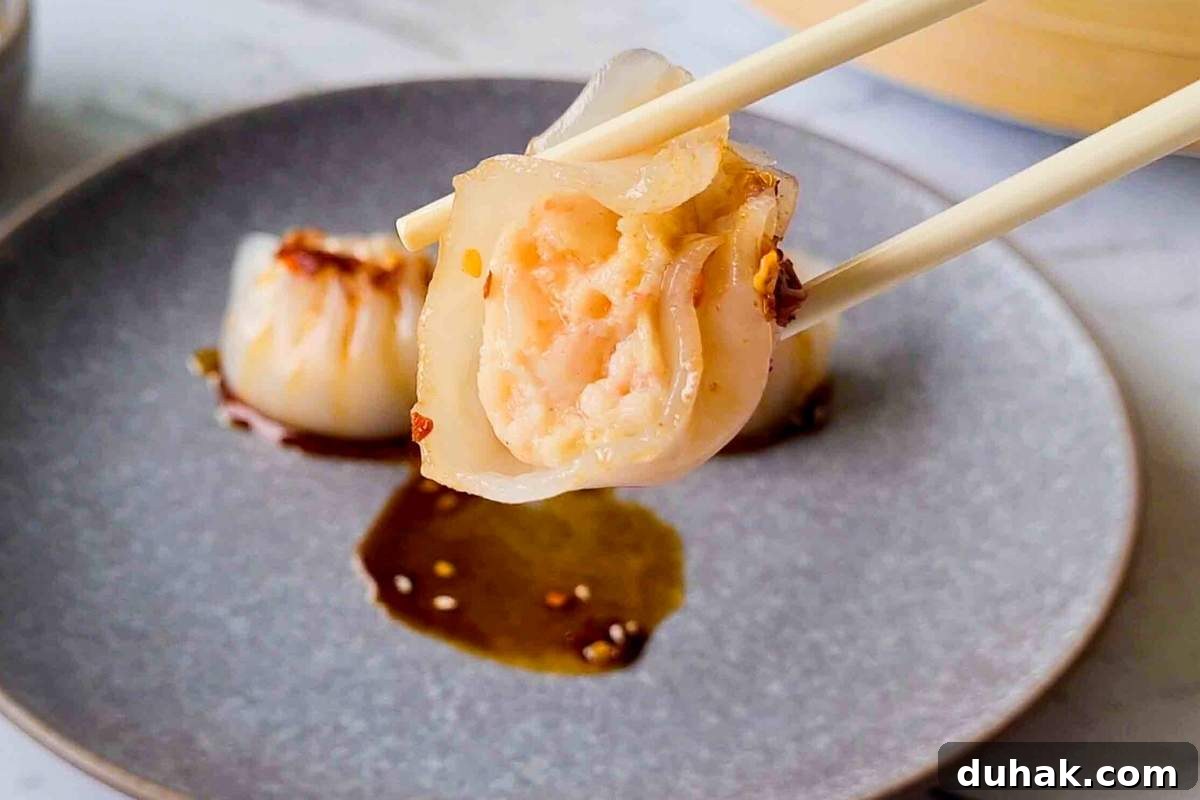
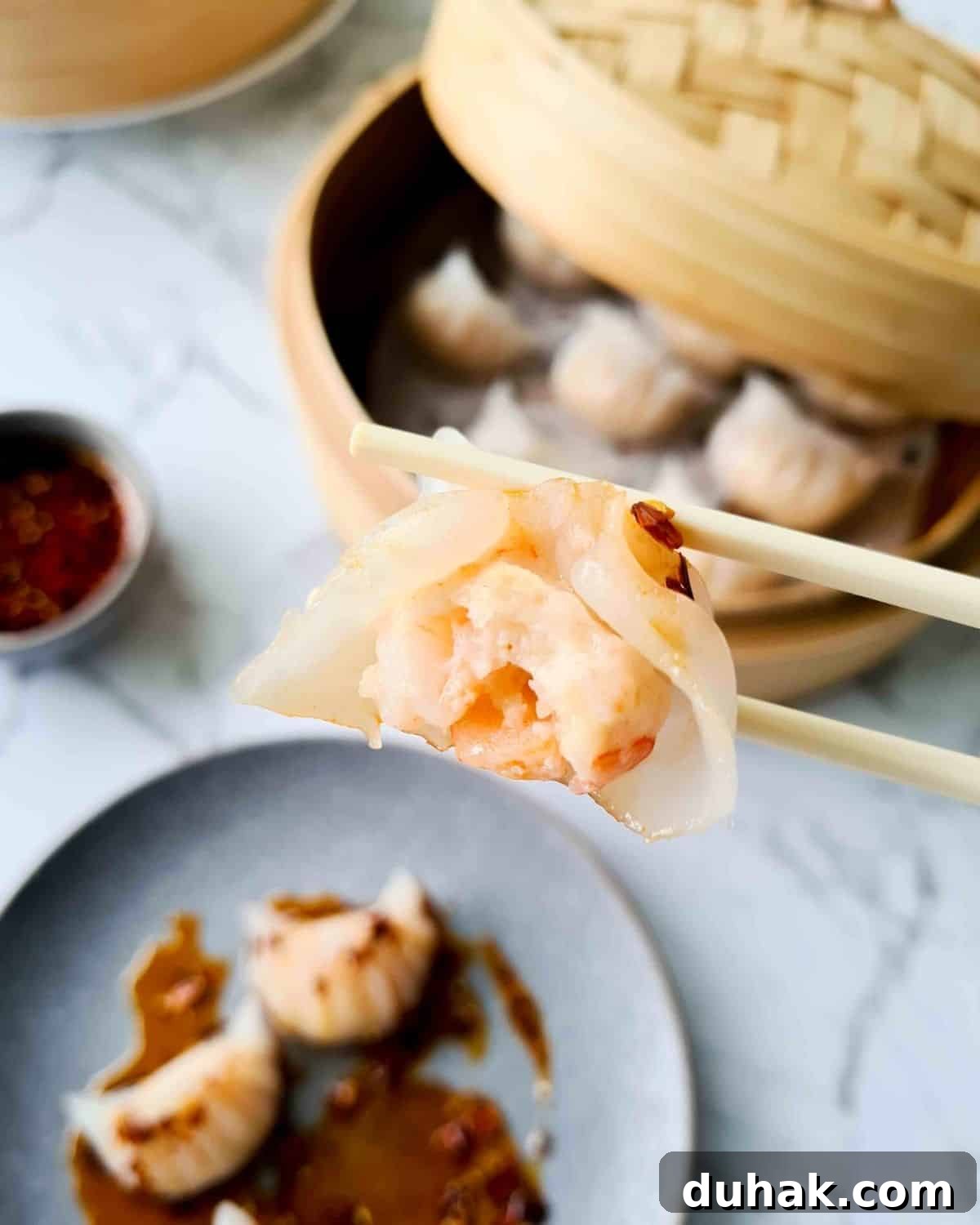
Har gow, also known as crystal prawn dumplings, is a classic yum cha and dim sum favourite. These delicate steamed dumplings are filled with juicy prawn, or shrimp, and wrapped in a lightly translucent “crystal” dumpling skin.
Traditional Cantonese-style har gow often includes finely minced bamboo shoots in the prawn filling. Some modern versions leave them out, but this recipe keeps that old-school touch. The bamboo shoots add a gentle aroma, a little texture and an extra layer of flavour that works beautifully with sweet prawns.
Har gow is usually served as part of a larger dim sum spread. It pairs well with dishes such as Chinese broccoli, char siu bao, vegan dumplings, pork dumplings, Chinese sausage fried rice, prawn fried rice and stir-fried noodles like chicken Hokkien noodles.
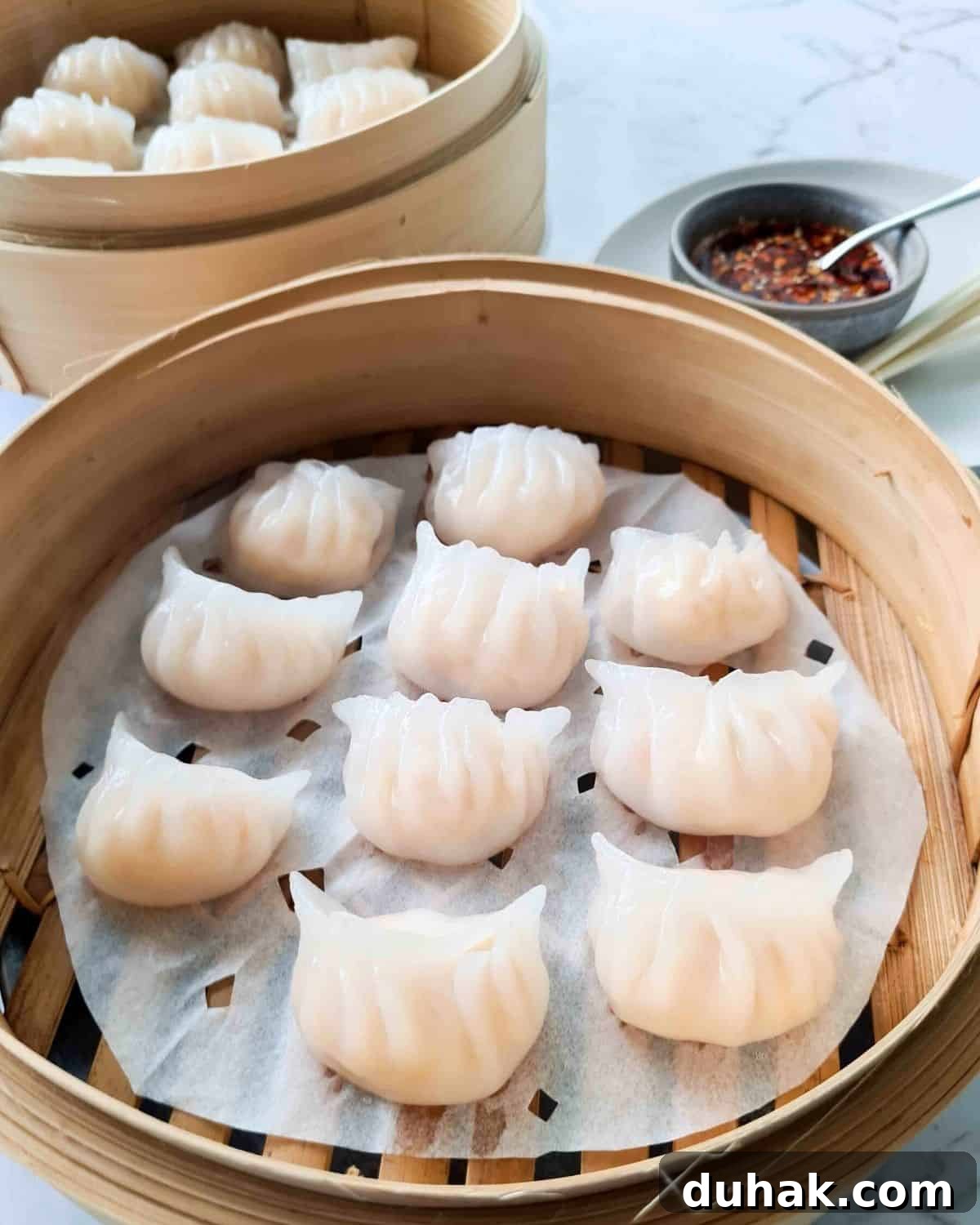
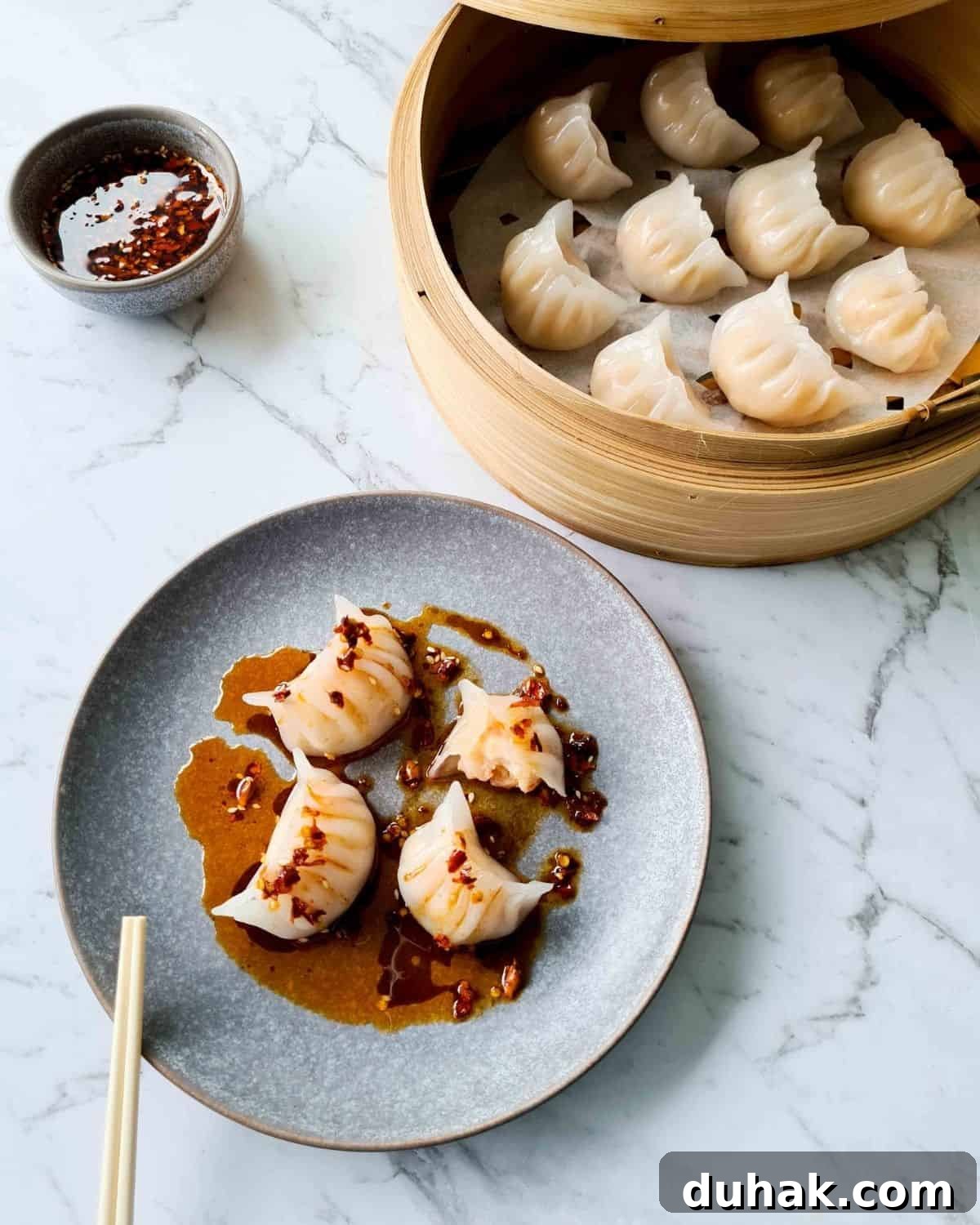
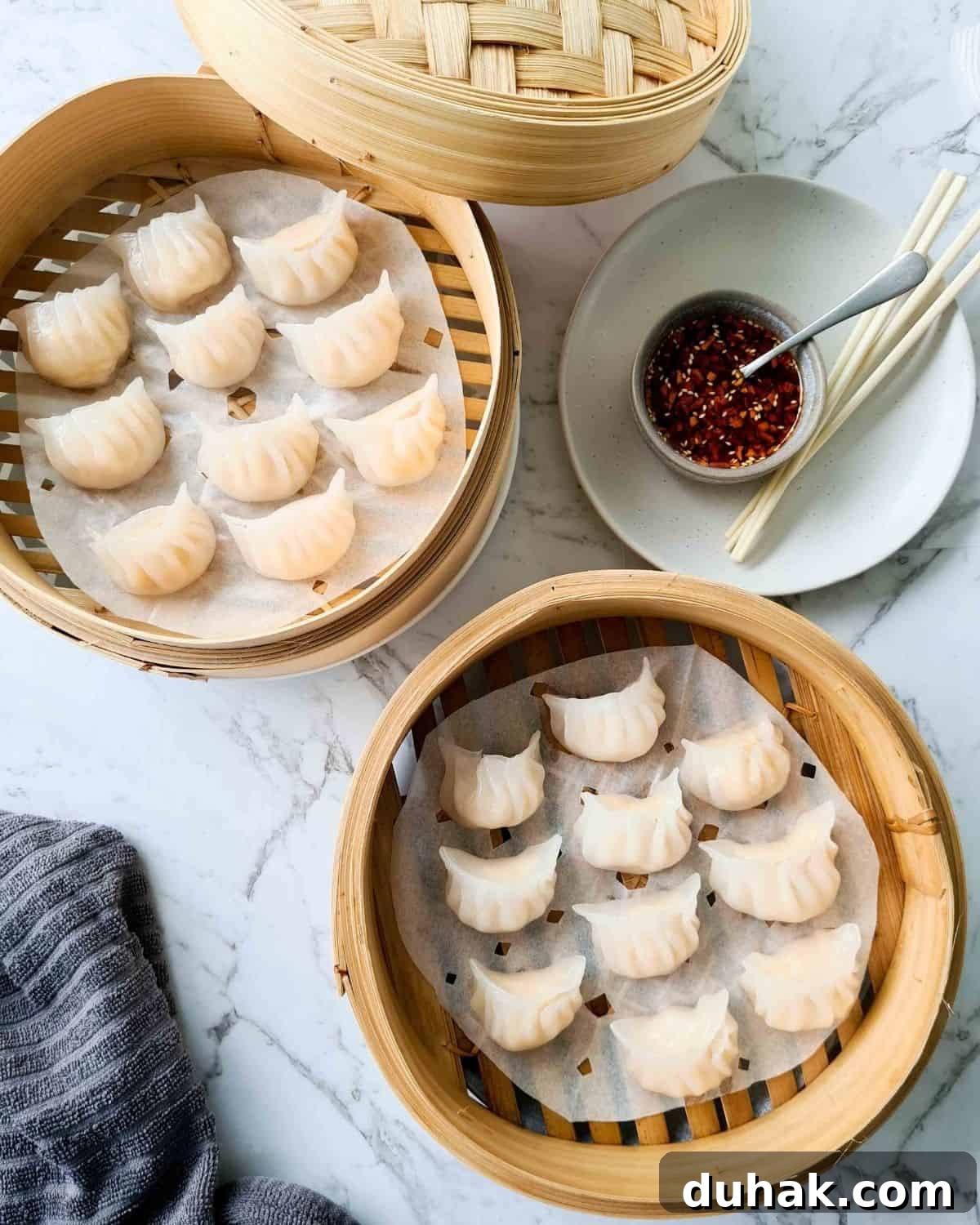
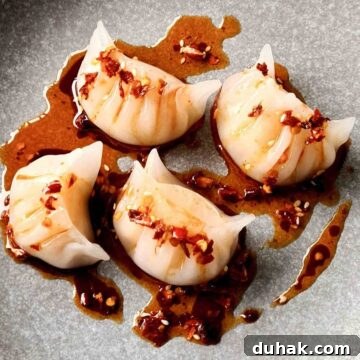
These crystal prawn dumplings are delicious on their own, but they are also excellent with a small dish of aromatic homemade chilli oil.
If har gow is the first thing you order at a dim sum restaurant, this recipe is for you. Making them at home takes patience, especially when rolling and pleating the wrappers, but the result is worth it. The filling is juicy, the dumpling skin is soft and translucent, and each bite has that unmistakable yum cha flavour.
This har gow recipe is a true labour of love, but once you learn the technique, it becomes a very rewarding dish to make at home.
Ingredients
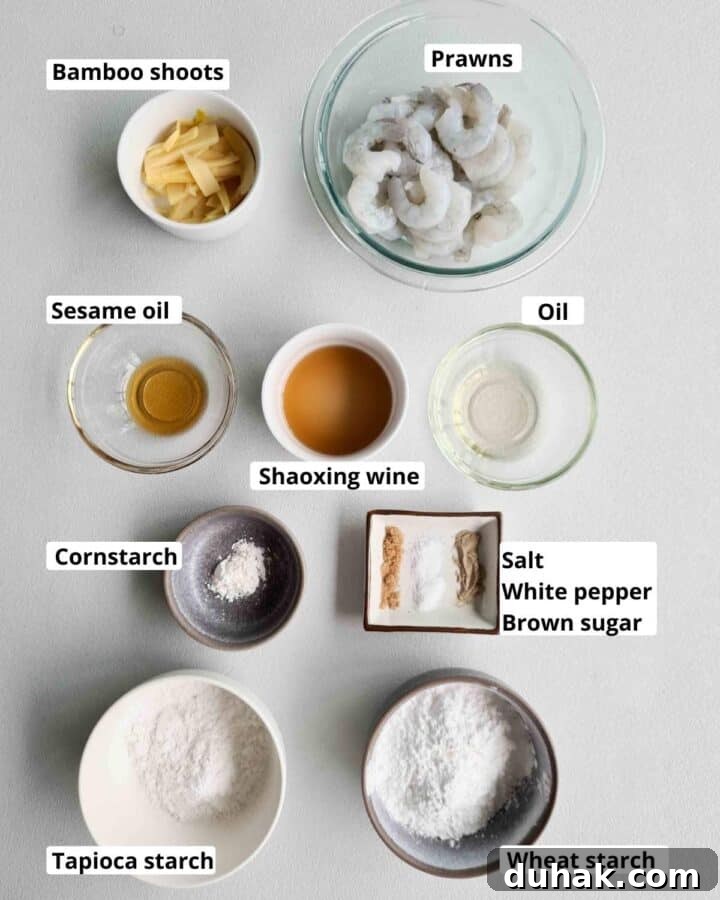
- Prawns or shrimp – Use the freshest prawns you can find. Peeled and deveined frozen prawns are convenient, but make sure they are good quality. If the prawns are not fresh, the cooked filling can become grainy.
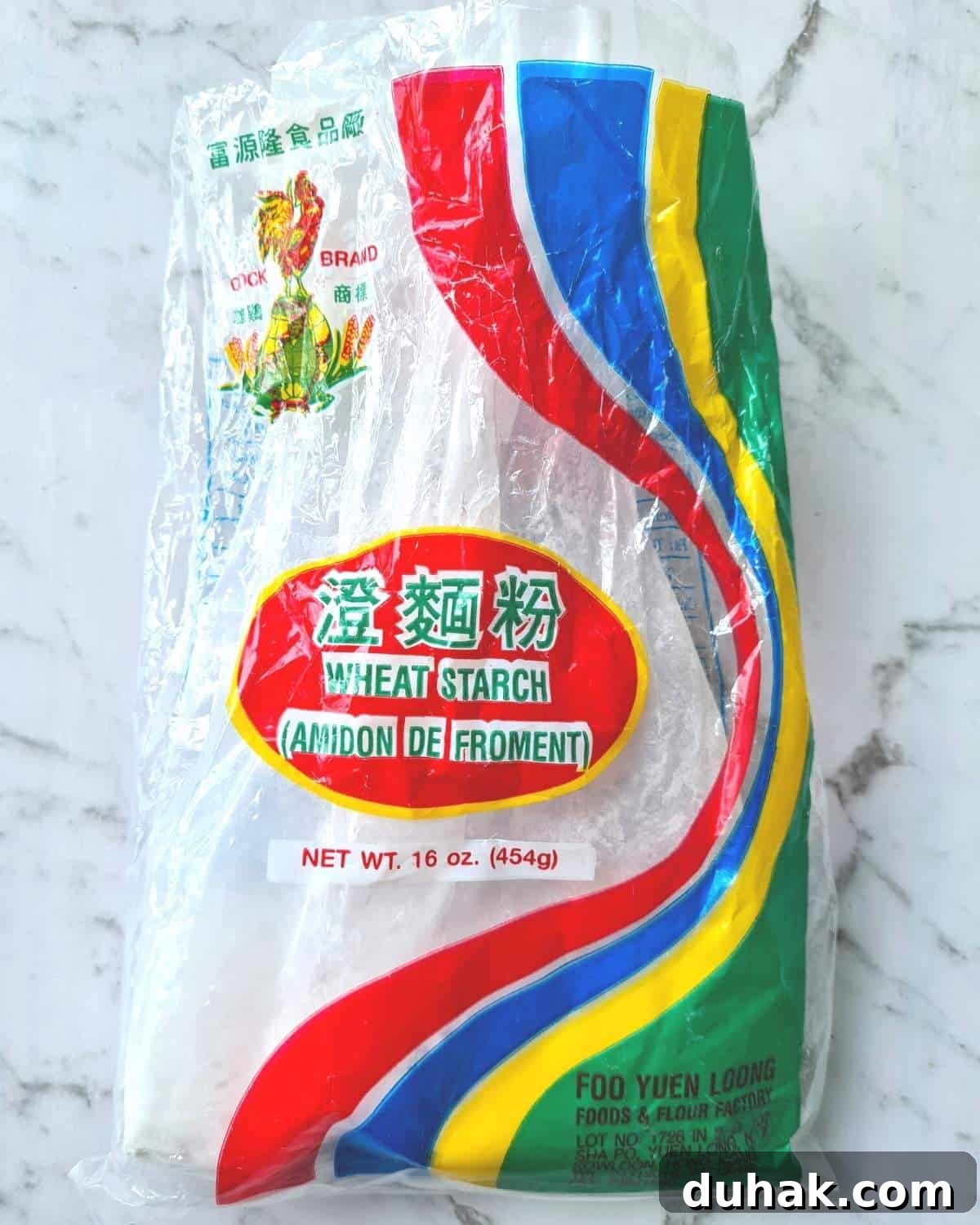
- Wheat starch – This is essential for the translucent har gow wrapper. Do not confuse it with corn starch. Wheat starch is usually available at Asian supermarkets, and substitutions are not recommended.
- Tapioca starch – Tapioca starch helps create the correct chewy texture in the crystal dumpling skin. It should not be replaced with another starch.
- Shaoxing wine – A Chinese cooking wine that adds depth and savoury flavour to the prawn filling.
- Sesame oil – A small amount gives the filling a rich aroma. In this recipe, it is important enough to use more than just a few drops.
- Bamboo shoots – Canned bamboo shoots are easy to find in Asian grocery stores and many large supermarkets. They add aroma and texture to the filling.
Equipment required
You will need a rolling pin, a steamer or bamboo steamer baskets, and a mini food processor. A thin dumpling rolling pin is ideal, but a regular rolling pin can also work.
The mini food processor is very important for the filling. To create that juicy, slightly bouncy prawn texture often found in dim sum restaurants, the prawns need to be quickly blended into a paste. This technique is also used for many Asian fish balls, beef balls and pork balls, where the mixture is processed briefly before cooking.
Do not overblend the prawns, or the filling may become gummy. Only a few seconds are needed. A mini food processor works best for this recipe because it uses 300 g, or 11 ounces, of prawns. If you double or triple the recipe, a larger food processor can be used.
If you don’t have a food processor
If you do not have a food processor, use the traditional method of crushing the prawns with the flat side of a Chinese cleaver. Work in small batches and crush the prawns repeatedly until they form a paste. Simply chopping the prawns into a mince is not enough, as the filling may turn out separated and slightly grainy.
How to make har gow
There are four main steps to making har gow: prepare the prawn filling, make the translucent dumpling dough, wrap the dumplings and steam them. The wrapping takes the most practice, but the method becomes easier once you understand how the dough behaves.
Preparing the filling
A good har gow filling should be smooth, juicy and full of prawn flavour. One restaurant-style detail is to include small chunks of prawn inside the paste. This gives each dumpling a satisfying bite.
Cut some of the prawns into chunks so there is one piece for each dumpling. If the prawns are small, you can keep them whole. If they are large, cut them into halves or thirds. This recipe makes 20 small dumplings, so prepare 20 prawn pieces.
The remaining prawns are blended with bamboo shoots and seasoning to make the paste.
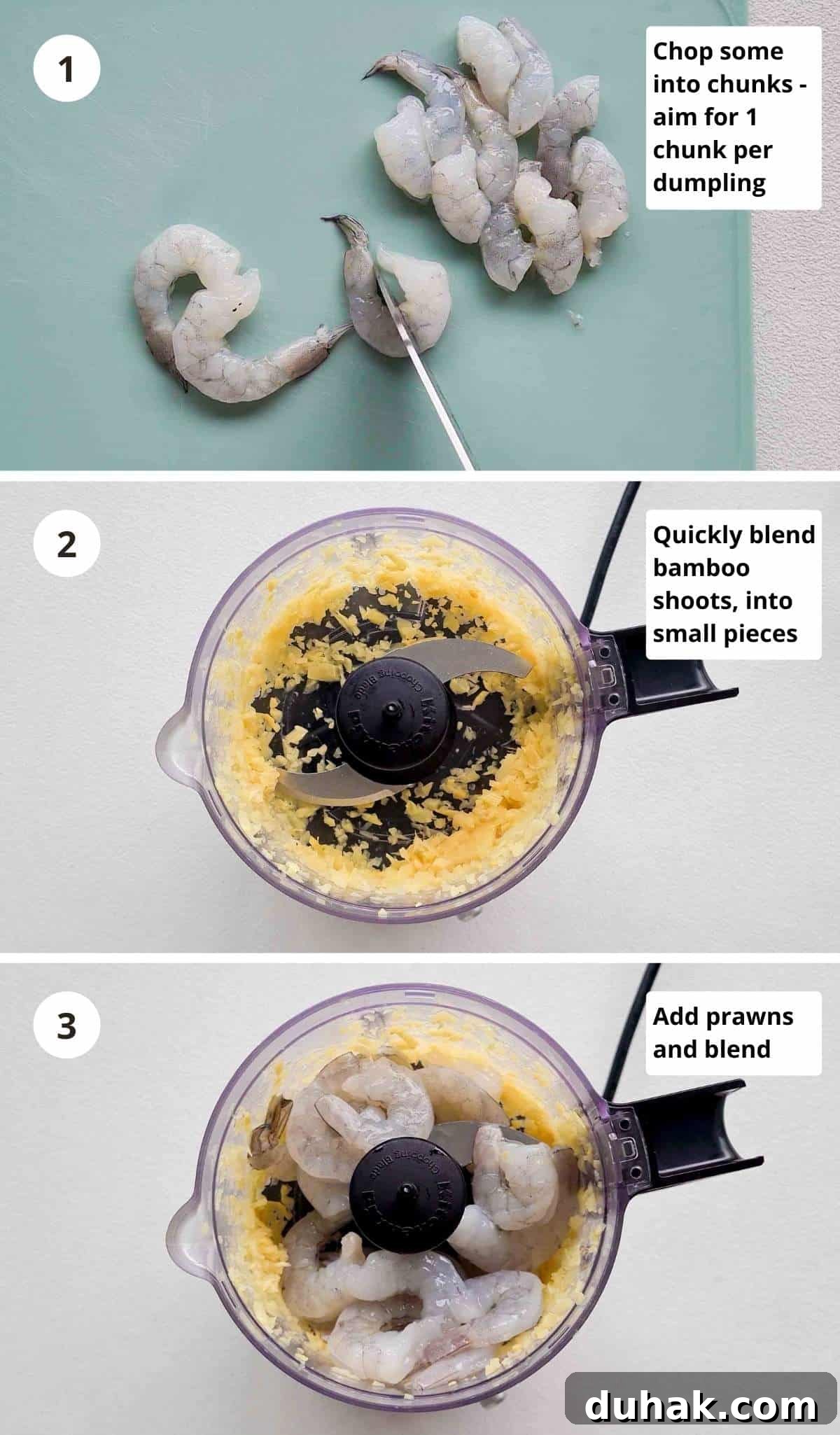
First, blend the bamboo shoots for a few seconds until finely minced. Stop and scrape down the sides if needed. Then add the remaining prawns and blend for 3 seconds. Add the sesame oil, white pepper, neutral oil, salt, sugar, corn starch and Shaoxing wine, then blend for another 5 seconds. Do not blend longer than necessary.
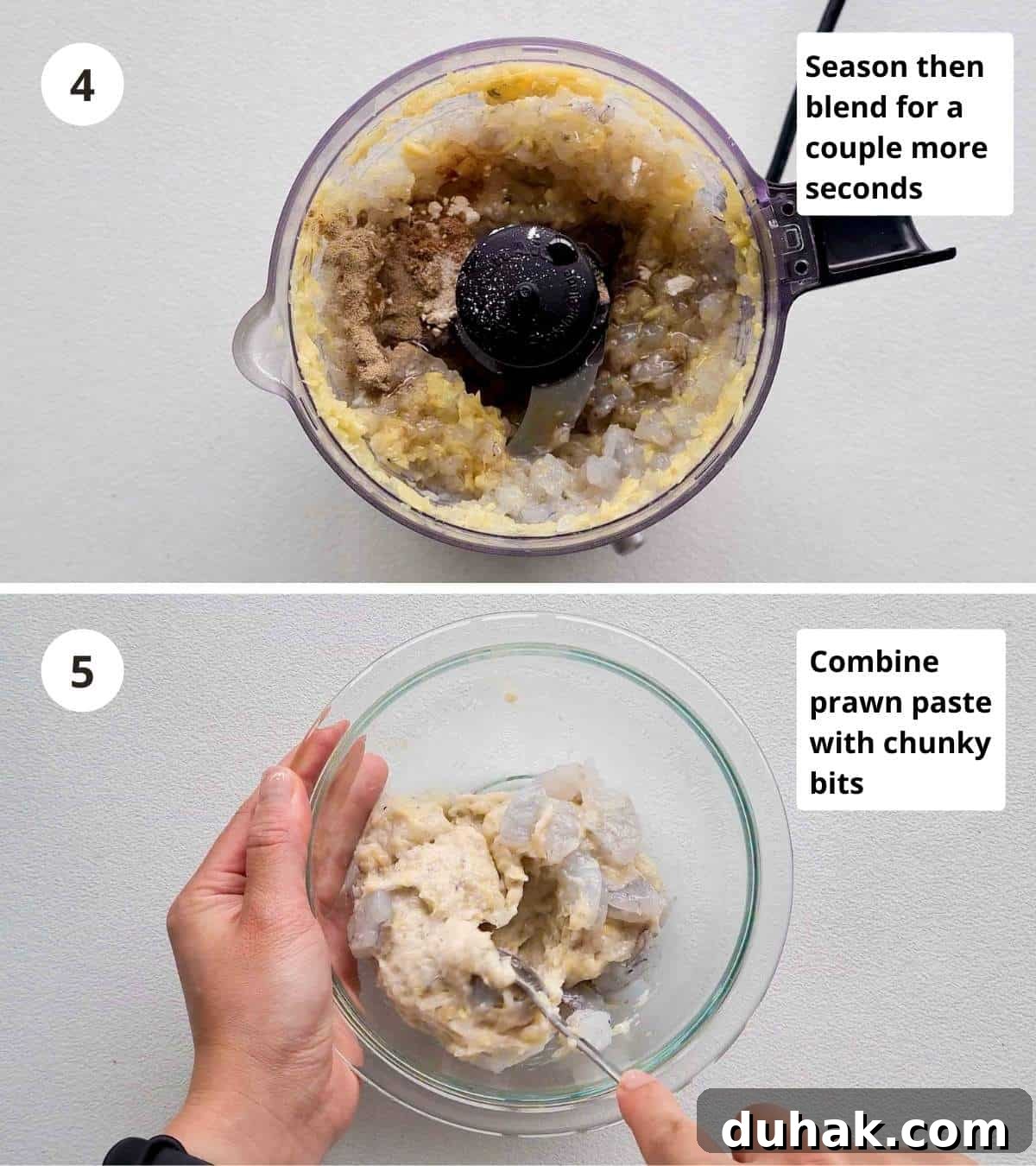
Transfer the prawn paste to a mixing bowl, stir in the reserved prawn chunks, cover and refrigerate until you are ready to wrap the dumplings.
Prepare and make the translucent dumpling dough
The dough for crystal prawn dumplings is simple, but the technique is important. The boiling water must be hot enough to cook the starches immediately, which allows the dough to come together properly.
In a medium heatproof bowl, combine wheat starch, tapioca starch and salt using chopsticks or a fork. Add the oil, then pour in boiling water straight from the kettle.
The ratio of starch to water must be accurate, so use a kitchen scale. Too much tapioca starch can make the wrappers overly chewy, while too little water can cause cracking when the dough is rolled.
Tip: Place the bowl of starch mixture directly on a kitchen scale, then pour the required amount of boiling water into the bowl.
Mix quickly. The mixture should turn into a rough dough almost immediately. If it stays liquid, the water was not hot enough and the dough cannot be saved. Start again with freshly boiled water.
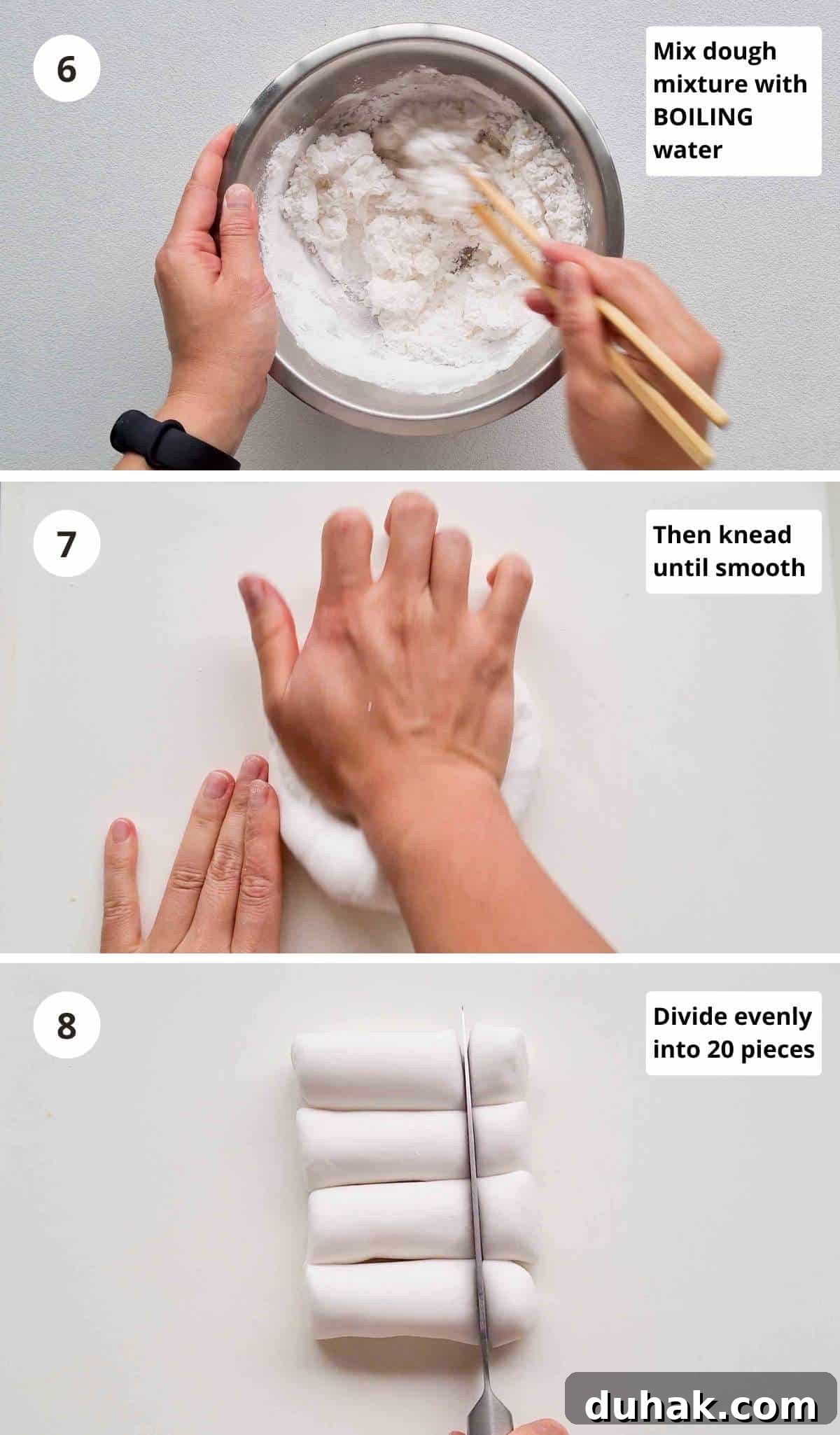
Transfer the dough to a clean work surface and knead for about 3 minutes, or until smooth and free of lumps. The dough should not feel sticky. Roll it into a long log about 30 cm, or 12 inches, long, then divide it into 20 equal pieces. Cover the pieces immediately with the mixing bowl or a damp tea towel so they do not dry out.
Wrapping the dumpling
Lightly grease the rolling pin with neutral oil using a paper towel or clean tea towel. Do not flour the work surface, as flour will dry out the dough and make it difficult to shape.
If the weather is warm, place the bowl of prawn filling over an ice pack while you wrap the dumplings. This helps keep the raw prawns cold and fresh.
Take one piece of dough and roll it into a small ball. Press it into a flat disc, then roll it into a thin, round, translucent wrapper. Turn the dough as you roll to keep the shape even.
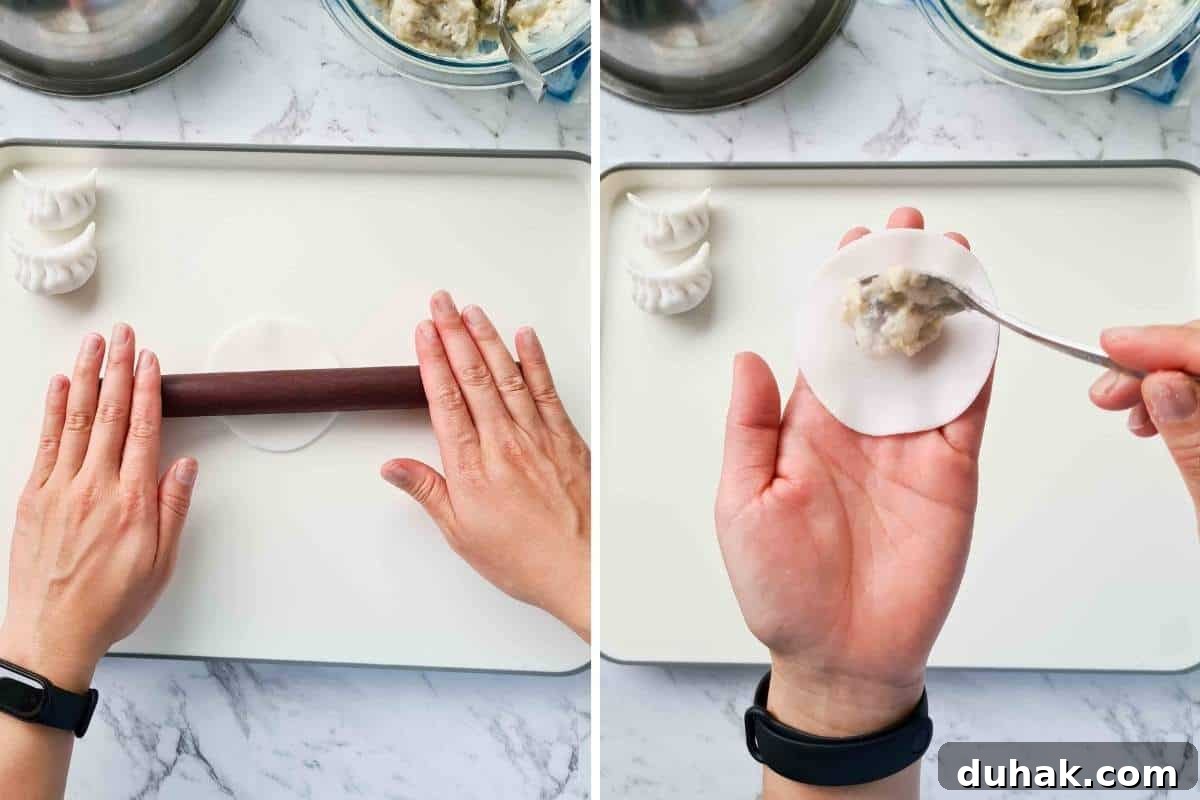
Place about one heaped teaspoon of prawn filling in the centre of the wrapper, making sure each dumpling includes one prawn chunk. Do not overfill, because crystal dumpling wrappers do not stretch like regular wheat dumpling wrappers.
To pleat, hold the dumpling in a folded position without sealing it completely. Use your thumb and index finger to make small pleats from one side to the other, sealing each pleat before moving on.
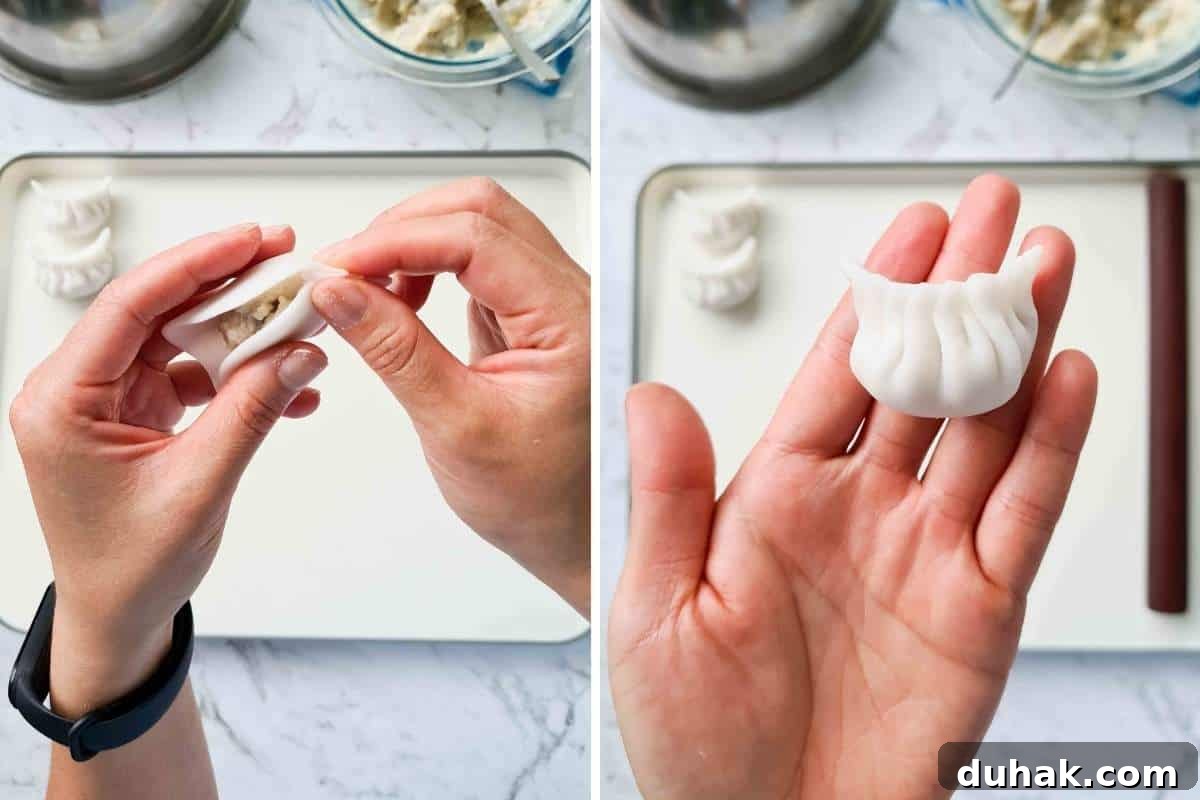
Repeat with the remaining dough and filling. Pleating is the trickiest part of making har gow, so do not worry if the first few are not perfect. With practice, the dumplings will become neater and easier to fold.
You can fold the dumplings a few hours ahead. Place them on a tray without overlapping, cover with cling wrap or a damp tea towel and refrigerate until ready to steam.
Steam and serve
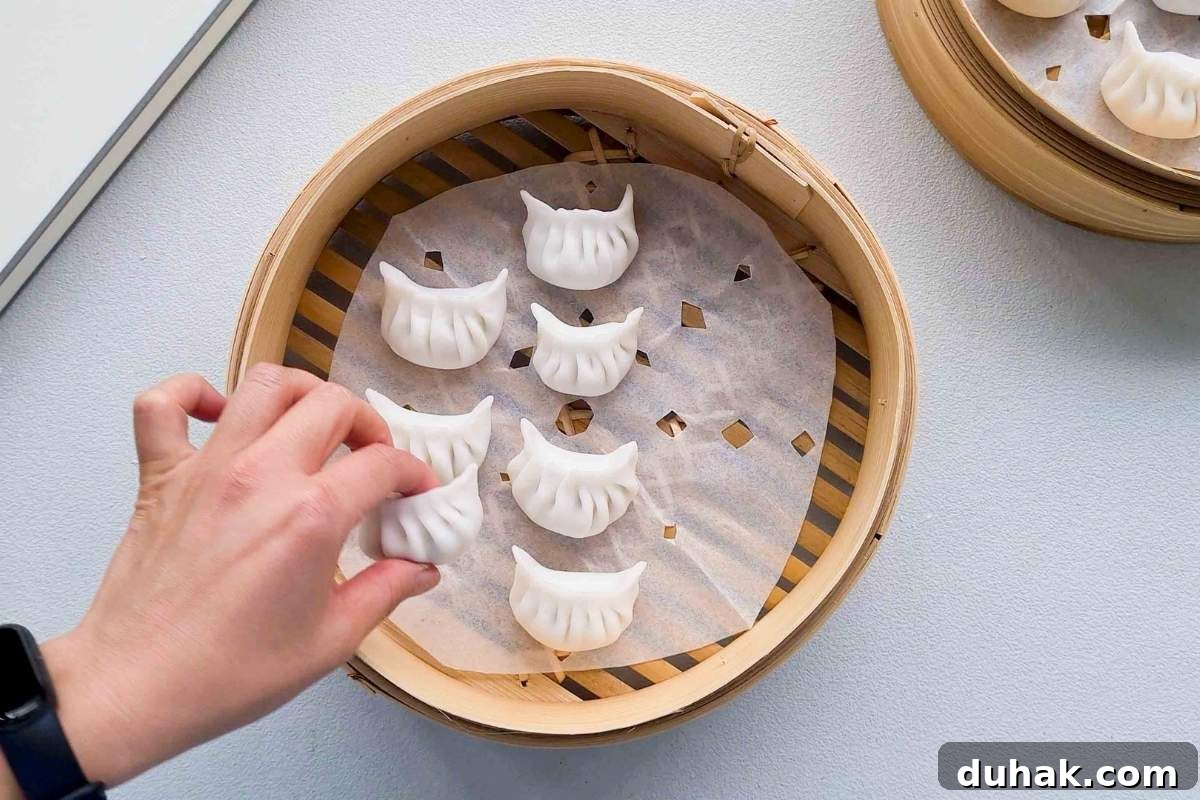
Line the bamboo steamer baskets with baking paper or parchment paper. Cut the paper to fit the baskets, and make a few small holes to allow steam to circulate.
Do not place uncooked har gow directly onto the bamboo steamer. The dumplings will stick and may tear when lifted.
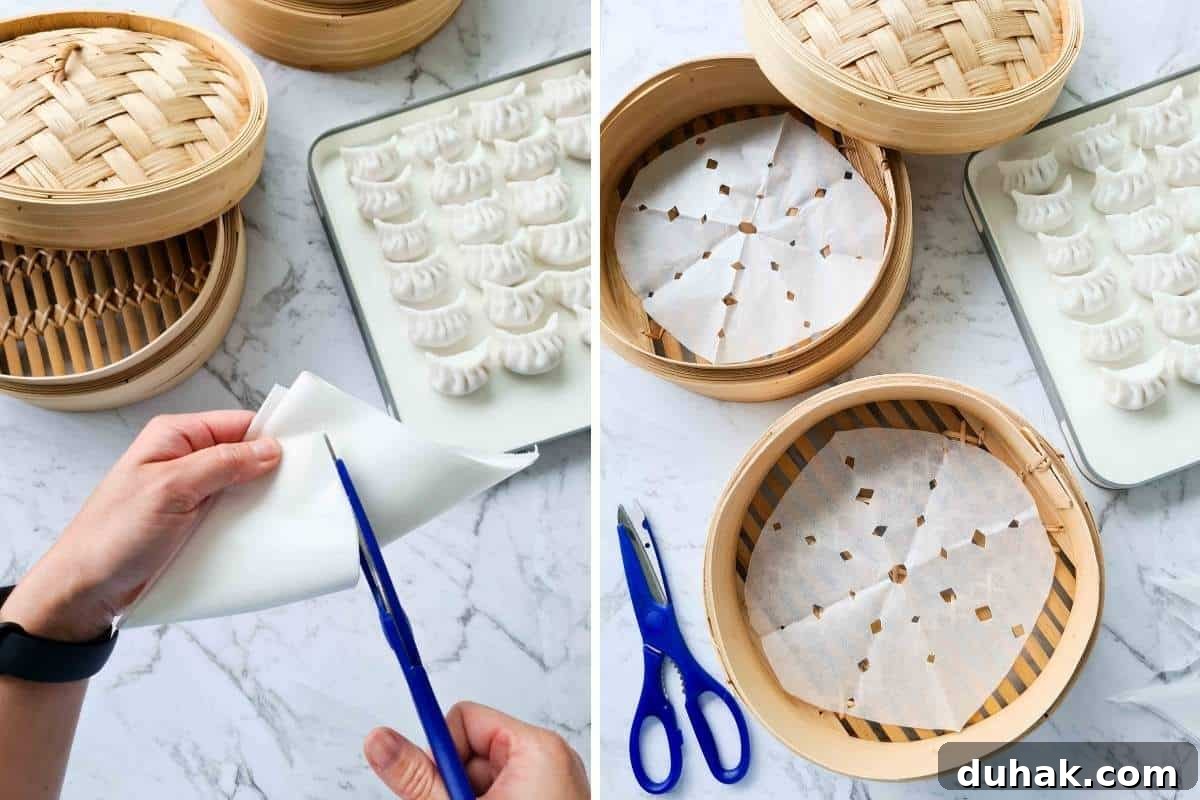
Arrange the dumplings in the baskets with space between each one, as they will expand while cooking. A medium bamboo steamer basket usually holds about 10 small dumplings.
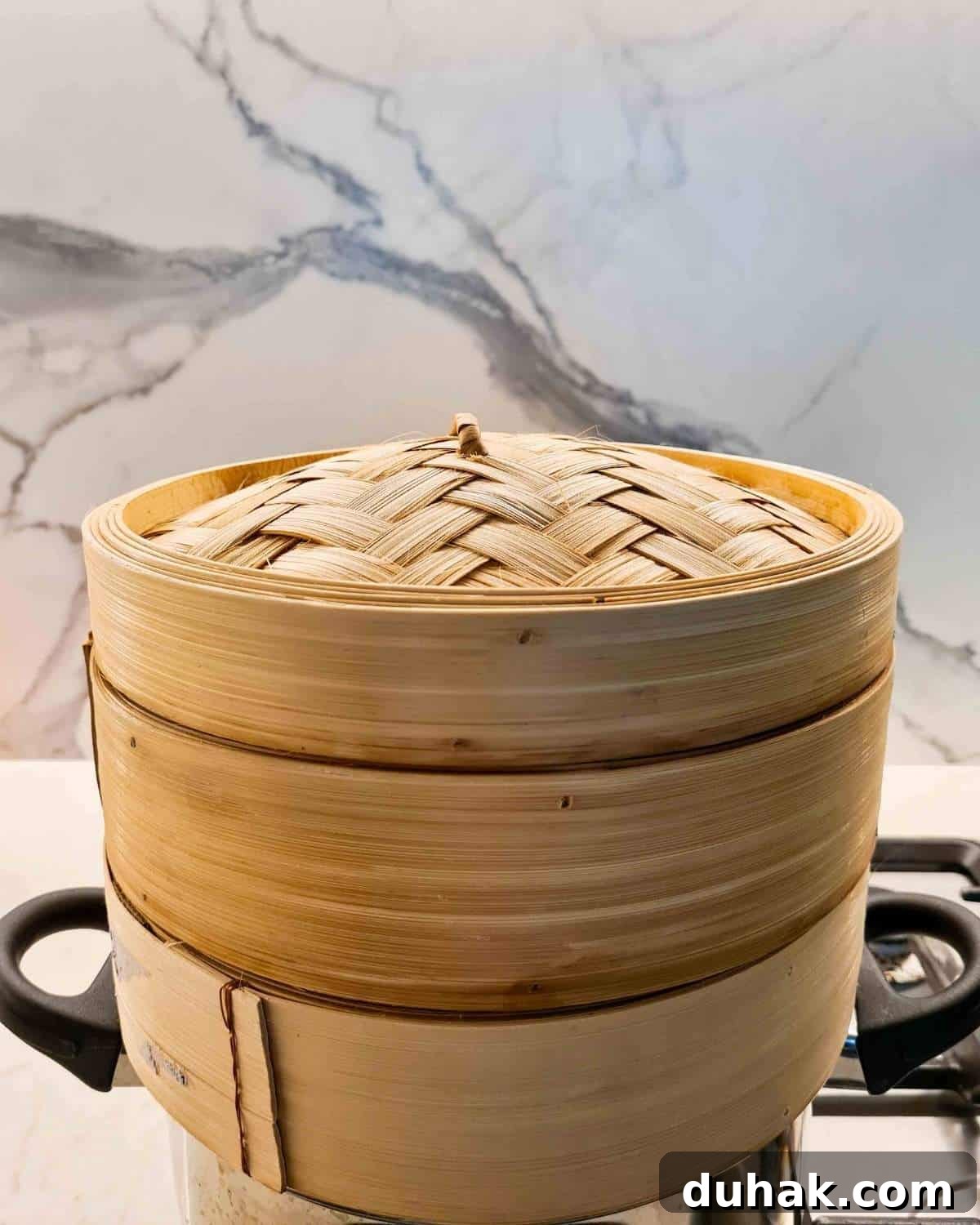
Bring water to a boil in a large pot or wok. Make sure the water does not touch the bottom of the steamer basket. Place the steamer over the pot, cover with the lid and steam on high heat for 7 minutes.
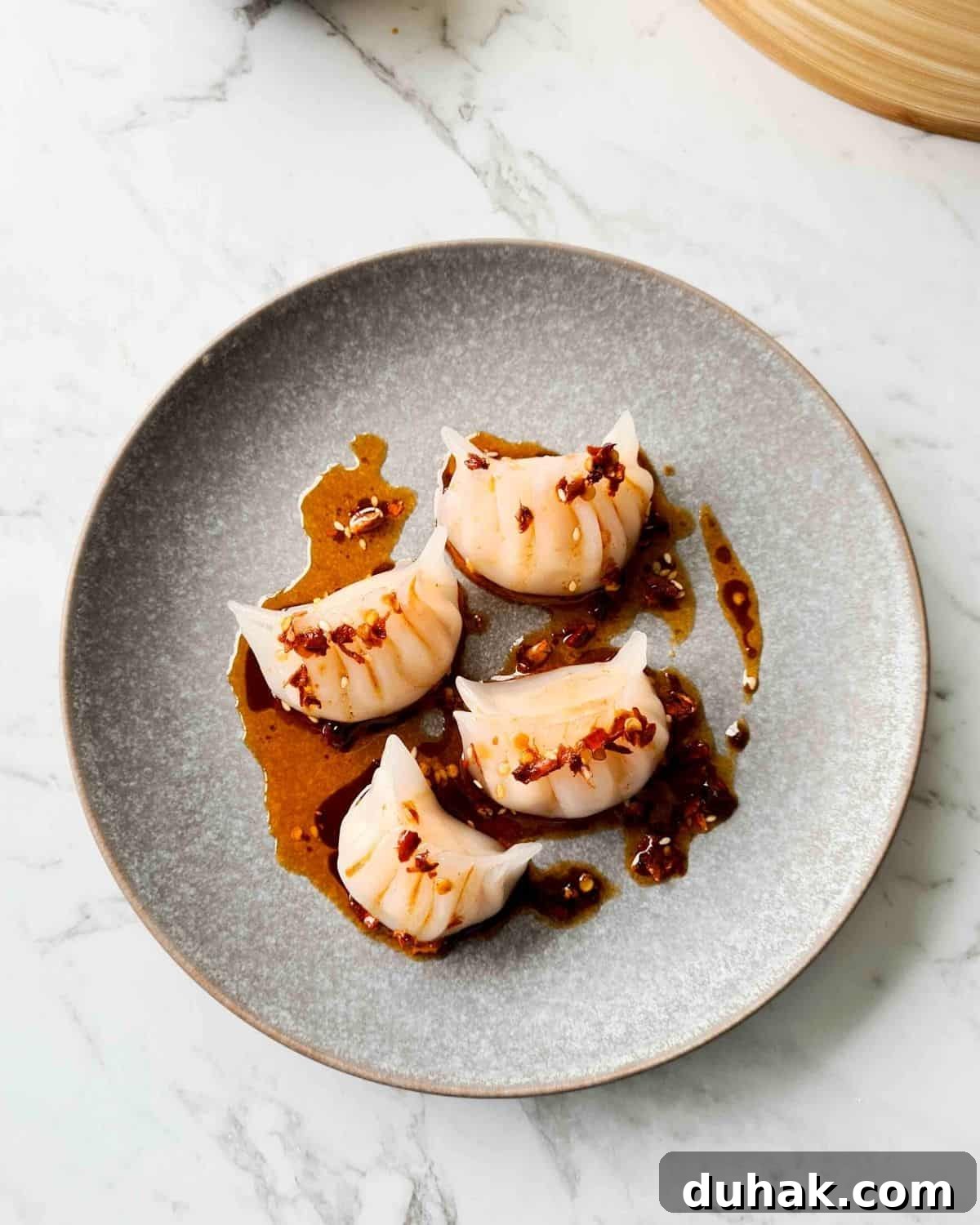
Serve the har gow hot, either plain or with a fragrant chilli oil dipping sauce.
Tips for making the best har gow at home
- Use boiling water for the dumpling dough. Pour it straight from the kettle into the starch mixture. Warm water is not enough to form the dough properly.
- Use a mini food processor for the prawn filling. This is the key to a juicy, smooth and slightly bouncy texture.
- Grease the rolling pin after each wrapper. Use a lightly oiled paper towel or tea towel. Do not use flour, as it dries out the crystal dough.
- Do not overfill the dumplings. Use about one heaped teaspoon of filling per dumpling. If you add too much, remove the excess with a small spoon.
- Keep your fingers away from the filling while wrapping. This helps prevent sticky edges and makes pleating easier.
- Practice makes a big difference. The pleats do not need to be perfect for the dumplings to taste delicious.
Good to know (FAQs)
Place a deep, medium-sized bowl upside down in a large pot or wok. Add hot water, leaving about 8 cm, or 3 inches, of the bowl uncovered. Bring the water to a boil. Place the dumplings on a plate lined with baking paper, then set the plate on top of the bowl. Cover and steam on high heat for 7 minutes.
Steam the dumplings on high heat for about 5 minutes, or until heated through.
If you use fresh raw prawns, you can freeze the uncooked dumplings for up to 2 months in airtight containers. Place them on a tray without overlapping and freeze for about 1 hour, then transfer them to containers. If you use frozen prawns, it is best not to refreeze the uncooked dumplings.
This recipe is estimated at about 47 calories per dumpling, not including dipping sauce.
Har gow comes from Guangdong, China.
No. This recipe uses wheat starch, so it is not gluten-free.
Har gow goes well with many Asian dishes, including stir-fries, noodles, soups and rice dishes. Try it with Chinese broccoli, Chinese sausage fried rice, chicken noodle stir fry or san choy bow.
Dim sum refers to small Cantonese dishes served for breakfast and lunch, including both savoury and sweet dishes. Dumplings are a general category of food made with fillings wrapped in dough.
Made this recipe? Leave your thoughts or questions in the comments. Happy cooking!
Video
📖 Recipe
Har Gow (Dim Sum Crystal Prawn Dumplings)
Equipment
-
Mini food processor or blender
-
Steamer or bamboo steamer basket
-
Rolling pin
Ingredients
Har gow filling
- 300 g / 11 ounces prawns or shrimp, peeled and deveined
- ¼ cup canned bamboo shoots, about 40 g
- 1 tablespoon Shaoxing wine
- ½ teaspoon corn starch
- ¼ teaspoon salt
- ¼ teaspoon sugar
- ¼ teaspoon white pepper
- 1 teaspoon sesame oil
- 1½ tablespoons neutral-tasting oil
Har gow sheets
- 80 g / 2.8 ounces wheat starch
- 40 g / 1.4 ounces tapioca starch
- 125 g / 4.4 ounces boiling water
- Pinch of salt
- ½ teaspoon neutral-tasting oil
Chilli oil dipping sauce, optional
- 2 tablespoons homemade Sichuan chilli oil
- 2 teaspoons soy sauce
- 2 teaspoons caster sugar
Instructions
To make the har gow filling
- Blend the bamboo shoots in a small food processor for a few seconds until finely minced.
- Cut a few prawns into large chunks. Depending on their size, cut them in halves or thirds. Prepare enough for 20 pieces and set aside.
- Add the remaining whole prawns to the food processor with the bamboo shoots and blend for 3 seconds.
- Add the remaining filling ingredients and blend for another 5 seconds, or until a thick paste forms.
- Transfer the mixture to a bowl, stir in the reserved prawn chunks, cover and refrigerate until ready to assemble.
To make the har gow sheets
- Combine wheat starch, tapioca starch and salt in a medium heatproof bowl. Mix with chopsticks or a fork.
- Add the oil and boiling water. For accuracy, place the bowl on a kitchen scale and pour the boiling water straight from the kettle.
- Mix quickly in a circular motion until a lumpy dough forms. Transfer to a clean work surface and knead for about 3 minutes until smooth. Do not flour the surface.
- Roll the dough into a log about 30 cm / 12 inches long, then divide it into 20 equal pieces.
- Cover the dough pieces with the bowl or a damp tea towel to prevent them from drying out.
To assemble
- Take one dough piece and roll it into a small ball. Lightly grease the rolling pin with oil, then flatten the dough and roll it into a thin round sheet about 8 to 10 cm / 3 to 4 inches wide.
- Keep the prawn filling cold while wrapping. If needed, place the bowl over an ice pack.
- Add about 1 teaspoon of prawn filling to the centre of the wrapper, including one prawn chunk. Pleat and seal the dumpling. Repeat until all 20 dumplings are made.
To steam
- Line the bamboo steamer baskets with baking paper. Cut small holes in the paper to help steam circulate.
- Place the dumplings in the baskets without overlapping. Leave space between each dumpling because they expand as they cook.
- Bring water to a boil in a pot or wok. Place the steamer over the pot, cover with the lid and steam on high heat for 7 minutes.
To make the chilli oil dipping sauce
- Combine the chilli oil, soy sauce and caster sugar in a small bowl and mix well.
Notes
Bamboo shoots: Canned bamboo shoots are usually available at Asian supermarkets and in the Asian aisle of major supermarkets.
Starches: Wheat starch and tapioca starch give the best result for translucent har gow wrappers. Substitutions are not recommended.
Boiling water: The water must be freshly boiled so the starches cook and form a workable dough.
Storage: Keep the prawn filling refrigerated until ready to wrap, especially on warm days.
Steamer lining: Always line the steamer with baking paper to prevent the dumplings from sticking.
Reheating: Steam cooked har gow on high heat for about 5 minutes.
Freezing: If made with fresh raw prawns, uncooked har gow can be frozen for up to 2 months. Do not refreeze dumplings made with prawns that were previously frozen.
Nutrition: Nutritional values are estimates and are based on one har gow without dipping sauce.
Nutrition
More Asian recipes to try
- San choy bow (lettuce wraps)
- Wonton Noodle Soup
- Pork Wontons
- Lu Rou Fan (Taiwanese Braised Pork Rice)