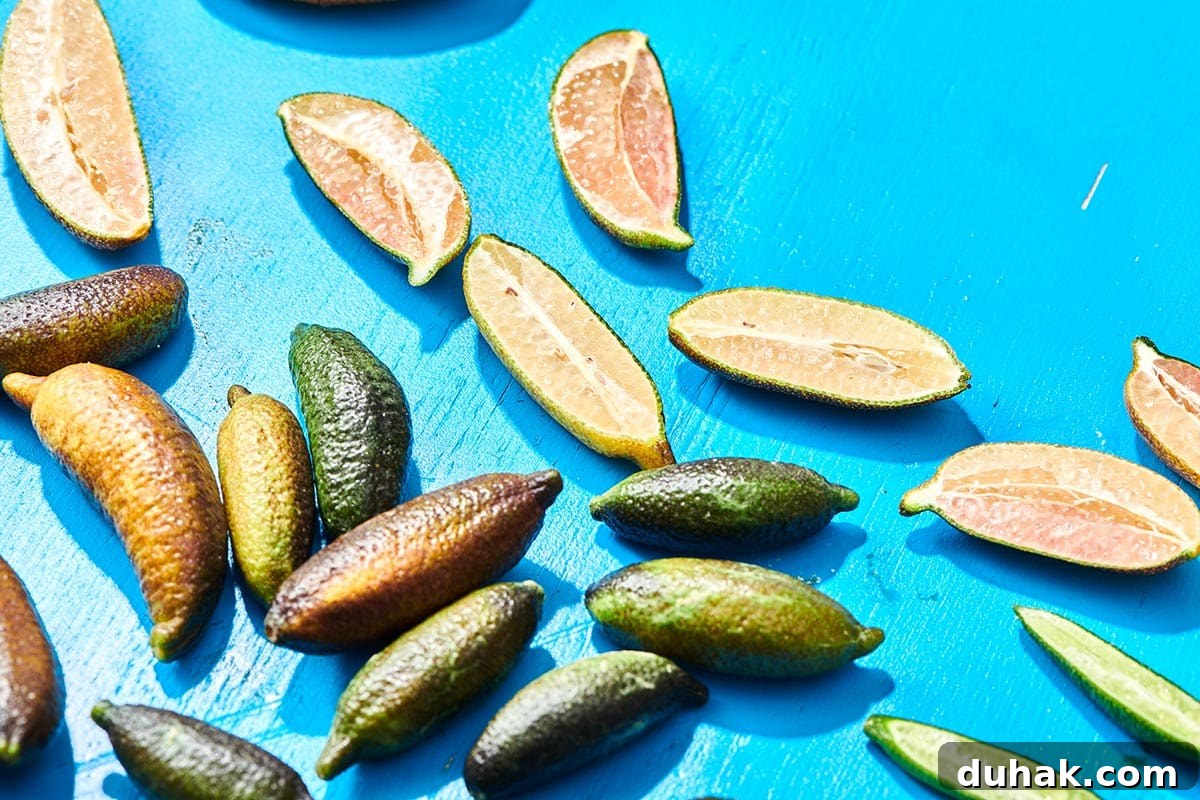
The finger lime is a sought-after ingredient right now because of its surprising, genre-defying qualities. It looks like a slender, pinky-shaped lime, but inside are tiny crunchy, caviar-like pearls of lime juice. While it’s a novelty, the flavor and texture make it an excellent addition to everything from oysters to scallop ceviche.
- What Are Finger Limes?
- What Do Finger Limes Look Like?
- What Do Finger Limes Taste Like?
- What Are the Health Benefits of Finger Limes?
- Where to Find Finger Limes
- When Are Finger Limes in Season?
- How To Prepare and Cook with Finger Limes
- How to Store Finger Limes
- Fun Facts About Finger Limes
- Try Using Finger Limes In These Recipes
How to Cook with Finger Limes: Everything you need to know about buying, storing and using these little pods of crunchy lime caviar.
What Are Finger Limes?
Finger limes, or Citrus australasica, are a citrus fruit native to Australia. Despite their unusual appearance, they contain a bright, concentrated burst of citrus in tiny juice-filled vesicles.
Chefs prize finger limes for the way they enhance both flavor and presentation. They make an elegant, easy-to-use alternative to traditional lime or lemon when finishing a dish.
What Do Finger Limes Look Like?
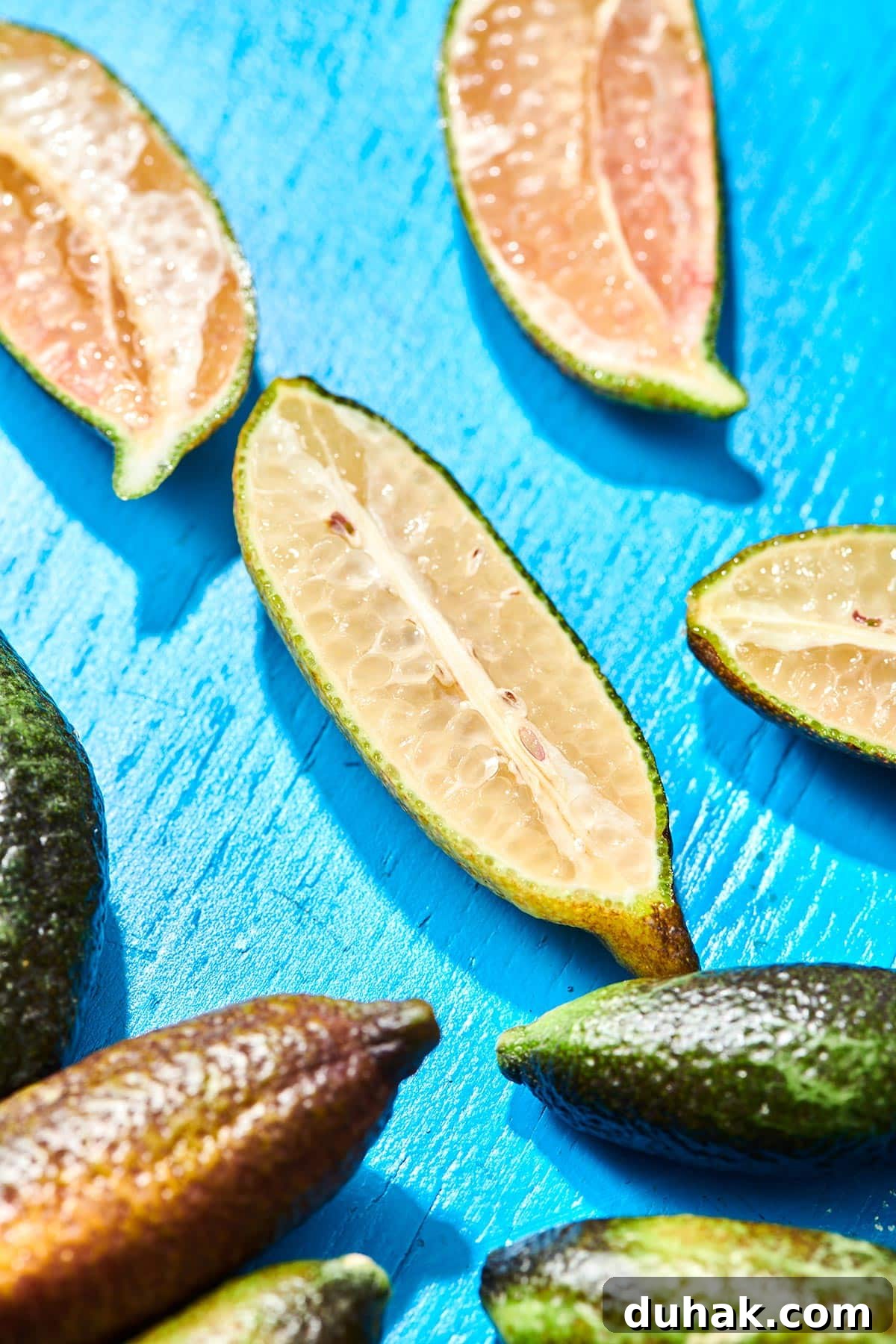
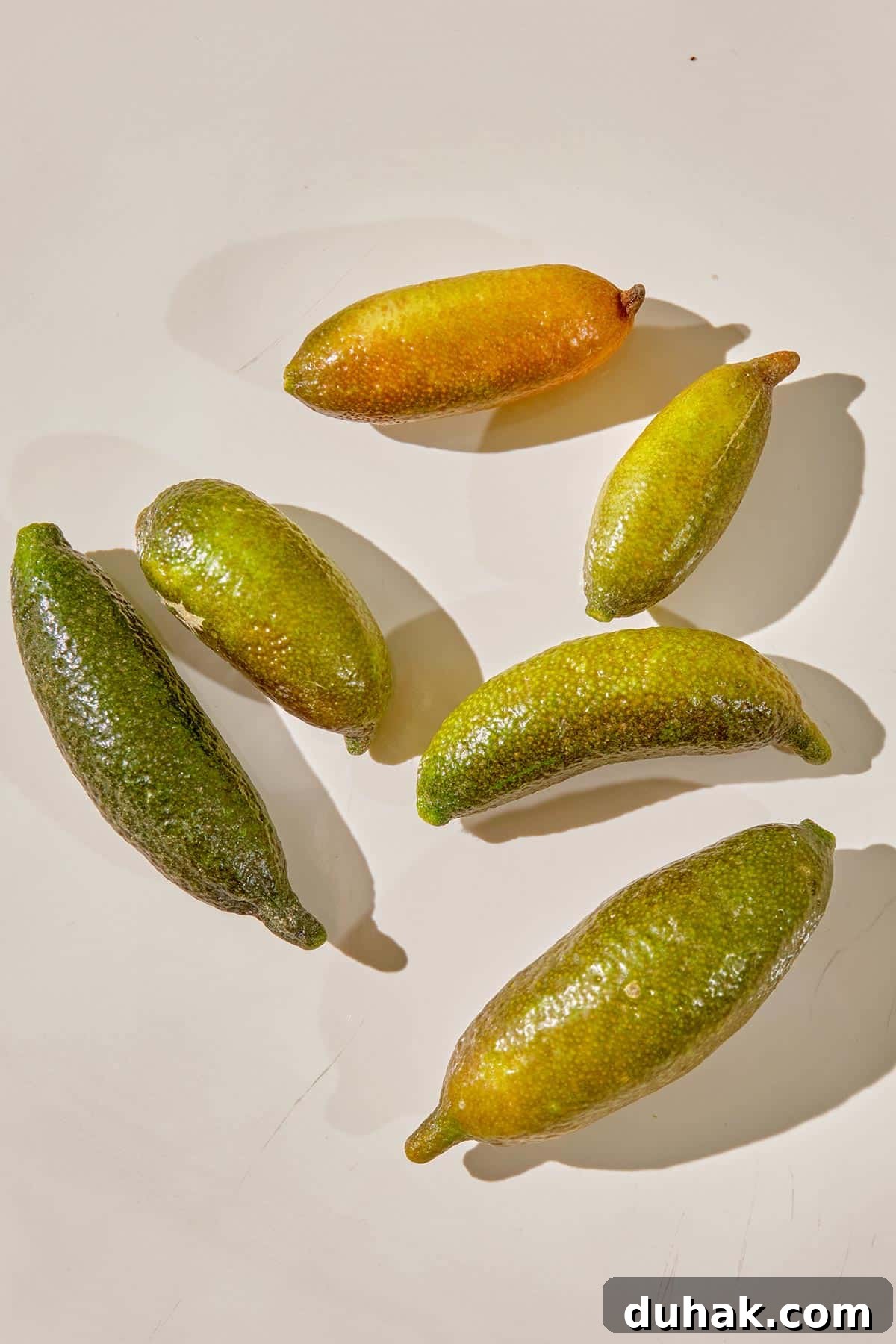
Finger limes are typically 2 to 3 inches long and resemble small pickles. Their skin ranges from green to purple, while the interior vesicles can be green, pink, brown, or translucent.
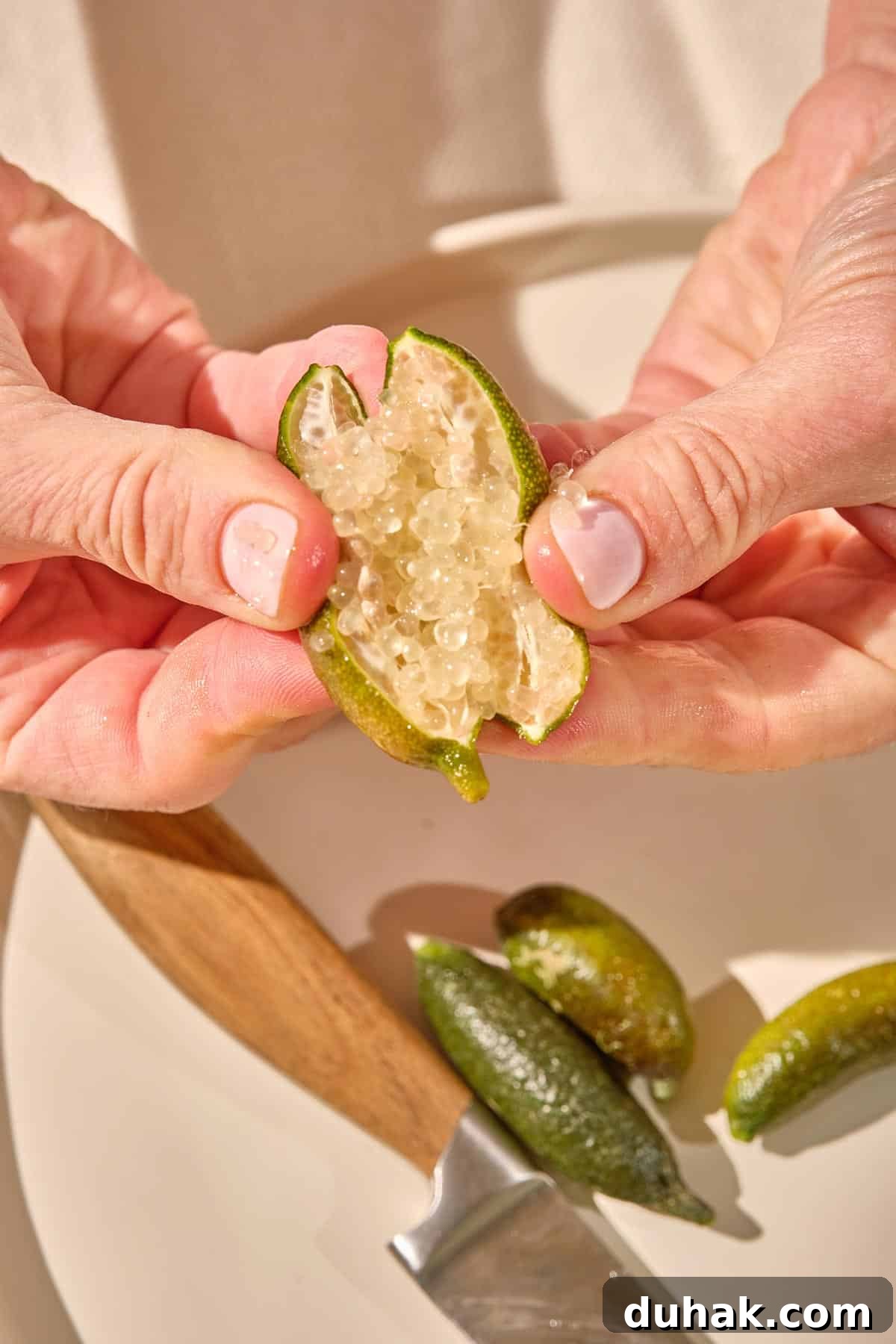
Inside you’ll find countless tiny, bead-like juice sacs called vesicles. These “caviar” or “caviar-lime” pearls are slightly firmer than fish roe but similar in size, and they burst with a bright pop when bitten, releasing concentrated lime flavor.
What Do Finger Limes Taste Like?
Finger limes deliver a flavor very close to lime juice—bright, acidic and aromatic. Many people detect subtle herbal or botanical notes, sometimes likened to rosemary, and a delicate bitterness that balances the citrus brightness.
What Are the Health Benefits of Finger Limes?
Although small, finger limes are rich in vitamin C. You won’t eat large quantities of them, but each garnish contributes a small boost of vitamin C and antioxidant compounds to your dish.
Where to Find Finger Limes
In the U.S., finger limes are primarily grown in California. They are still relatively rare and can be expensive—prices can reach high amounts per pound in specialty markets.
Because they are prized by restaurants, retail availability is limited. Look for finger limes at farmers markets, specialty grocery stores, or from reputable online sellers that offer fresh produce.
When Are Finger Limes in Season?
Finger lime plants flower sporadically throughout the year and typically produce fruit around seven months after flowering. In many growing regions, you’ll find the best availability in late summer through fall.
How To Prepare and Cook with Finger Limes
Harvesting the caviar is simple: slice or snap a finger lime in half and squeeze each half like you would a tube of toothpaste. Fresh fruit will release the vesicles easily.
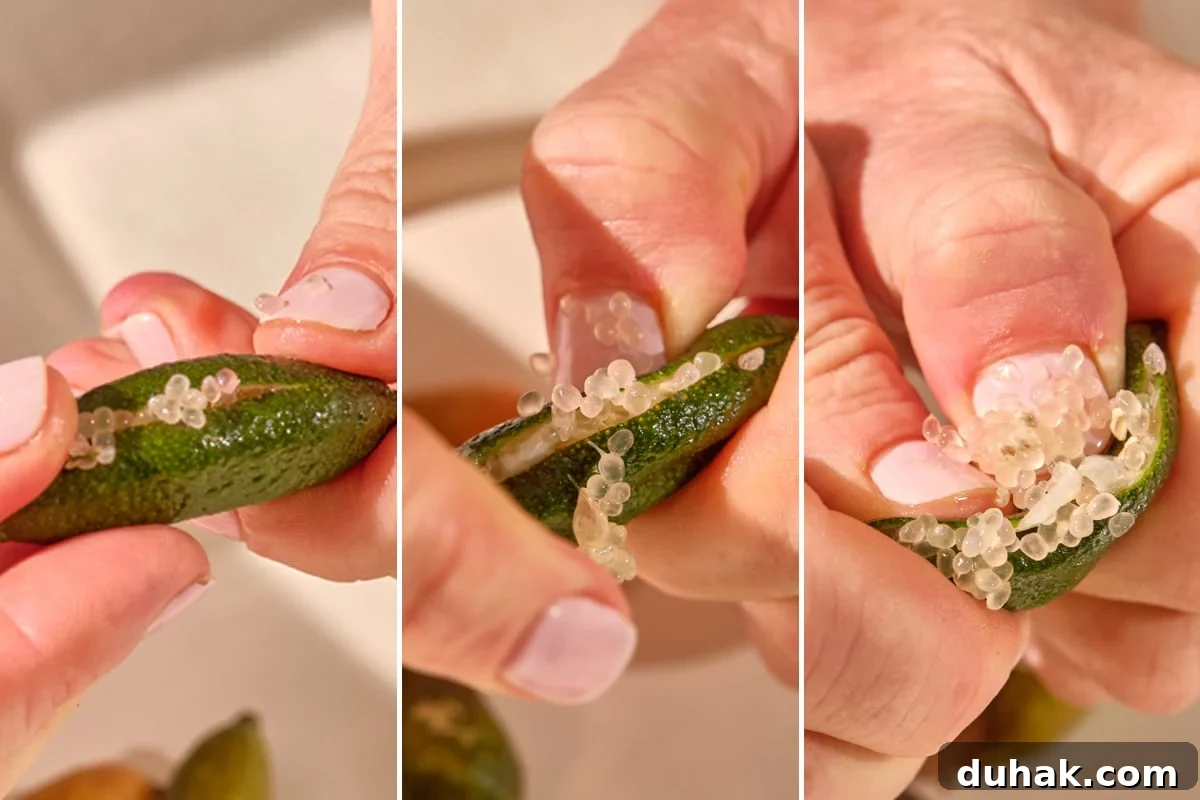
Because of their price and delicate texture, finger limes are most often used as a finishing garnish. Their sharp, clean citrus pairs exceptionally well with seafood—try them on sushi, ceviche or oysters.
They also brighten cocktails and can add a lively citrus pop to dishes like guacamole or tacos, where a small burst of acidity and texture makes a big difference.

How to Store Finger Limes
Finger limes have a relatively long shelf life. Kept in the refrigerator, they can last several weeks, but for the best texture and the most dramatic release of caviar, use them while they’re freshest—ideally within a couple of weeks of purchase.
Fun Facts About Finger Limes
Finger limes are sometimes called “rainforest pearls” for their striking appearance and Australian origins. A few more interesting points:
- Dried finger lime peel can be ground into a spice with an earthy, tangy aroma.
- A significant portion of Australian finger lime production is exported to Europe and Asia, largely serving the hospitality sector.
- Finger lime plants can be grown in home gardens in many regions. They tolerate partial sun, need protection from cold below about 45°F, and are a way to enjoy the fruit without relying on pricey retail purchases.