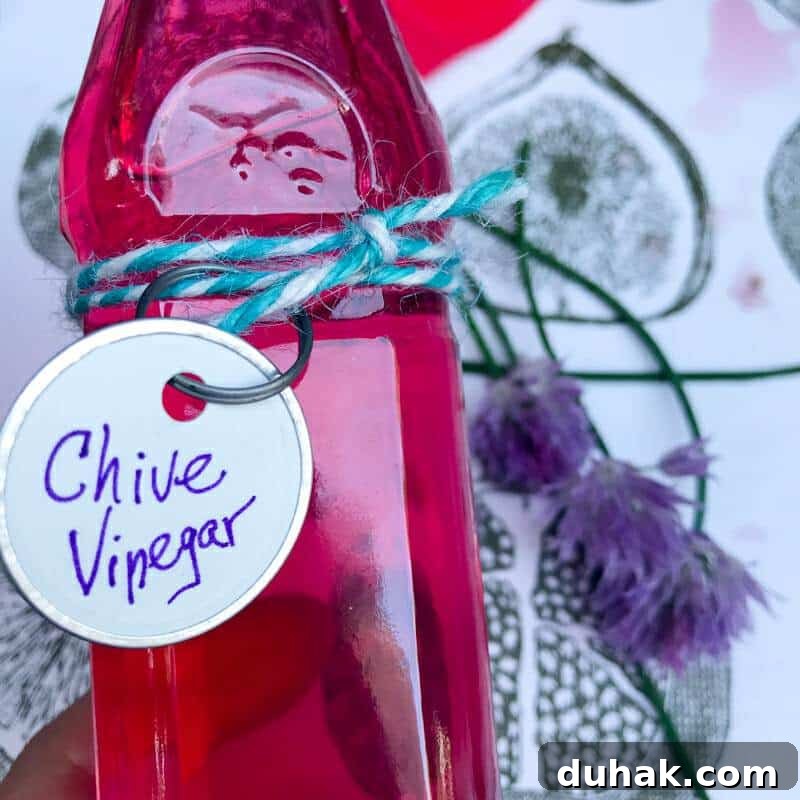
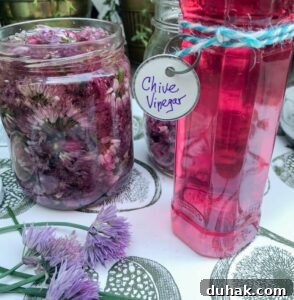
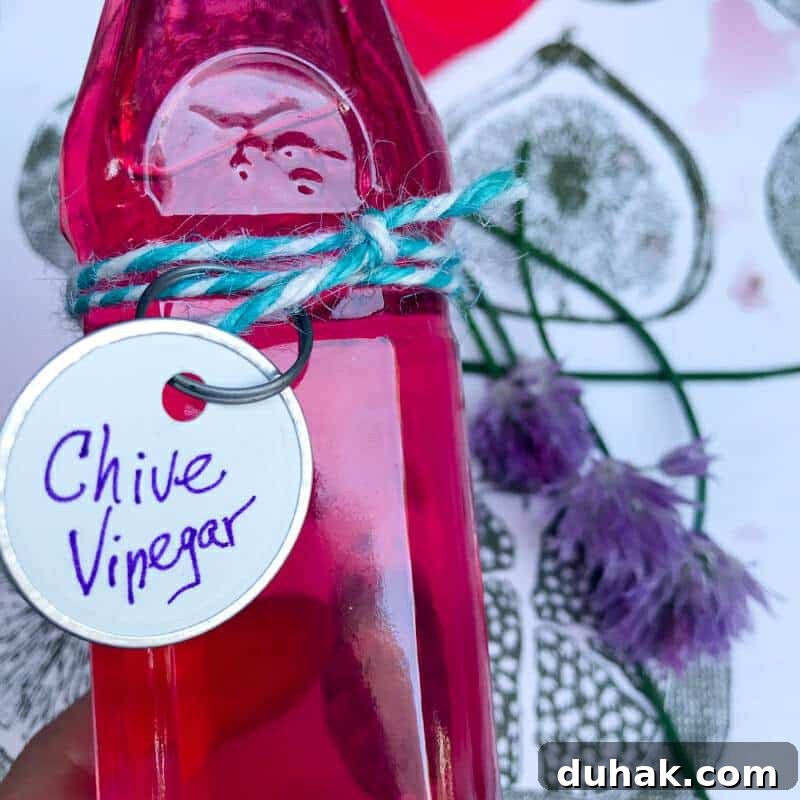
Chive-infused vinegar is one of my favourite vinegars for making salad dressings. It develops a beautiful violet hue and a delicate onion-like flavor that brightens vinaigrettes without overpowering them.
Read More: How to Cut & Preserve Chives, 5 Infused Vinegars, Chive Biscuits, Lemon Chive Vinaigrette
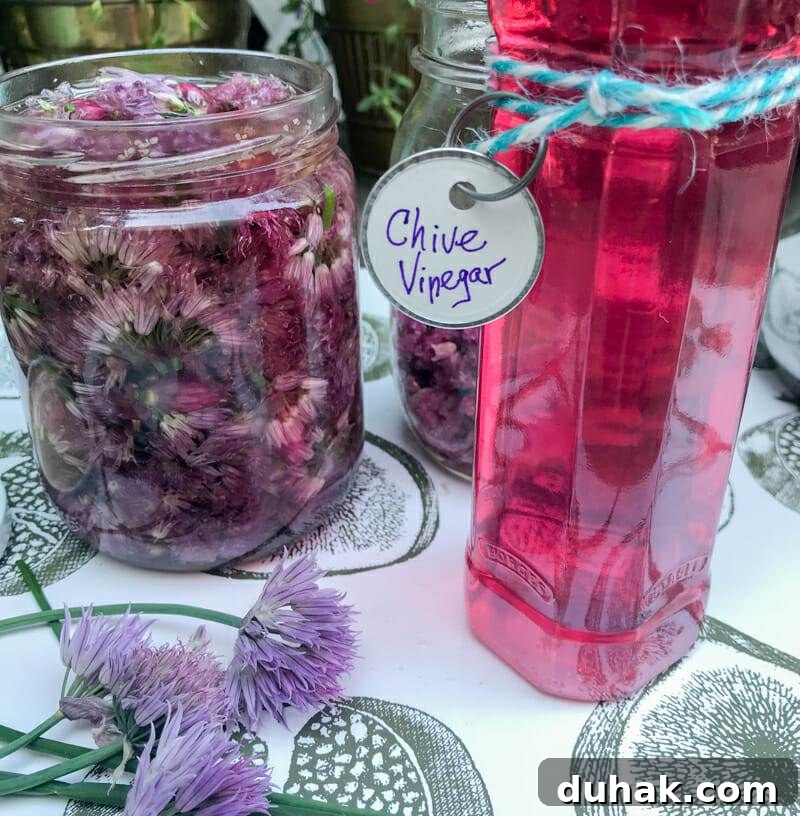
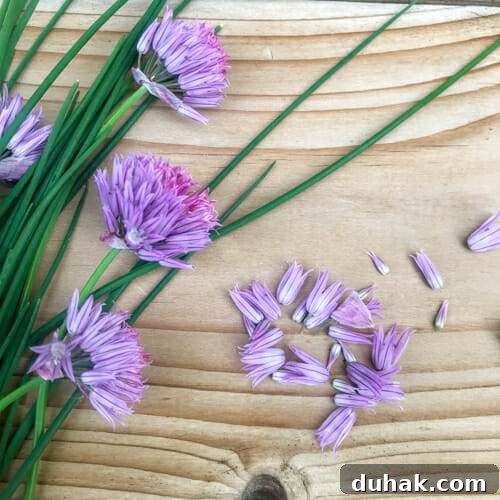
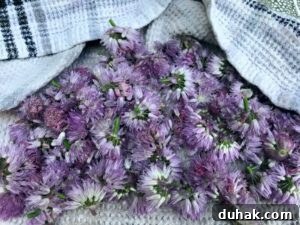
This vinegar is made using the purple blossoms of chives. As they steep, the blossoms release both color and flavor: a gentle, mild onion taste — more like onion seed than raw onion. If you prefer light, herb-forward dressings, this vinegar is ideal for Italian- or Greek-style vinaigrettes.
Recipe for Chive Infused Vinegar
Print Recipe
Chive Blossom Infused Vinegar
Ingredients
- 1 cup chive blossom heads
- 1 cup white wine vinegar
Instructions
-
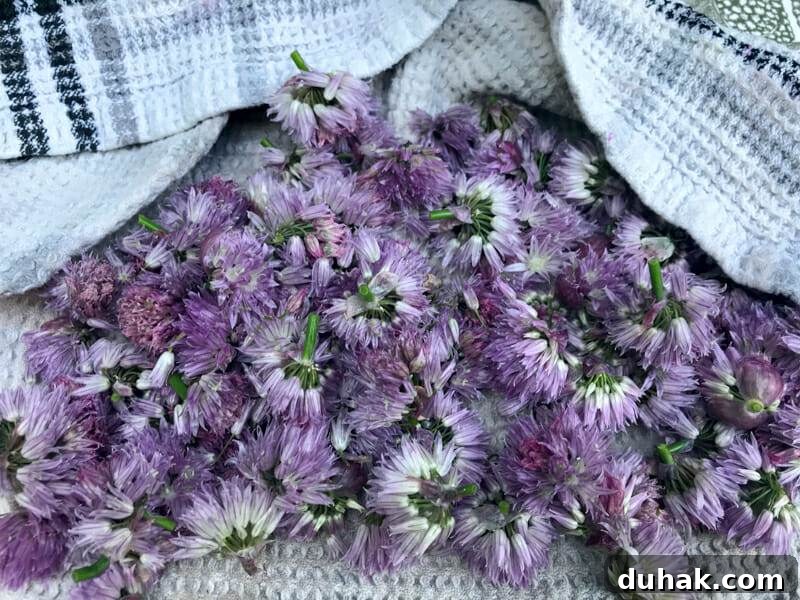
Rinse chive blossoms several times in cold water to remove debris and tiny insects. If very dirty, soak for 15–30 minutes in a salt solution (2 tbsp salt to 4 cups water). Drain and pat dry; the blossoms should be as dry as possible before infusing.

-
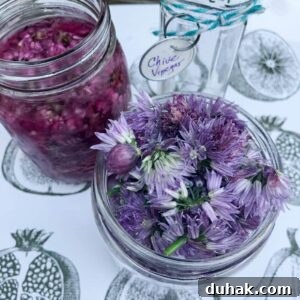
Pack a clean glass jar with the chive blossom heads.
-
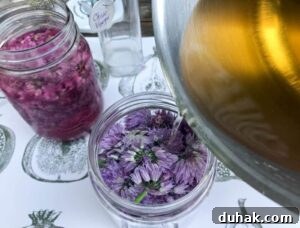
Warm the vinegar until just below boiling, then pour it over the blossoms. Stir gently to remove trapped air and make sure all blossoms are submerged; top up with more vinegar if needed.
-
Allow the jar to cool, seal it tightly, give it a gentle shake and store it in a cool, dark place for one week.
-
Taste the vinegar after a week. If you want a stronger flavor, let it infuse another 3–5 days. When the flavor is to your liking, proceed to strain.
-
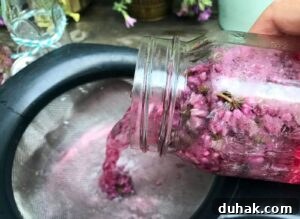
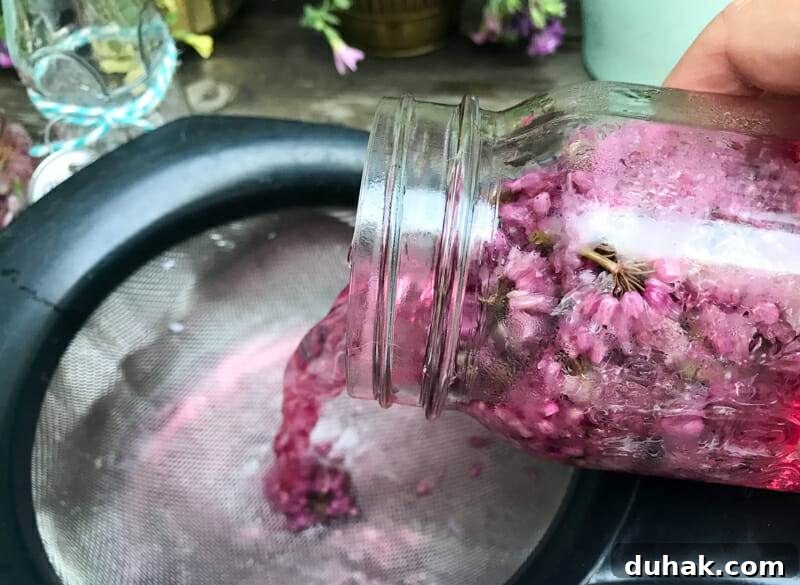
Strain out the blossoms and discard or compost them. Transfer the flavoured vinegar to a clean glass bottle or jar with a plastic- or rubber-lined lid; metal lids can corrode from the acid.
-
Label and decorate your bottle as desired before storing.
Video
Notes
Italian Vinaigrette with Chive Vinegar
3 Tbsp canola oil
1 Tbsp chive vinegar
2 tsp Dijon mustard
1 tsp sugar or honey
1 tsp Italian seasoning
1/2 tsp salt & a dash of pepper to taste
Combine ingredients in a jar, shake well, taste and adjust seasoning. Enjoy.
Tips for Homemade Infused Vinegar
- Choose a mild vinegar such as white wine or rice vinegar for the best color and a gentle taste; most vinegars will work, but stronger vinegars may overpower delicate blossoms.
- Maintain good cleanliness and food hygiene. Proper acidity makes infused vinegar a safe preserve when basic sanitation is observed. Discard any infusion that shows bubbling, mold, slime, cloudiness or off-colours.
- Avoid adding water to the infusion. Make sure blossoms are well dried so they don’t dilute the vinegar.
- Use only glass containers with a tight seal for both infusion and long-term storage. Seal with plastic- or rubber-lined lids; metal lids can corrode. Alternatively, place parchment between the lid and jar.
- Store infusions in a cool, dark place. Refrigeration helps preserve color and flavor but isn’t required for safety.
- Use infused vinegars within 4–6 months; colour and aroma fade over time.
- Do not prepare homemade infused oil for long-term storage. Oil infusions can support growth of C. botulinum. At home, keep infused oils only for immediate use or refrigerate for up to three days.
- Avoid aluminum pots and utensils when preparing vinegar; they can create off-flavors.
How to Use Infused Vinegar
Infused vinegars are versatile. Try them in:
- homemade vinaigrettes and salad dressings
- marinades for meats or vegetables
- sauces and condiments (sweet-and-sour, barbecue, mustard-based sauces)
- oil-and-vinegar bread dips
Other Combinations
You can infuse vinegar with many herbs, fruits and spices. Try combinations such as basil & oregano, garlic & rosemary, lemon & dill, apple & cinnamon (use sticks), lemon & blueberry, or raspberry & mint. Use the same basic process and ratio as outlined above. Other popular infused vinegars include:
- Cranberry & Orange Vinegar
- Spicy Hot Pepper Vinegar
- Lemon & Tarragon Vinegar
- Garlic & Herb Vinegar
Have you made infused vinegar? Share your experience in the comments or post a photo on social media and tag @getgettys so I can see it!