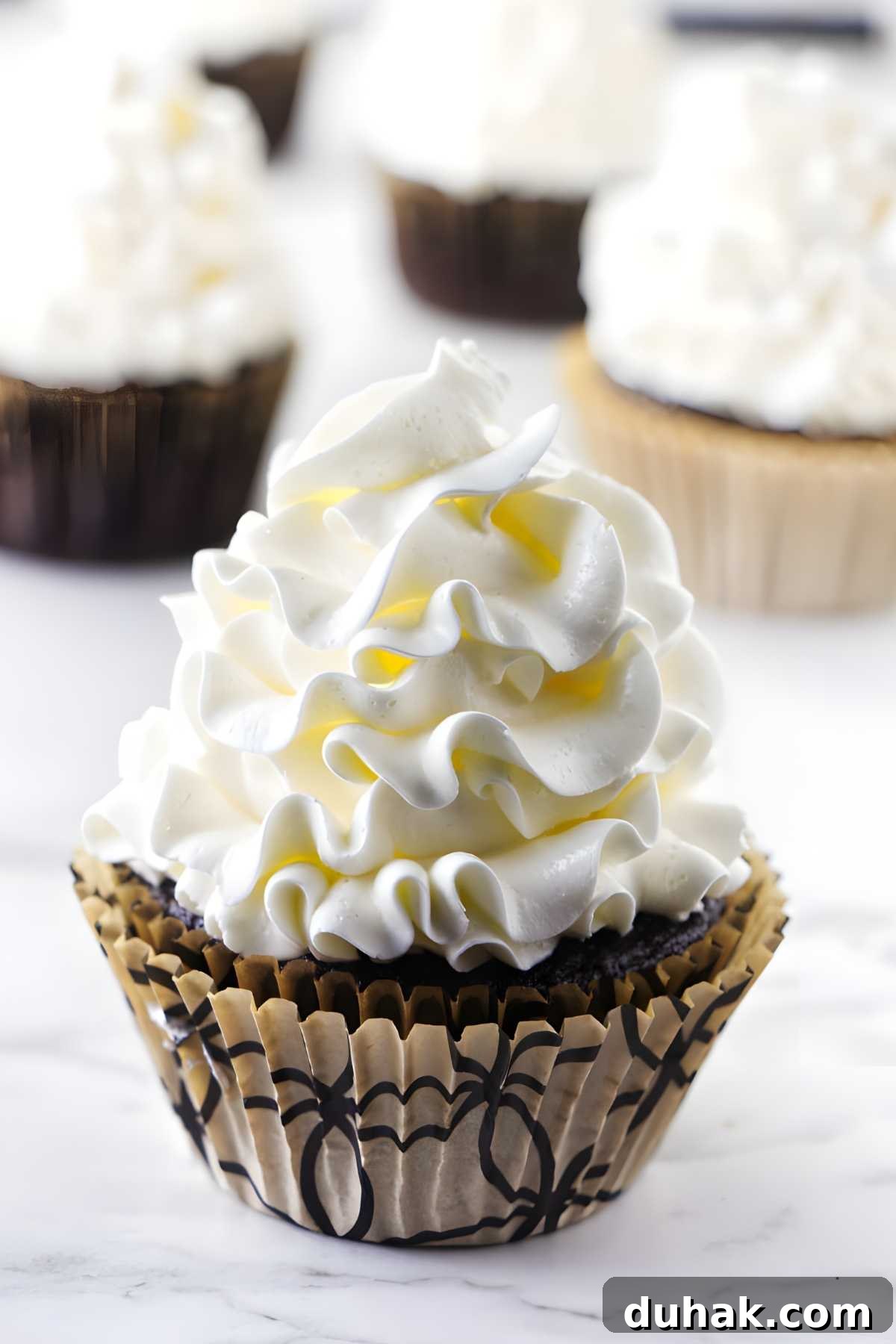
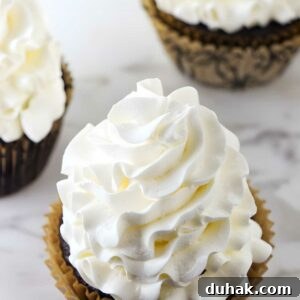
Meet the frosting that does it all: Italian Meringue Buttercream. Silky, stable, and not cloyingly sweet, this buttercream delivers a light, mousse-like texture that’s rich and creamy. Unlike American buttercream, which can be dense or overly sweet, Italian meringue buttercream pipes beautifully, holds up well in warm weather, and produces clean, elegant results.
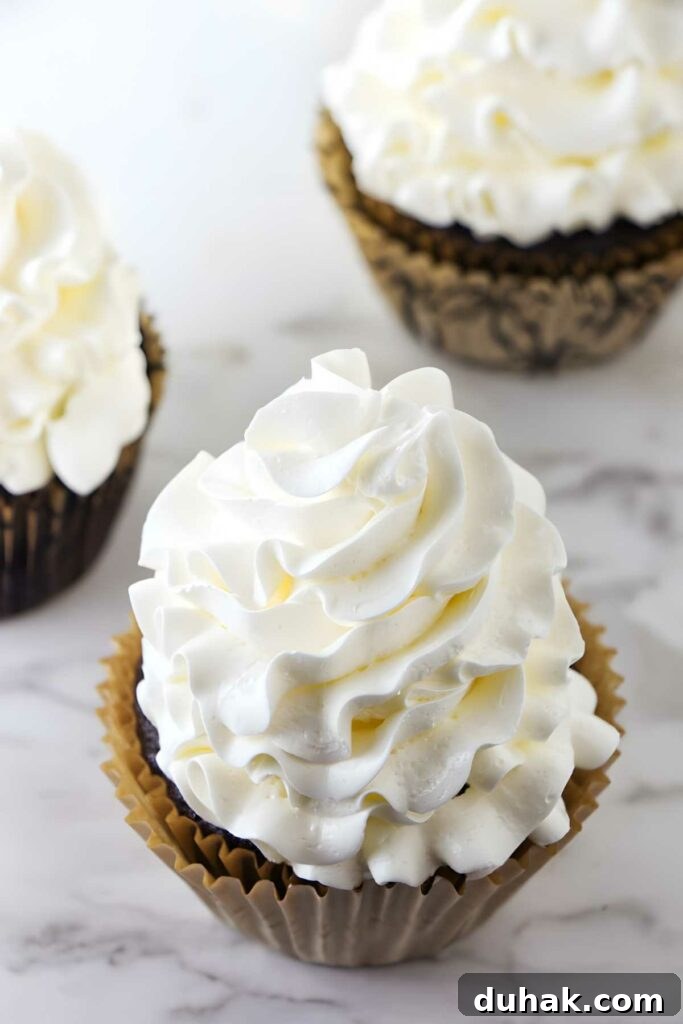
Here’s Why This Italian Meringue Buttercream Recipe Works
Stable and heat-resistant: The cooked sugar syrup creates a buttercream that holds its shape much better in warm conditions than most frostings.
Silky-smooth texture: Whipping hot syrup into whipped egg whites yields an ultra-light, silky meringue base that blends with butter to create a non-greasy finish.
Less sweet than most: This buttercream highlights real butter flavor without relying on cups of confectioners’ sugar, so it tastes less sugary while remaining indulgent.
Endlessly customizable: Add fruit purées, melted chocolate, or a splash of liqueur to adapt flavor and stability for different applications.
Recipe Tips
Nail the syrup temperature: Aim for 240°F to 243°F. If the syrup is too cool the buttercream will be runny; if too hot it can become grainy. A candy thermometer is essential for consistency.
Use properly tempered butter: Butter should be around 68°F to 70°F — soft enough to press lightly but still slightly firm. Too-warm butter or hot meringue prevents good emulsification and can make the mixture separate.
Avoid syrup splatter: Drizzle the hot syrup down the side of the bowl while the mixer runs rather than pouring it onto the beaters. If pouring steady is difficult, stop the mixer, add a small amount, then beat for a few seconds; repeat until incorporated.
Whip until cool: Continue beating the meringue until it reaches room temperature before adding butter. This yields a lighter, fluffier buttercream.
Leftover egg yolks? Save them for recipes like lemon curd or cookies instead of discarding.
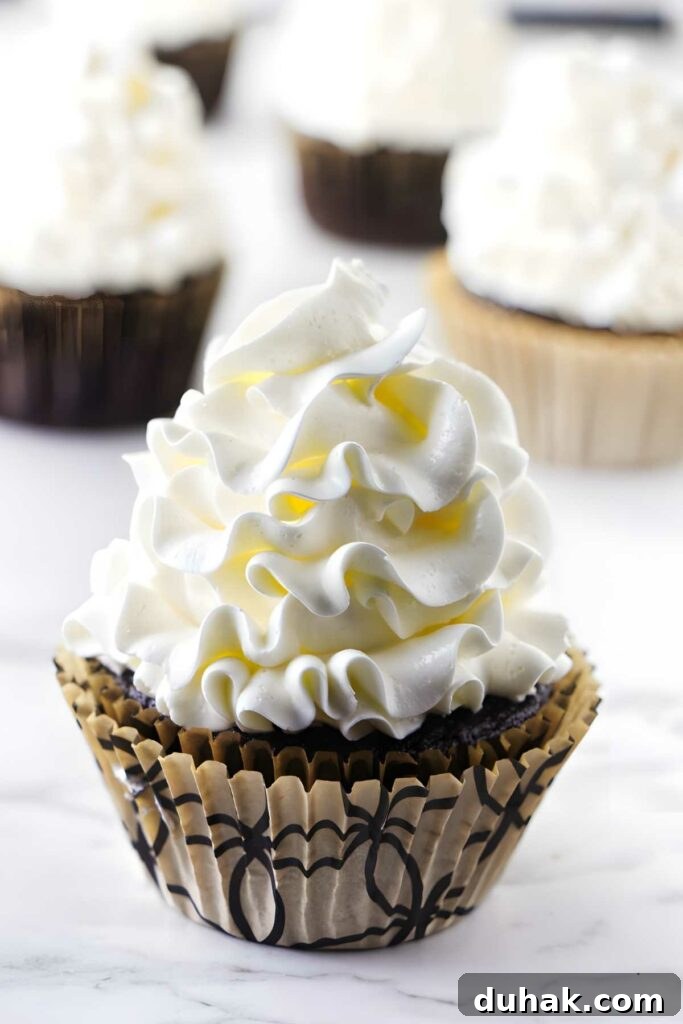
If you prefer frostings that are less sweet but don’t want to work with meringue, consider trying an Ermine frosting for a velvety, old-fashioned alternative.
Italian Meringue Buttercream
The process can be a bit fussy if temperatures aren’t right, so read the notes before you start. Get the butter and meringue to the right temperatures and the recipe is very reliable.
If you make this recipe, please leave a star rating and comment.
Pin
Comment
Ingredients
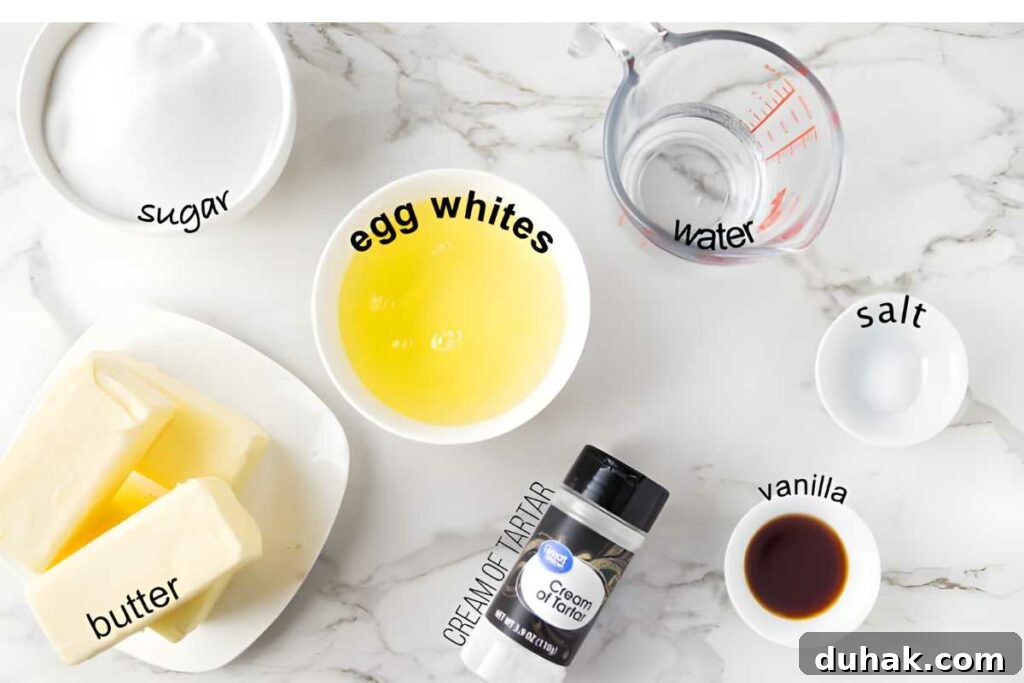
- ⅓ cup water
- 1 ½ cups granulated sugar, divided
- 5 egg whites, room temperature
- ¼ teaspoon cream of tartar
- 1 pound butter, softened but slightly cool, 454 grams
- 1 teaspoon vanilla extract
- ¼ teaspoon salt
Instructions
Make the syrup:
-
Combine 1 ¼ cups of sugar and the water in a saucepan. Stir to dissolve the sugar, then stop stirring and bring to a boil over medium-high heat.
-
Attach a candy thermometer and let the syrup reach 238°F to 245°F.
Whip the egg whites:
-
While the syrup heats, place the egg whites and cream of tartar in the mixer bowl and begin beating on low speed to combine.
-
When the syrup reaches about 230°F to 235°F, increase the mixer to medium-high and continue whipping the egg whites.
-
When soft peaks form, slowly add the remaining ¼ cup sugar and beat until stiff peaks develop.
Pour the syrup into the egg whites:
-
Once the syrup reaches 240°F to 245°F, remove from heat and slowly drizzle it into the meringue with the mixer running at medium to medium-high speed.
-
After all syrup is added, beat on high for 2 minutes, then reduce to low and continue beating until the meringue cools to room temperature (about 15–20 minutes). Keeping the mixer running while it cools often gives a slightly fluffier result.
Add the butter:
-
With the mixer on medium, add the butter 1–2 tablespoons at a time, beating 3–5 seconds after each addition. The mixture may look thin or separated at first; continue adding butter and beating slowly until it comes together.
-
When all the butter is incorporated, beat in the salt and vanilla and continue until the buttercream is light and fluffy. At this point, you can add flavorings or use the buttercream as is.
Variations:
White chocolate buttercream:
-
Melt 8 ounces white chocolate over a double boiler, cool to room temperature, then beat into the buttercream. White chocolate raises the buttercream’s melting point and improves stability in very hot weather.
Chocolate buttercream:
-
Melt 6 ounces bittersweet chocolate, let it cool, and beat it into the buttercream to add flavor and extra stability.
Tipsy buttercream (with alcohol):
-
Add up to 3 ounces of liqueur such as Grand Marnier, Amaretto, Chambord, or Cointreau for a boozy twist.
Fruit-flavored buttercream:
-
Fold in ¾ cup fruit purée or lemon curd. You can also use ½–¾ cup jam, though jam will make the buttercream slightly sweeter.
Notes
Butter temperature: Keep butter around 68°F–70°F. If your kitchen is warm, don’t let butter get too soft; it should still feel slightly firm when pressed.
Emulsification warning: If butter is too warm or egg whites are still hot, the mixture may fail to emulsify and will become runny. Correct temperatures at each step are essential.
Syrup temperature: The syrup should reach at least 238°F; 240°F–243°F is ideal. Temperatures above about 250°F risk a grainy texture in the finished buttercream.
Pouring the syrup: Drizzle the hot syrup down the side of the bowl, not onto the beaters, to avoid whipping sticky sugar strings. If steady pouring is difficult, use a stop-pour-beat method in small increments.
Nutrition
Nutrition information is automatically calculated and should be used as an approximation.
 Like this recipe? Rate & comment below!
Storing Leftovers
Refrigerate: Store in an airtight container for up to two weeks. Bring to room temperature and re-whip before using to restore a silky texture.
Freeze: Place in a freezer-safe container for up to three months. Thaw overnight in the fridge, then re-whip until smooth.
Italian Buttercream
If you want a frosting that’s elegant, versatile, and holds its shape, Italian Meringue Buttercream is hard to beat. It takes a little more attention than a powdered-sugar frosting, but the result is worth the extra steps: a refined, stable buttercream with a silky mouthfeel you’ll reach for again and again.
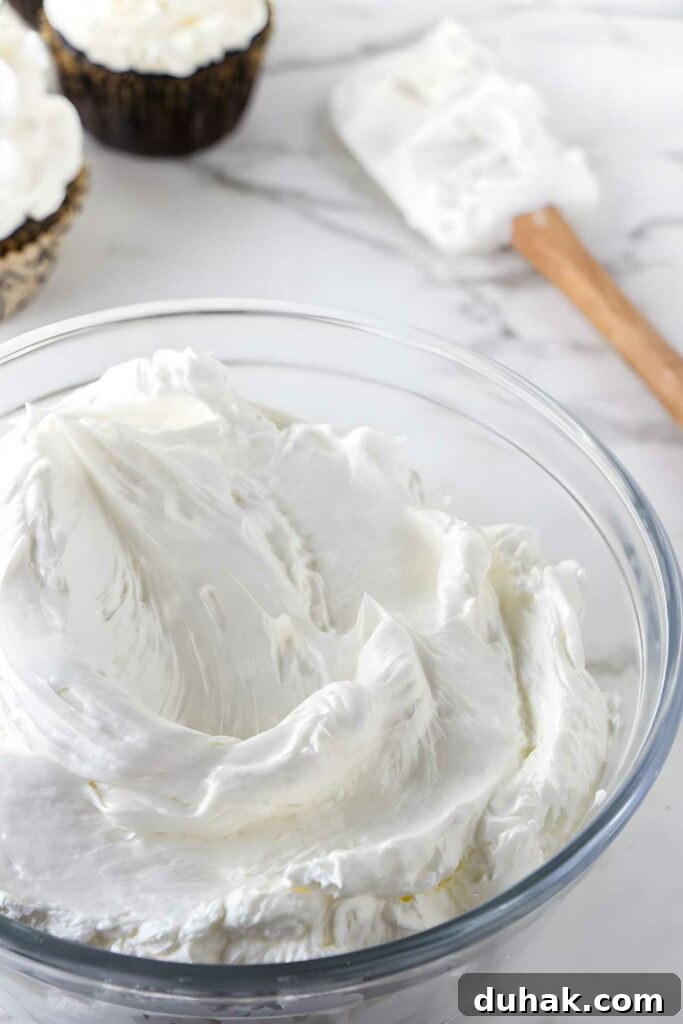
This is my go-to buttercream. I’m not a professional decorator, but I do enjoy experimenting with cake designs, and this buttercream is my reliable choice because of its stability, creaminess, and compatibility with fondant and decorations.