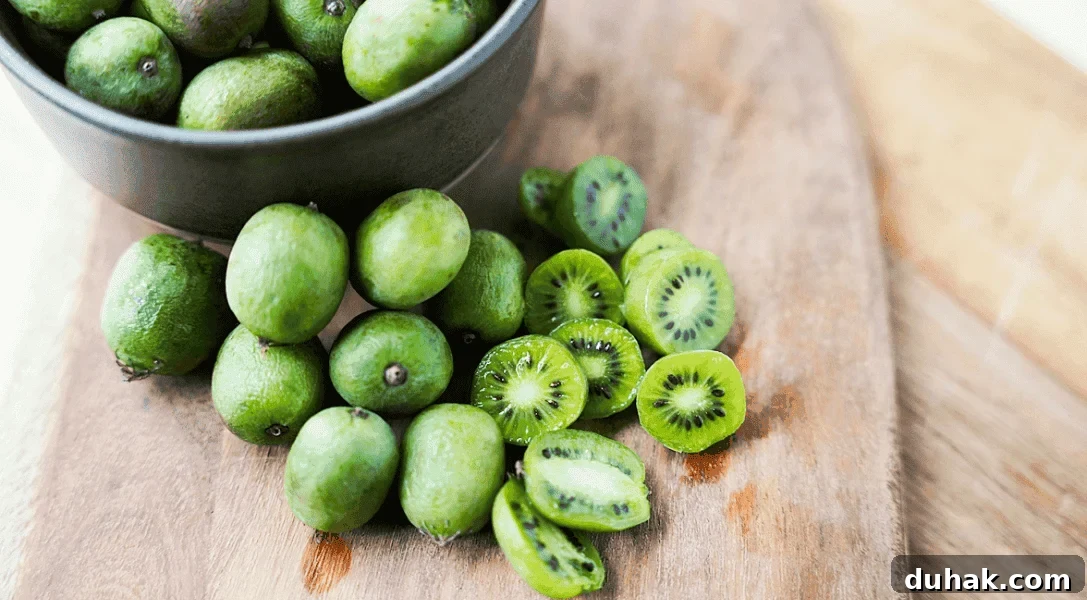
Are you wondering what kiwi berries are? Are they a type of kiwi or a true berry? Let’s clear up the confusion.
Kiwi berries are the petite, smooth-skinned relatives of the familiar kiwifruit. These small fruits pack a lot of flavor and nutrition into a grape-sized package, making them an excellent, convenient snack. If you haven’t tried them yet, you’re missing a sweet, tangy treat that’s grown in popularity for good reasons.
What Are Kiwi Berries?
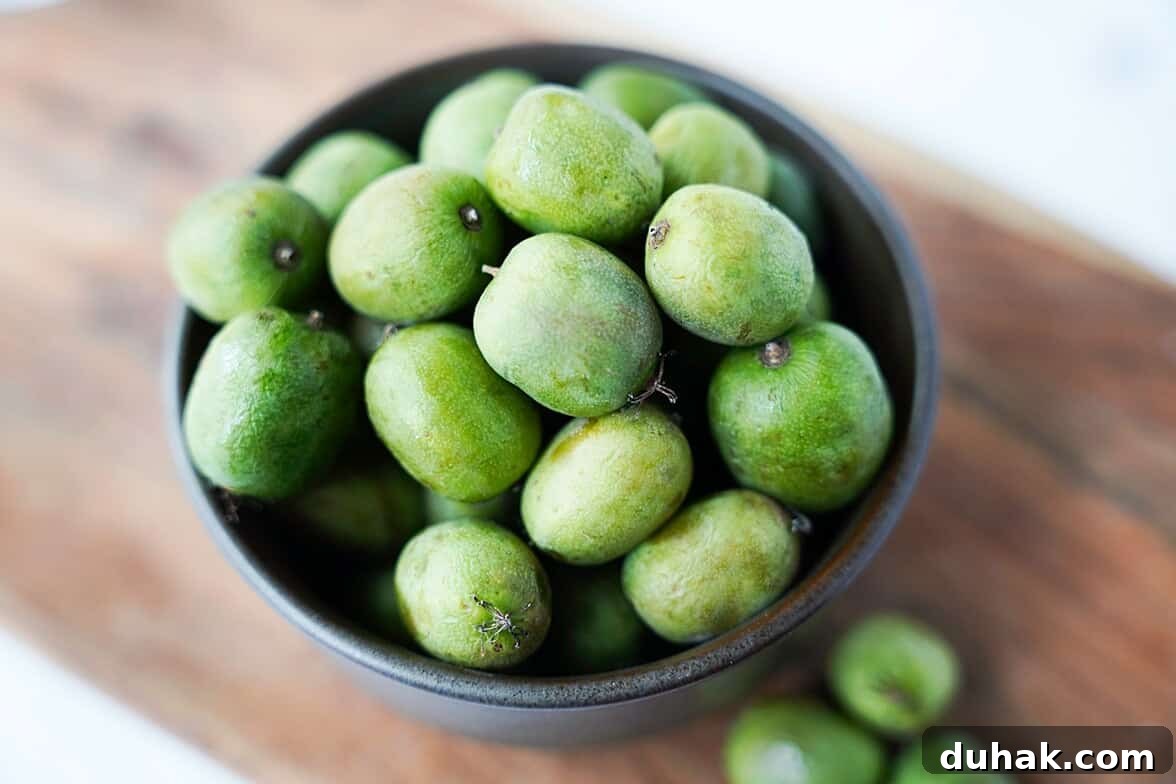
Kiwi berries, often called hardy kiwis, resemble a cross between a grape and a small kiwifruit. Unlike the larger, brown, fuzzy kiwifruit, kiwi berries have thin, smooth, edible skin and measure about the size of a large grape.
When you slice one open, you’ll see the familiar bright green flesh with tiny black seeds arranged in a star-like pattern. Their taste is similar to regular kiwifruit but usually sweeter, tangier, and juicier.
Native to regions in East Asia—such as China, Korea, and parts of Siberia—kiwi berries grow on hardy perennial vines that tolerate colder temperatures better than standard kiwifruit, which makes them suitable for cultivation in many temperate areas of the United States and Europe. They are also nutritionally dense, providing notable amounts of Vitamin C, Vitamin E, fiber, and antioxidants.
How Do You Eat Kiwi Berries?
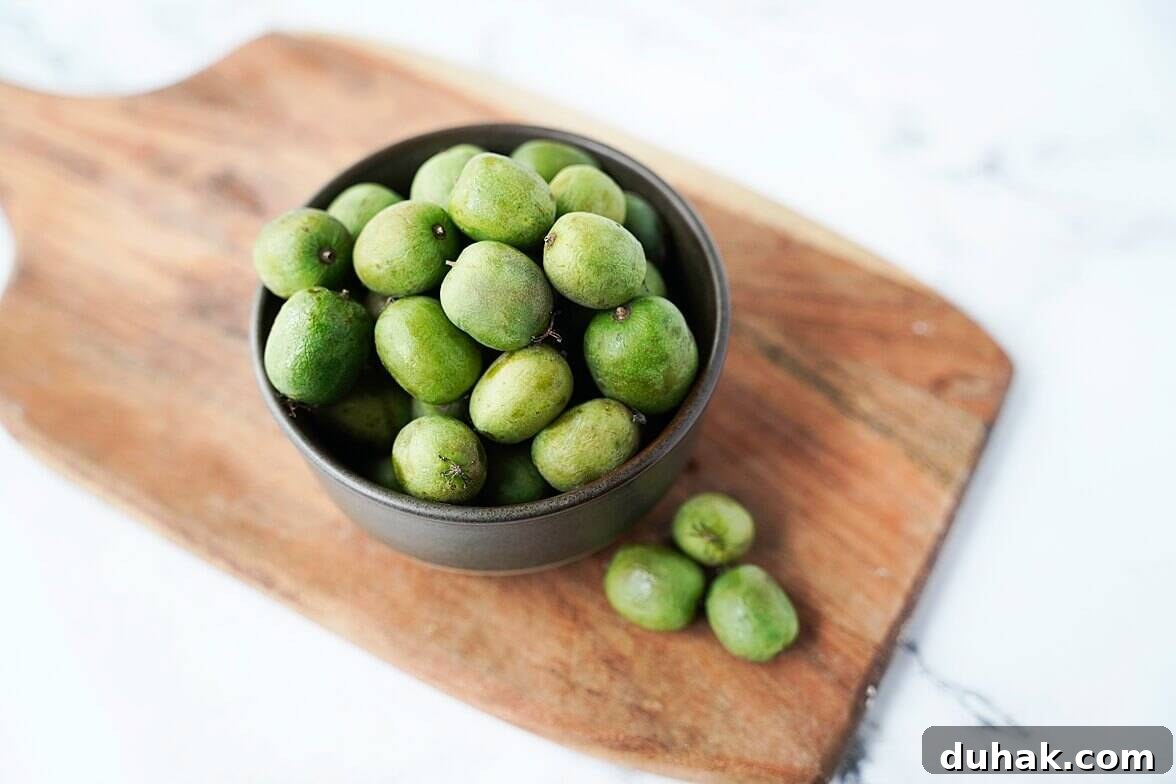
The best part about kiwi berries is how easy they are to enjoy. Their smooth, edible skin means minimal preparation.
- Wash Them: Rinse briefly under cool running water.
- Pop and Go: Eat the whole berry—skin and all—for an instant burst of sweet-tart flavor.
Ripeness is simple to judge: kiwi berries often arrive firm and will ripen at room temperature. They are ready to eat when the skin deepens in color, may wrinkle slightly, and yields gently to a light touch—similar to how you check a peach or avocado. Softer berries tend to be sweeter and less acidic.
How To Store Kiwi Berries
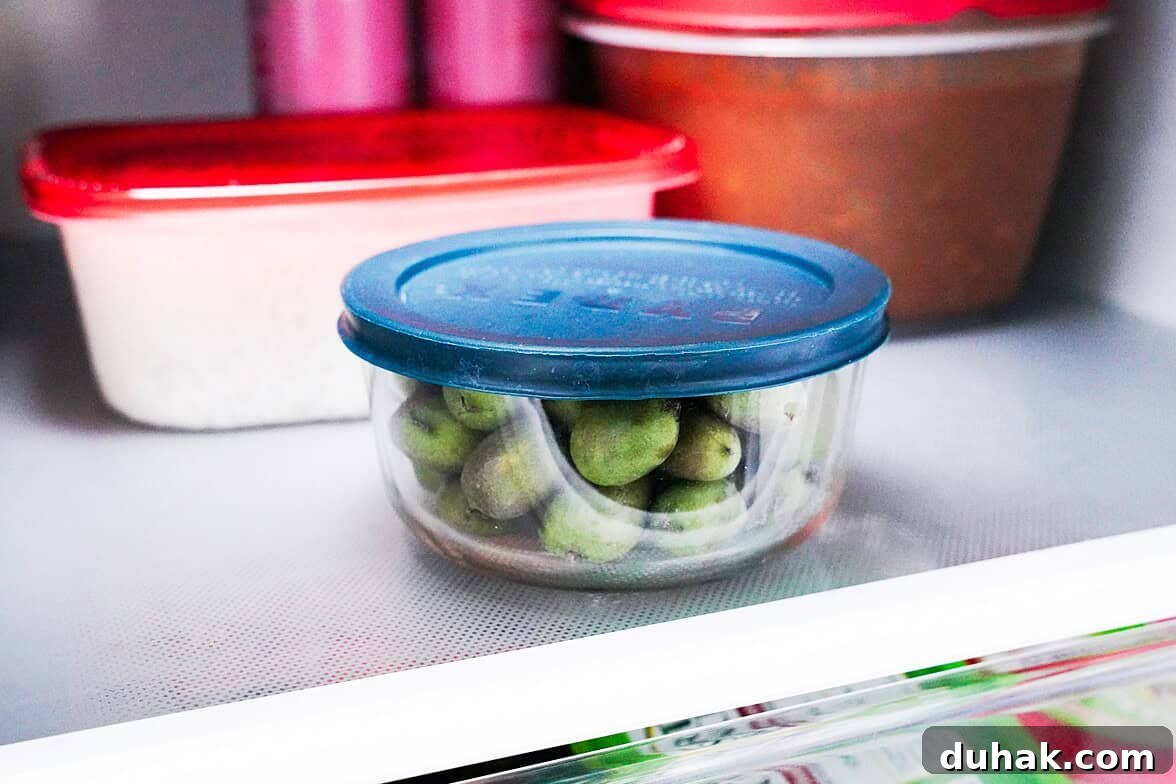
Kiwi berries are delicate and have a shorter shelf life than many fruits, so proper storage helps preserve their texture and flavor.
Ripening: If they’re still firm, leave them at room temperature in a bowl or a paper bag for a day or two until they soften slightly.
Refrigeration: Once ripe, place them in an airtight container and store them in the coldest part of the refrigerator. They typically keep for about one to two weeks; for the best taste and texture, eat them within a week.
Freezing: Kiwi berries freeze well for longer storage. After washing and drying, spread them in a single layer on a baking sheet and freeze. Transfer frozen berries to a freezer-safe bag or container. Frozen kiwi berries work great in smoothies and many baked recipes.
More Ways to Enjoy Kiwi Berries
While they’re delicious eaten straight from the container, kiwi berries are versatile in the kitchen thanks to their sweet-tart flavor and compact size.
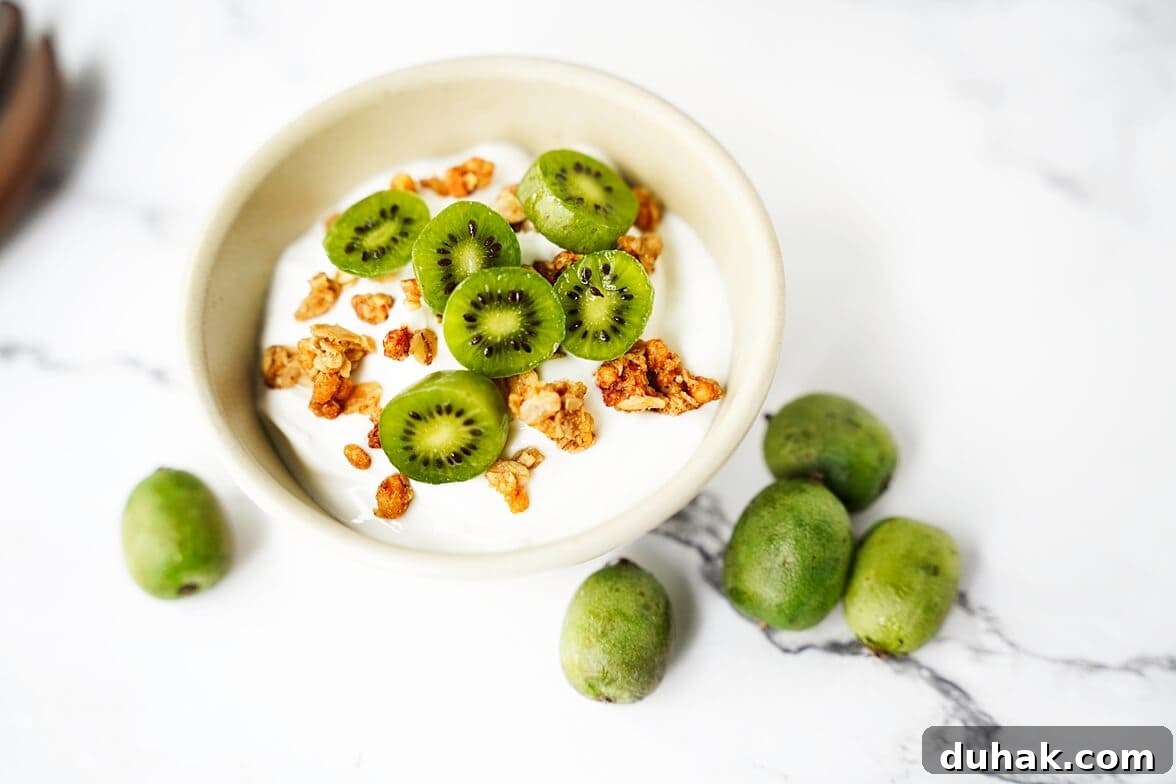
Breakfast: Halve them and add to oatmeal, yogurt parfaits, or tuck them atop pancakes and waffles for a bright burst of flavor.
Beverages: Muddle kiwi berries into cocktails, use as a colorful garnish for lemonades and iced teas, or blend a handful into smoothies for a vitamin C boost.
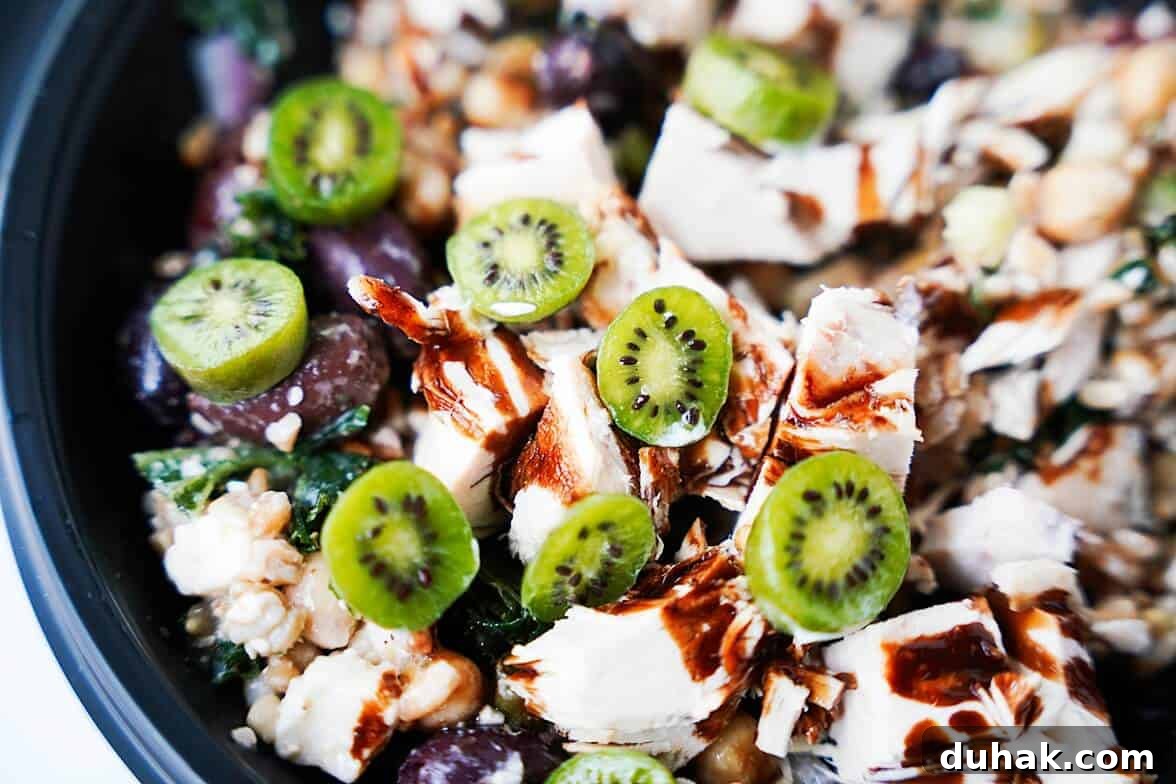
Salads and Savory Dishes: Their tang balances well with savory components—add whole or halved kiwi berries to green salads, grain bowls, or a cheese and charcuterie board. They also brighten fresh fruit salsas.
Desserts: Use kiwi berries as toppings for tarts, pavlovas, brownies, or ice cream. They can also be cooked down into a vivid, flavorful jam or preserve.

If you want more ideas and inspiration, explore recipe collections and seasonal tips from fruit-focused communities and social channels that share ideas for using seasonal produce.